Fishers Island Conservancy
  • Home
  • Who We Are
    • Our Mission
    • Our History
    • Our People
    • Contact Us
  • What We Do
    • Shorebird Monitoring
    • Annual Bird Counts
    • Marine Debris Clean Up
    • Island Sentinels
    • Research and Survey Team
    • Grassland Restoration
    • Mosquito Control
    • Invasive Plant Management
  • How To Help
    • Donate
    • Join Us
  • From the Field
  • News
  • Events
    • Calendar
Thursday, November 26, 2026
Fishers Island Conservancy
  • Home
  • Who We Are
    • Our Mission
    • Our History
    • Our People
    • Contact Us
  • What We Do
    • Shorebird Monitoring
    • Annual Bird Counts
    • Marine Debris Clean Up
    • Island Sentinels
    • Research and Survey Team
    • Grassland Restoration
    • Mosquito Control
    • Invasive Plant Management
  • How To Help
    • Donate
    • Join Us
  • From the Field
  • News
  • Events
    • Calendar
Copyright 2026 - All Right Reserved
Marine ReportsNews

Marine Debris Report – June 2026

by Anna White July 2, 2026

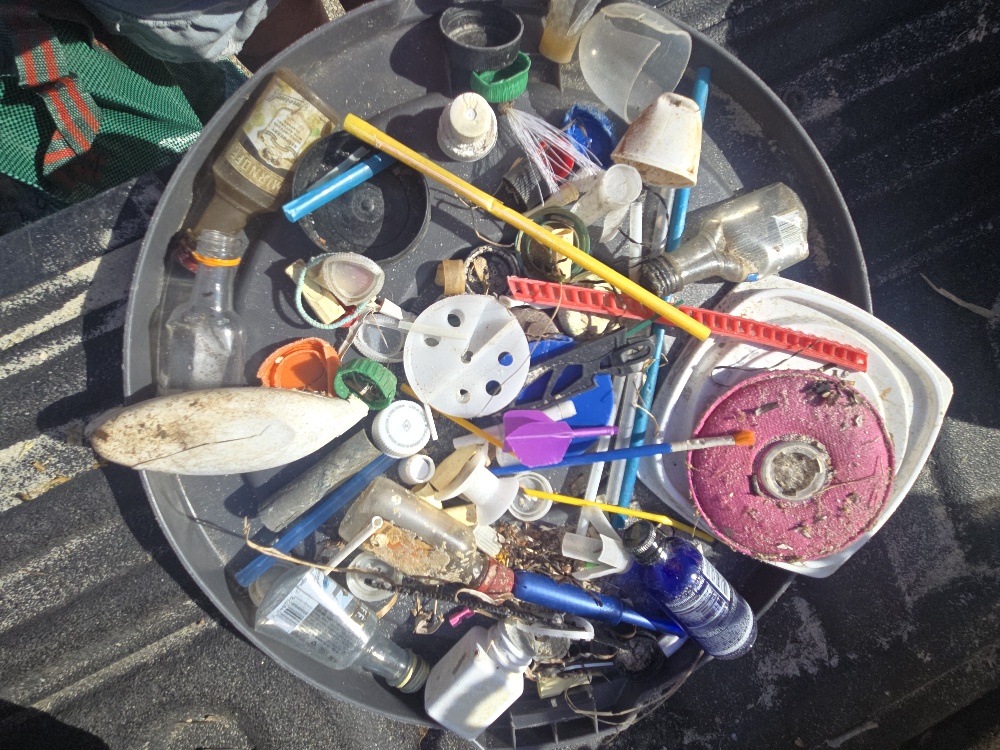
Marine Debris June 2026

beaches,

Total lbs = 1,473 / Total hours = 182.5
~ Michele Klimczak

DATEZONELOCATIONWEIGHT (LBS)HOURS
6/1/2026S3Beach before Big Club, Chocomount to farthest ends by Treasure Pond.628
6/2/2026S2Vikings End to Isabella Beach to Secret Beach.567.5
6/3/2026S2Wilderness Point beaches to South Beach, Sanctuary of Sands to Race Point.588.5
6/4/2026N1Airport beaches, ordinance, Ferry Park to Silver Eel Cove.375
6/5/2026N6Clay Point Rd. beaches to Brick Yard Rd. to Dock beach to Where the Wild Things Are through North Hill.488
6/7/2026N5Chocomount Cove beaches up to Hungry Point beaches.345
6/9/2026E4East Harbor to beaches north of Big Club Golf Course up to Latimer Light beaches.668.5
6/10/2026E4Latimer Light beaches through Castle to behind Money Pond and beach after Big Club beach.538
6/11/2026S3Beach before Big Club to Chocomount Beach.426
6/12/2026S2Isabella Beach, Secret Beach through far side of Vikings End (big pot).488.5
6/14/2026S2Wilderness Point to South Beach up to Sanctuary of Sands.416
6/15/2026N1Sanctuary of Sands to Race Point. Airport beaches to Ordinance to ferry Park to Silver Eel Cove to Little Stony Beach.508.5
6/16/2026N6North Hill beaches to Brick Yard Rd. beaches (tons of black buoys) to Clay Point. Road beaches to Dock Beach.618
6/17/2026N5Hungry Point beaches through Chocomount Cove beaches.437.5
6/18/2026E4Beach after Big Club beach, behind Money Pond to Castle.586
6/19/2026E4All Latimer Light beaches up through East Harbor over North side of Golf Course.738.5
6/21/2026S3Chocomount beaches.264
6/22/2026S2Isabella Beach through Vikings End through Wilderness Point beaches.498
6/23/2026S2South Beach through Sanctuary of Sands to Race Rock.347
6/24/2026N1Airport beaches to Ordinance, Ferry Park, Silver Eel Cove, Little Stony Beach, Holiday House beachesup to Tom's house.598
6/25/2026E4Latimer Light beaches around North side and Golf Course across from Big Club.636
6/26/2026N5Hungry Point beaches through Chocomount Cove beaches.527.5
6/27/2026N6Brick Yard Rd. beaches to Dock beaches to North Hil Rd. beaches (mess at South Beach from grad. Party).384
6/28/2026N6Clay Point Rd. beaches to Grey Gulls beaches.834
6/29/2026S3Beach befor Big club end to end of Chocomount. Nate Chaves came for 2.5 hours to drag tire, pots, hugs bags, trash!1868.5
6/30/2026E4Fire pits at Race and Buds Hole, is smoldering. Castle beaches through beaches behind Money Pond farthest end to beach after Big Club Beach.538

View Debris Photo Gallery Here!

July 2, 2026 285 views
NewsShorebirds

NEW: Introducing Shorebird Watch

by Anna White June 30, 2026

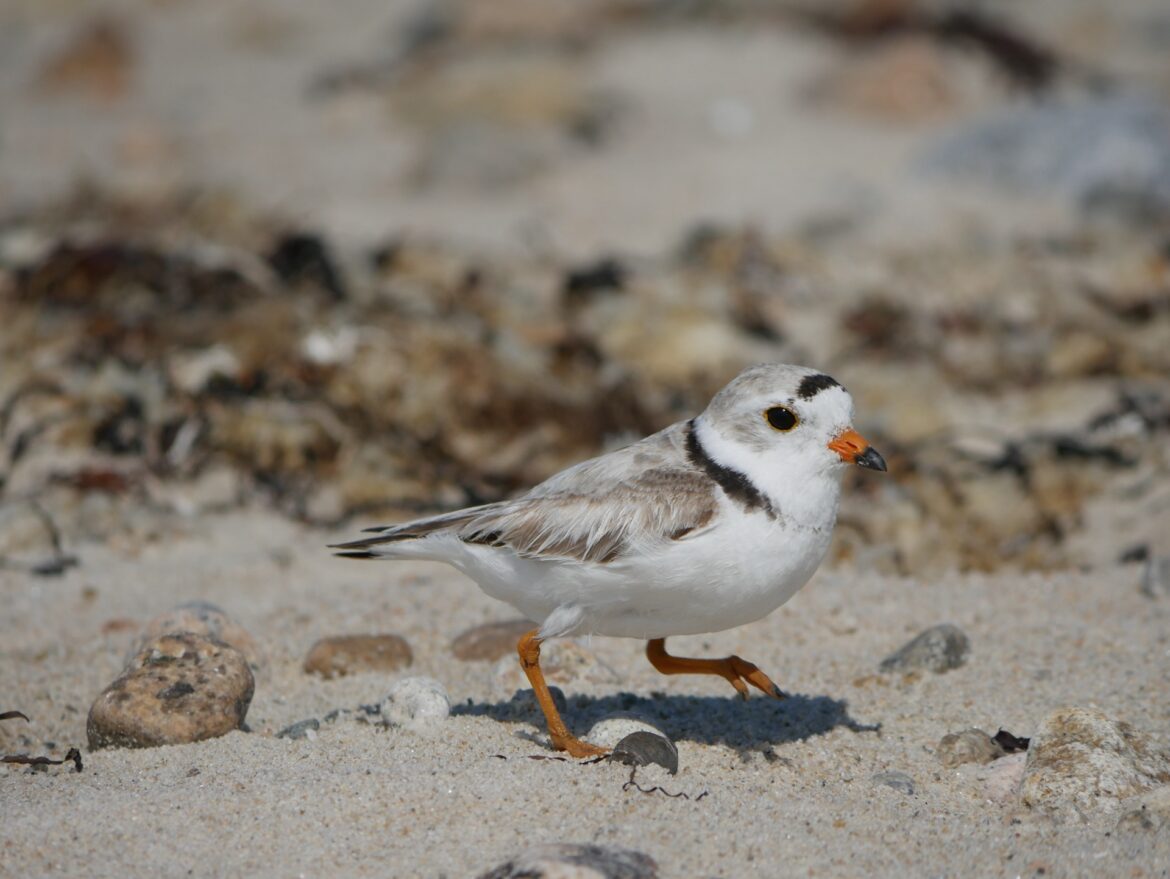
A NEW way for the community to follow along with the piping plovers, least terns, and oystercatchers nesting on island this season!

If you’ve ever walked the beach and wondered whether there are nesting birds nearby, or wished you could check in on how the chicks are doing without having to track us down, we built something just for you!

Shorebird Watch is a new page on our website where you can follow what’s happening with the island’s nesting shorebirds throughout the season, updated regularly by our team as we see it happen out in the field.

Why we created this

Protecting nesting shorebirds on Fishers Island has always been a community effort. Our staff and volunteers spend hours each week monitoring nests, but the truth is, the birds’ best chance at a successful season depends just as much on everyone walking these beaches every day. We know people care, and we know not everyone has an easy way to stay in the loop on what’s happening at any given moment. Shorebird Watch is our way of closing that gap and making sure the whole community has the information they need to help protect these birds, together.

What you’ll see on the page

The page gives a season-long look at our active monitoring sites, with regular updates on what’s happening at each one. You’ll find general activity updates, like when a site has active nests or young chicks present, along with simple notes on what kind of care that site might need from beach goers at that moment. We’ll be adding photos throughout the season as well, so the community can see a bit of what our team is seeing out in the field.

How it will be updated

Our team updates the page regularly throughout the breeding season, generally on a weekly basis, though timing may shift depending on what’s happening on the beach. Nesting season moves quickly, so we’ll do our best to keep things current as eggs hatch, chicks grow, and birds make their way toward fledging.

A note on how to use this page

We’re sharing this information so the community can make small, thoughtful choices, like giving a certain stretch of beach a little extra space, or choosing a different path for a dog walk during an especially sensitive window. This page is meant to help you stay informed, not to invite a visit to the nest itself. We ask that everyone please avoid seeking out or approaching any active nesting areas. Even well-meaning visits can disturb nesting birds, and the whole point of this page is to help protect them, not to create more activity around them.

A community effort

At the end of the day, conservation on Fishers Island only works because this community shows up for it. Shorebird Watch is one more way to keep everyone connected to that effort, and to make it just a little easier to be a good neighbor to the birds sharing our beaches this summer. We’re grateful for everyone who already gives these nesting areas the space they need, and we hope this page helps even more of our community feel like part of the work.

You can find Shorebird Watch on our Shorebird Monitoring page now, and we’ll continue adding updates and photos throughout the season.

Click Here to View

Featured Photo by Naomi Zahn 

June 30, 2026 285 views
FIRST

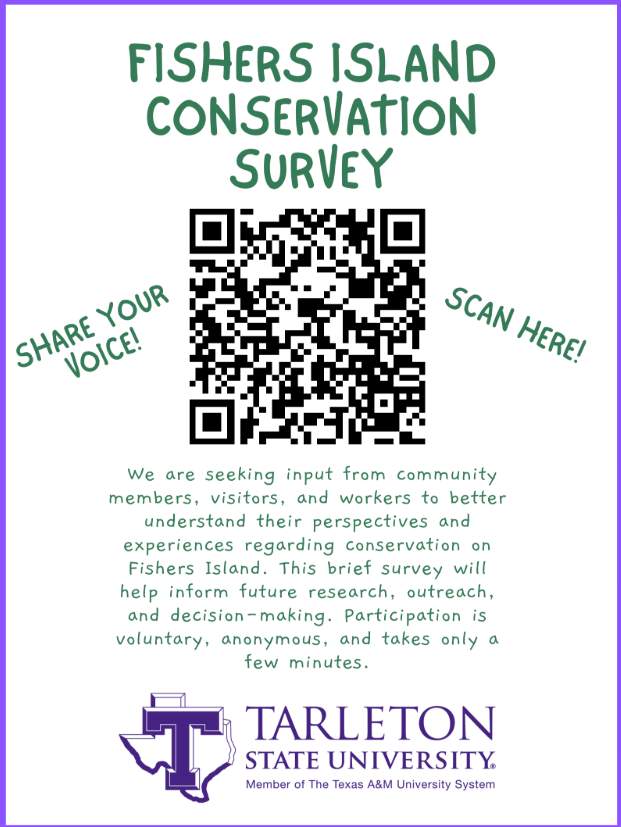
FI Conservation Survey from Tarleton University

by Anna White June 23, 2026

Tyler McMahon, a second-year PhD student in Wildlife and Natural Resources at Tarleton University, is conducting a community survey on Fishers Island as part of his graduate research. Tyler works in partnership with the Fishers Island Conservancy through the Fishers Island Research and Survey Team (FIRST) program, and the survey is supported by FIC as part of that collaboration.

The survey invites community members, visitors, and workers on Fishers Island to share their connections to and experiences with conservation on the island. Tyler hopes the responses will offer insight into how people engage with the area, what they value most, and how future outreach, research, and management efforts can better reflect community input.

Everyone is welcome to take part, and it only takes a few minutes. Participation is completely voluntary and anonymous, so feel free to skip anything you would rather not answer. Responses are collected through Qualtrics, a secure survey platform, so nothing personal is shared or tied back to you.

Anyone with questions can reach out to Tyler directly at tyler.mcmahon@go.tarleton.edu.


Take the Survey
June 23, 2026 274 views
Bird CountsCurrent EventsFIRSTNews

June 2026 Breeding Bird Count

by Anna White June 18, 2026

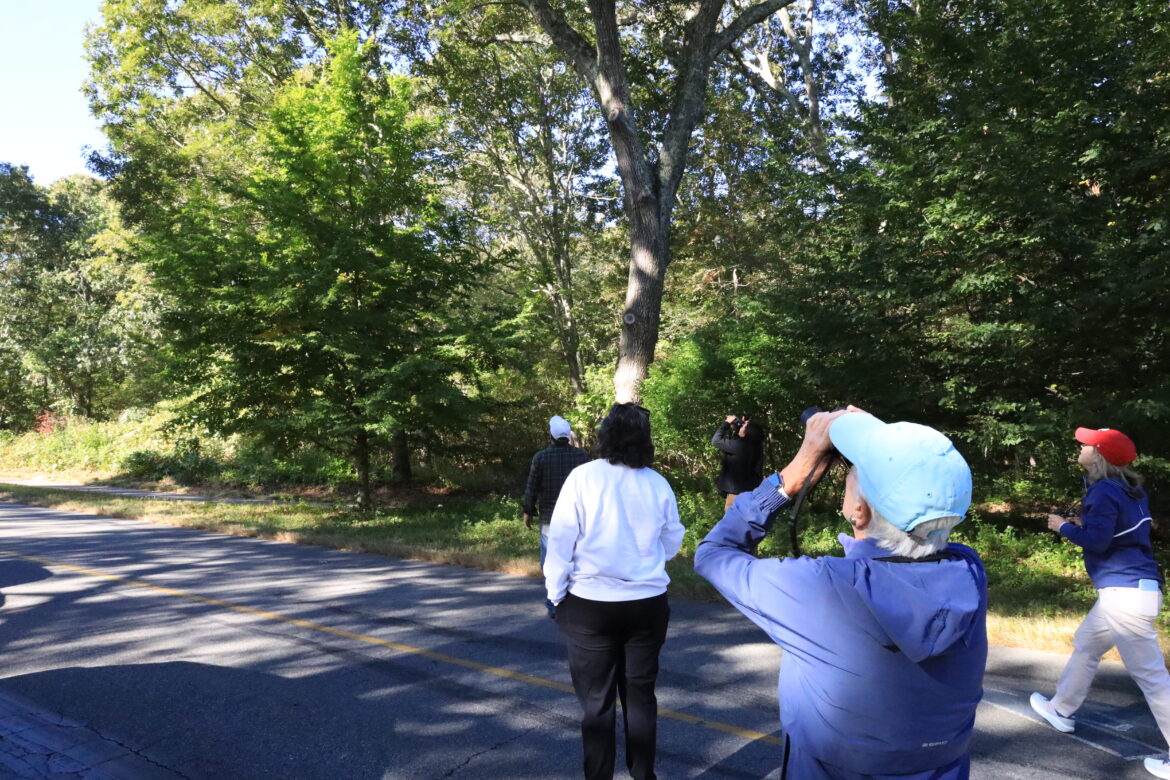
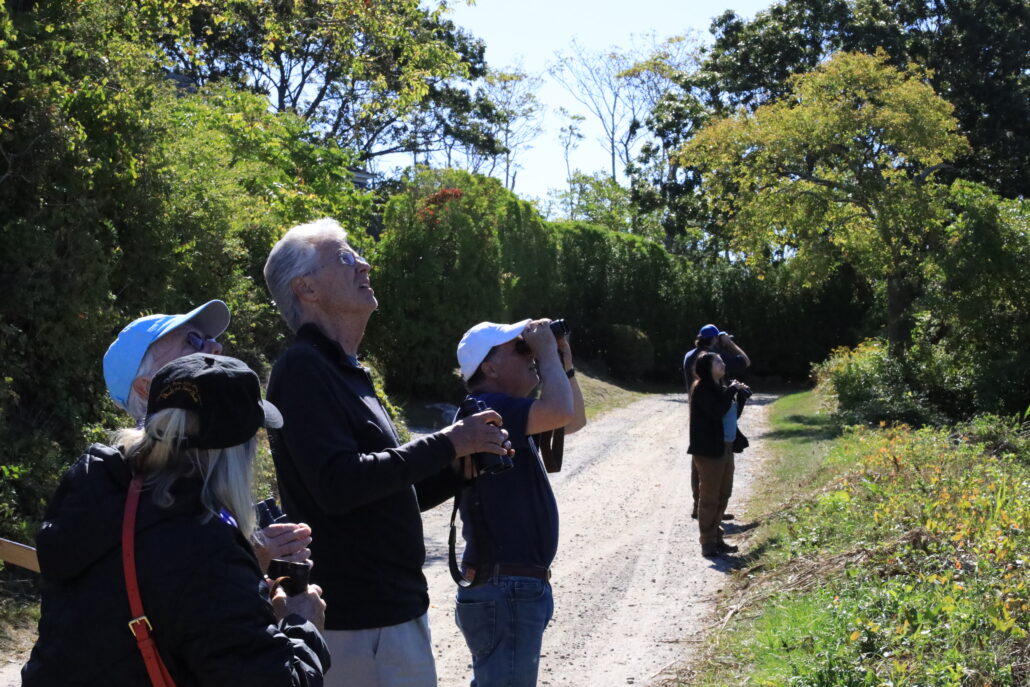
On Sunday, June 14th, the FI Research and Survey Team (FIRST) conducted a breeding bird survey across the island. The survey follows the same format as our classic migratory bird survey, but instead focuses on the birds currently nesting and raising young here on Fishers Island, outside of the migratory window. Unlike our migratory visitors passing through, these breeding residents will stick around for the next few months, relying on the island’s insects and other resources to feed and raise their chicks.

During the survey, FIRST identified 42 unique species across the island, including familiar residents like Osprey, Gray Catbird, and Double-crested Cormorant. The team also turned up a few exciting surprises, including a Scarlet Tanager and a Willow Flycatcher.

Breeding surveys may not have the same buzz as migratory season, but they play an important role in tracking the health of the birds that call Fishers Island home for the summer. Keeping an eye on these populations helps us understand how well our nesting birds are doing year over year.

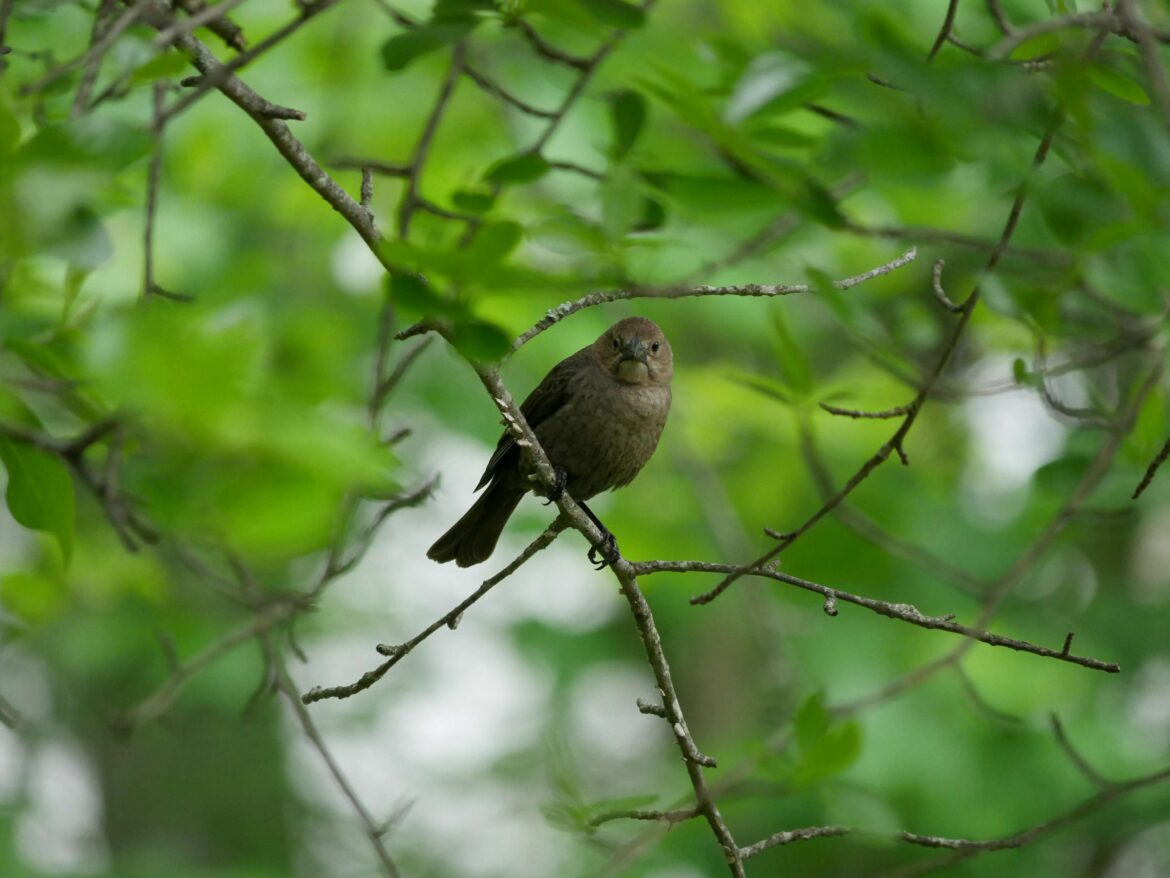
Featured photo by Naomi Zahn 

Here is the full list of species identified during the survey:

June 2026 Breeding Bird Count
Common Tern
American Herring Gull
American Robin
European Starling
Red-winged Blackbird
Tree Swallow
American Goldfinch
Song Sparrow
Bank Swallow
Baltimore Oriole
Northern Mockingbird
Barn Swallow
Common Yellowthroat
Fork-tailed Flycatcher
Common Grackle
Gray Catbird
Willow Flycatcher
Double-crested Cormorant
Killdeer
Great Black-backed Gull
Yellow Warbler
Canada Goose
American Redstart
House Finch
Mourning Dove
Northern House Wren
Fish Crow
American crow
Ring-necked Pheasant
Great Crested Flycatcher
Yellow-breasted Chat
Eastern Towhee
Wood Thrush
Red-eyed Vireo
Red-bellied Woodpecker
Eastern Wood-Pewee
White-eyed Vireo
Cedar Waxwing
Scarlet Tanager
Tufted Titmouse
Ruby-throated Hummingbird
Mute Swan
June 18, 2026 287 views
Marine ReportsNews

Marine Debris Report – May 2026

by Anna White June 4, 2026

Marine Debris May 2026

beaches,

Total lbs = 1,252 / Total hours = 175.5
~ Michele Klimczak

DATEZONELOCATIONWEIGHT (LBS)HOURS
05/1/2026S2Isabella Beach to Vikings End to Wilderness Point beaches up to South Beach at Hay Harbor588.5
05/3/2026S2South Beach at Hay Harbor to Sanctuary of the Sands to the Race284
05/4/2026N1Airport to the Ordinance, Ferry Park, Silver Eel Cove, Little Stony behind Holiday house438.5
05/5/2026N6North Hill Dock beaches, Peninsula area across Dock Beach, Brickyard Road beaches to far end of  Clay Point Road598.5
05/6/2026N5Hawks Nest beaches and through that road, Chocomount Cove beaches to Hungry Point686.5
05/7/2026E4Beaches before 8th Hole, through 8th Hole to Latimer Lighthouse Beaches647
05/9/2026E4Behind Money Pond, both sides.494
05/10/2026E4Castle Road beaches and beach at the Big Club374.5
05/11/2026S3Beach before Big Club, Chocomount beaches all they way to the end by the driving range.468
05/12/2026S2Isabella Beach to Vikings End to Wilderness Point448
05/13/2026S2Far end South Beach through Hay Harbor Golf area down to Sanctuary of Sands to the Race518
05/14/2026N1Airport beaches to the Ordinance, to the Ferry Park Silver Eel Cove to Little Stony466
05/15/2026N6North Hill beaches, Dock, Brick Yard Road beaches to Clay Point Road beaches628
05/16/2026N5Hungry Point beaches both ends344
05/17/2026N5Chocomount Cove and beaches to Hawks Nest264
05/17/2026E4Beaches before 8th Hole over course424
05/19/2026E48th Hole through Latimer Lighthouse beaches up to the castle.345.5
05/20/2026E4Both ends of beaches behind Money Pond through beaches at the Big Club, then Sec. Beach, 8th Hole, the Big Club, and Buds Hole599
05/21/2026S3Beach before Big Club to Barley Field Cove through Chocomount476
05/22/2026S2Isabella Beaches to Vikings End to Wilderness Point up to South Beach at the Hay Harbor Golf569.5
05/23/2026S2South Beach to Sanctuary of Sands to the Race324
05/25/2026N1Airport beaches to the Ordinance to Ferry Park to Silver Eel Cove to Little Stony265
05/26/2026N6North Hill beaches to dock to Brickyard Road to Clay Point Road, then Buds Hole, 8th Hole, and the Big Club4210
05/27/2026N5Chocomount Cove beaches through Hawks Nest Beaches, behind Glass House beaches and through Hungry Point beaches589
05/29/2026E4Beaches over courses to left of the Big Clun through to the beginning of Latimer Lighthouse beaches748
05/31/2026E4Latimer Lighthouse beaches through Castle Road to behind Money Pond to beach after the Big Club678
 

View Sample Photo Gallery Here!

June 4, 2026 276 views
Bird CountsNews

2026 Spring Migratory Bird Count Results

by Anna White May 11, 2026

We are excited to share the results of this year’s Spring 2026 Migratory Bird Count. Despite overnight storms and a dense fog advisory on Sunday morning, this year’s count turned out to be a fantastic day for birding on Fishers Island! With the help of our wonderful volunteers, we recorded a total of 66 bird species by sight or sound during the official count!

Some especially exciting highlights included 10 species of warblers, including American redstart, blue-winged warbler, chestnut-sided warbler, common yellowthroat, Nashville warbler, northern parula, yellow warbler, ovenbird, wood thrush, and yellow-rumped warbler. We also recorded four species of swallows: bank swallow, barn swallow, northern rough-winged swallow, and tree swallow, all welcome signs that spring migration is in full swing on the island.

A few species that are normally observed during the spring count, including seabirds, egrets, and herons, were notably absent from the official tally. However, participants suspect the dense fog likely reduced visibility and detectability rather than reflecting a true absence on the island.

In addition to the official count, we also kept a “running list” throughout the weekend, bringing the unofficial total to an impressive 75 species! These strong numbers continue to highlight our island as an important stopover habitat for migratory birds along the Atlantic Flyway.

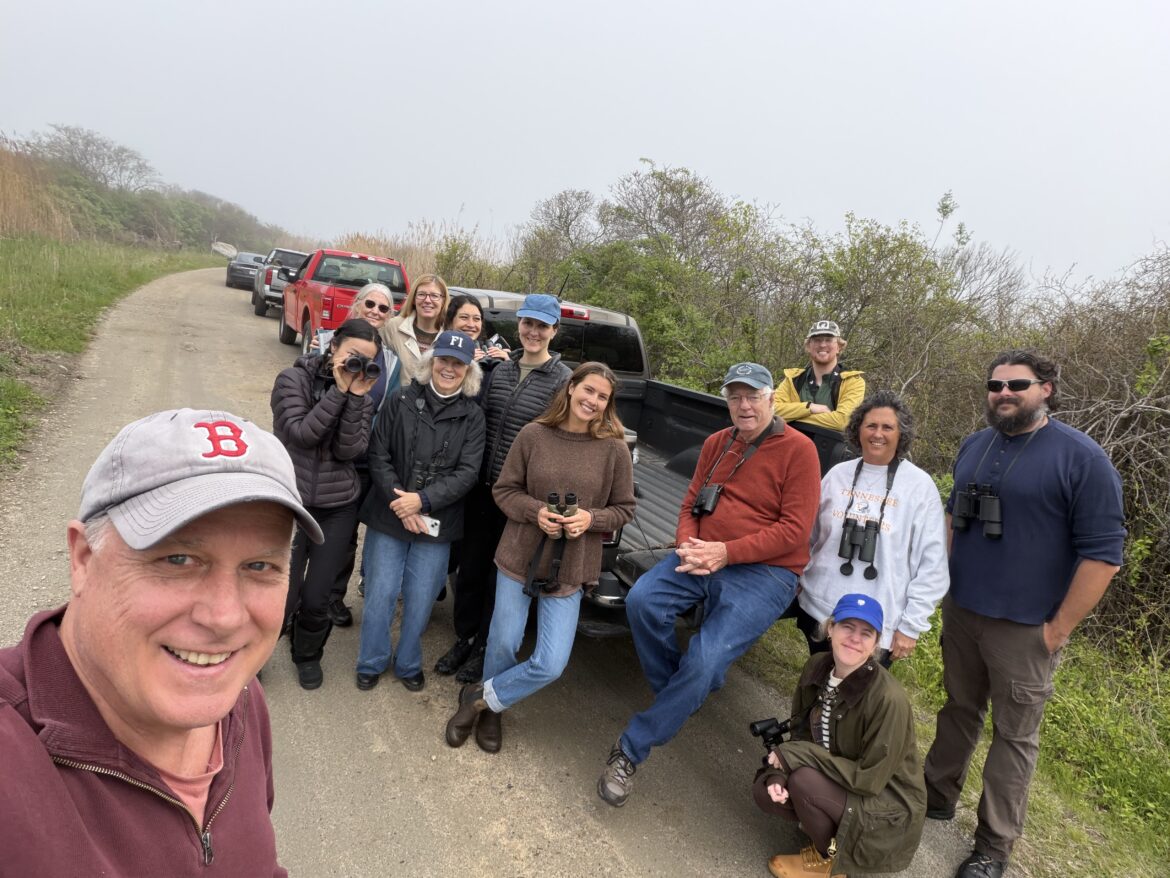
One of the best parts of this year’s event was the community effort behind it. This marked the 13th year of the bird count, and we are incredibly grateful to everyone who participated, helped identify species, shared recordings, and kept spirits high throughout the day. Special thanks to Allison Sargent for serving as scribe, Tyler McMahon and Dr. Adam Mitchell for leading the count, and to all of the volunteers who made the weekend such a success.

Thank you Dr. Adam Mitchell and Tyler McMahon!
Below is the full list of species recorded during the Spring 2026 Migratory Bird Count. Species marked with an asterisk (*) were observed during the unofficial weekend running count.

Spring 2026 Bird Count
1. American black duck*
2. American goldfinch
3. American redstart
4. American robin
5. Atlantic brant
6. Bank swallow
7. Barn swallow
8. Baltimore oriole
9. Black-capped chickadee
10. Blue jay
11. Blue-gray gnatcatcher
12. Blue-winged warbler
13. Brown creeper
14. Brown thrasher
15. Brown-headed cowbird
16. Canada goose
17. Carolina wren
18. Chestnut-sided warbler
19. Chipping sparrow
20. Common eider
21. Common grackle
22. Common loon
23. Common raven*
24. Common tern
25. Common yellowthroat
26. Cooper's hawk
27. Downy woodpecker
28. Double-crested cormorant
29. Eastern kingbird*
30. Eastern towhee
31. Eastern wood peewee
32. European starling
33. Field sparrow
34. Fish crow
35. Gray catbird
36. Great black-backed gull*
37. Great-crested flycatcher
38. Great egret*
39. Great horned owl
40. Greater yellowlegs*
41. Hairy woodpecker
42. Herring gull
43. House finch
44. House sparrow
45. Killdeer
46. Mallard
47. Merlin
48. Mourning dove
49. Nashville warbler
50. Northern cardinal
51. Northern harrier
52. Northern house wren
53. Northing mockingbird
54. Northern parula
55. Northern rough-winged swallow
56. Northern yellow warbler
57. Orchard oriole
58. Osprey
59. Ovenbird
60. Red-bellied woodpecker
61. Red-eyed vireo
62. Red-winged blackbird
63. Ring-necked pheasant
64. Rose-breasted grosbeak
65. Ruby-crowned kinglet*
66. Ruby-throated hummingbird*
67. Snowy egret*
68. Song sparrow
69. Tree swallow
70. Tufted titmouse
71. White-breasted nuthatch
72. White-eyed vireo
73. Wood thrust
74. White-throated sparrow
75. Yellow-rumped warbler
Learn more about our annual bird counts here!
May 11, 2026 293 views
Marine ReportsNews

Marine Debris Report – April 2026

by Anna White May 3, 2026

Marine Debris April 2026

beaches,

Total lbs = 1,305 / Total hours = 166.5
~ Michele Klimczak

 
DATE ZONE LOCATION WEIGHT (LBS) HOURS
04/1/2026 N5 Chocomount cove beaches to Hungry Point 57 7.5
04/2/2026 E4 Hungry Point beaches up to Latimer Light 66 7.5
04/3/2026 E4 Latimer Light beaches to Castle to behind $ pond 71 8
04/6/2026 E4 Over golf course up to beach before Big Club 89 4
04/7/2026 S3 Beaches before Big Club to Chocomount end 68 7.5

04/8/2026

S2 Secret beach to Isabella to Vikings End 58 8
04/9/2026 S2 Wilderness Point to South Beach, Sanctuary of Sands to Race Point 49 8
04/10/2026 N1 Airport to Ordinance, Ferry Park, Silver Eel Cove, Little Stony 42 6
04/12/2026 N1 Hay Harbor to Holiday House beaches 56 4
04/13/2026 N6 North Hill Beaches to Dock beach to Brick yard  43 7
04/14/2026 N5 Clay Point Rd beaches to behind the Glass House & Chock Coves 54 8
04/15/2026 E4 Hungry Point up to Latimer light beaches 62 6.5
04/16/2026 E4 Latimer Light beaches to Castle 52 5
04/17/2026 E4 Beaches behind $ pond over golf course to club beaches 78 8
04/22/2026 S3 Beach before Big Club through both ends of Chocomount over rocks  70 8.5
04/23/2026 S2 Isabella beaches, Vikings end through Wilderness Point 55 8.5
04/24/2026 S2 2 hours @ the shed sorting South beach, Sanctuary of sands to Race Point 39 8.5
04/25/2026 N1 Airport beaches to Ordinance Ferry Park to Silver Eel Cover to Little Stony  45 7
04/26/2026 N6 North Dumpling beaches to Dock to Brick yard Rd, Grey Gulls to Clay Point Rd. beaches 50 6
04/27/2026 N5 Hungry point beach to East Harbor back to Chocomount Cove 48 8
04/28/2026 E4 All Latimer Light beaches to Castle  37 6
04/29/2026 E4 behind $ pond, over course up to Big Club beaches  48

8.5


View Sample Photo Gallery Here!

May 3, 2026 297 views
Bird CountsEventsNews

Spring Migratory Bird Count 2026

by Anna White April 30, 2026

Spring Migratory Bird Count 2026

When: Sunday, May 10th at 8:00 am
Where: Community Center

Join us for our annual Spring Migratory Bird Count on Sunday, May 10th at 8:00 am. This is one of the best times of year to get outside and experience the energy of spring migration as birds move through the island!

We’ll begin the morning by meeting at the Community Center before heading out. Following established Audubon Society count methods, participants will make 15 stops along a route stretching from the West End to the East End of Fishers Island. Each stop lasts five minutes, giving the group time to identify and record all birds seen and heard.

Located along the Atlantic Flyway, Fishers Island serves as an important stopover for migrating birds, making it an ideal place to observe a wide variety of species during this seasonal movement!

Please come prepared for a longer walk and bring binoculars if you have them. Our team will be there to guide the group, help with identification, and answer questions along the way!

Whether you’re an experienced birder or just getting started, all are welcome to join!

April 30, 2026 277 views
FIRSTNews

the 2026 FIRST Team

by fic0n5erv April 23, 2026

the 2026 FIRST Team

We’re excited to welcome the Fishers Island Research and Survey Team (FIRST) back for another summer on the island. The 2026 field season kicks off June 1st, and we’re looking forward to having a great group of students back out in the field!

Starting in 2024, the Conservancy piloted the FIRST program in collaboration with Tarleton State University and Dr. Adam Mitchell, bringing students from Texas to Fishers Island to take part in hands-on conservation work and ecological research. 

FIRST itself grew out of the Conservancy’s earlier Weed Team program, which focused on hands-on invasive species removal across some of the island’s most sensitive habitats. That work laid the groundwork for what FIRST is today.

Over the course of the summer, FIRST students help with everything from monitoring wildlife and tracking biodiversity to managing invasive species and supporting habitat restoration efforts across the island.

Meet the 2026 FIRST Team

This year’s team includes a mix of returning students and new faces, and we’re excited to introduce them!

Tyler McMahon returns as the FIRST team lead and is currently a PhD student in Wildlife and Natural Resources working in partnership with the Fishers Island Conservancy.

His research focuses on long-term grassland biodiversity and how management decisions shape insect communities over time. Before coming to Fishers Island, Tyler studied the effects of bison reintroduction in Illinois tallgrass prairies, looking at how large grazers influenced moth diversity.

On Fishers Island, Tyler leads field surveys, supports invasive species management, and continues expanding the program’s insect monitoring efforts, including nocturnal sampling. His work builds on earlier datasets while helping to track how vegetation change and restoration efforts are influencing biodiversity across the island.

In addition to his research, Tyler works closely with the undergraduate team, guiding student projects and helping connect their work to the broader goals of the program. His background in insect ecology, especially his interest in moths and butterflies, continues to shape and strengthen the Conservancy’s growing monitoring efforts.

Tyler McMahon

Naomi Zahn is returning to Fishers Island for her third field season with FIRST. She is a Senior at Tarleton State University studying Wildlife Sustainability and Ecosystem Science, with a minor in Entomology.Passionate about insect–plant interactions, Naomi has focused her research on how invasive species management practices affect arthropod communities. Her work on Fishers Island has contributed to a growing understanding of how restoration efforts influence insect diversity over time.Before transferring to Tarleton in 2024, Naomi attended the University of Texas at San Antonio and spent two years working as a dolphin trainer at SeaWorld San Antonio. She has a strong interest in invertebrate ecology and plans to continue building on her research experience this summer. Naomi hopes to pursue a career as a wildlife biologist, with a focus on entomological interactions in natural systems. 

Naomi Zahn

 Natalie Sato is a Junior at Grinnell College, where she is pursuing a double major in Biology and Studio Art. She brings a strong interest in restoration ecology, plant communities, and the role of invasive species in shaping ecosystems.

Natalie has experience working in prairie systems, including identifying and removing invasive plant species and studying biodiversity across restored landscapes. She has also worked as a research assistant studying soil ecology and carbon cycling, giving her a broader understanding of how plant and soil systems interact.

Her academic and field experience reflect a focus on sustainability and environmental change, particularly how ecosystems respond to management and disturbance. During her time on Fishers Island, she is excited to continue developing her skills in plant identification and contribute to ongoing restoration work.

Outside of her academic work, Natalie enjoys backpacking and playing both the saxophone and violin.

Natalie Sato

The 2026 FIRST Team: Season Findings

The 2026 field season marked the third year of the FIRST program on Fishers Island, and in many ways it was the most significant yet. From birds and bats to insects, plants, and soils, the team spent the summer collecting data that will help us better understand how the island’s ecosystems are changing and how conservation efforts can support them into the future.

Here is a look at what the team worked on and what they found this season.


Tyler McMahon
Three-Year Plant-Insect Study: A Major Milestone

This season marked the completion of FIRST’s three-year plant-insect study, one of the program’s most ambitious long-term efforts. Over the summer, Tyler and the team completed 15 vegetation transects, 150 pitfall traps, 75 vacuum samples, and 75 vegetation plots, adding a full third year of data to what is now a comprehensive ecological dataset.

With all three years now in hand, Tyler will begin the full analysis this fall. The results will eventually be paired with similar research conducted on Fishers Island about ten years ago, giving us a rare opportunity to compare how the island’s plant and insect communities have changed over the past decade and how restoration and management work may be shaping those changes. Results will be shared with the community as they become available.

The team also continued the annual breeding bird surveys throughout June and July, adding another season to a dataset that now spans 14 years. Formal analysis of that long-term bird data will also begin this year, looking at population trends and how different species are faring across the island’s habitats over time.

Bat monitors were deployed again this summer across the island. Tyler is working with a collaborator to confirm species identifications from the recorded calls, and results will be shared once finalized.


Naomi Zahn
What Happens to the Bugs When the Knotweed is Mowed?

Now in her third and final season with FIRST, Naomi continued her investigation into how Japanese knotweed management affects arthropod communities in the Parade Grounds. While most invasive species management focuses on the plants themselves, Naomi’s work asks what happens to the insects, spiders, beetles, and other ground-dwelling creatures when knotweed is disturbed or removed.

This season, Naomi established ten sampling sites within areas of 100% knotweed cover, collecting arthropods from the foliage using vacuum sampling and deploying pitfall traps at each site. After completing her pre-mow sampling, the team coordinated with Race Rock Garden Company to get the Parade Grounds mowed, then waited a full month before returning for her second round of sampling to allow arthropod communities time to respond.

Her results showed that while mowing did not significantly change the overall diversity of arthropods present, it did shift which types were most common. Mowed areas showed more plant-eaters and predators, a shift that can ripple outward and affect things like pollination and nutrient cycling across the broader ecosystem.

This was Naomi’s third and final season with FIRST. She graduated from Tarleton State University this summer and we could not be more proud of everything she has contributed to this program. We cannot wait to see where her career in wildlife biology takes her next.


Natalie Sato
What Invasive Plants Leave Behind

Natalie joined FIRST for the first time this season, coming to Fishers Island from Grinnell College in Iowa, and she brought a research project that asked a question we have not explored before: does knotweed keep affecting the soil even after it is gone?

Her work focuses on allelopathy, a process by which invasive plants release chemical compounds into the soil that can suppress the growth of native plants long after the invader has been removed or managed. Natalie collected soil from four different site types around the Parade Grounds, areas actively dominated by knotweed, sites that have been mowed, sites that have been chemically treated, and native reference grasslands, and is growing two native plant species, black-eyed Susan and Virginia wild rye, in each soil type to measure how well they germinate and grow.

Half of each soil sample was also treated with activated carbon, which absorbs harmful chemical compounds, helping confirm whether lingering knotweed chemistry is actually causing any differences in plant growth. Her results could have real implications for how restoration efforts approach reseeding and soil management after invasive removal on the island.

Natalie also got a new project underway investigating the island’s seed bank, the dormant seeds sitting in soil that could play a role in native plant recovery after restoration work. Around 250 topsoil samples were collected on island, with an additional 150 samples brought back to Grinnell for further analysis.


What the Team Built Together

Beyond their independent research, the team started a Plants of Fishers Island pressed-plant collection this season, preserving examples of plants found across the island as a lasting educational and identification resource for the community. They also pitched in on piping plover and least tern monitoring in collaboration with the New York State DEC and the Long Island Colonial Waterbird and Piping Plover Survey, and volunteered across three major community events including Pollinator Pathways, Ferry Park, and FI Seagrass, contributing more than 36 hours of community volunteer time.

The team wrapped up the season and departed the island on August 2nd. Some of this year’s projects are just getting started, while others are bringing several years of fieldwork into analysis. Together they are building a long-term scientific picture of Fishers Island’s plants, insects, birds, bats, soils, and habitats, one that will help guide conservation decisions for years to come.

Thank you to Tyler, Naomi, and Natalie for another outstanding season, and to the Fishers Island community for continuing to support this work.

April 23, 2026 320 views
NewsShorebirds

A Little Space Goes a Long Way

by fic0n5erv April 23, 2026

A Little Space Goes a Long Way

Spring is here on island, and that means our shorebirds are back too!

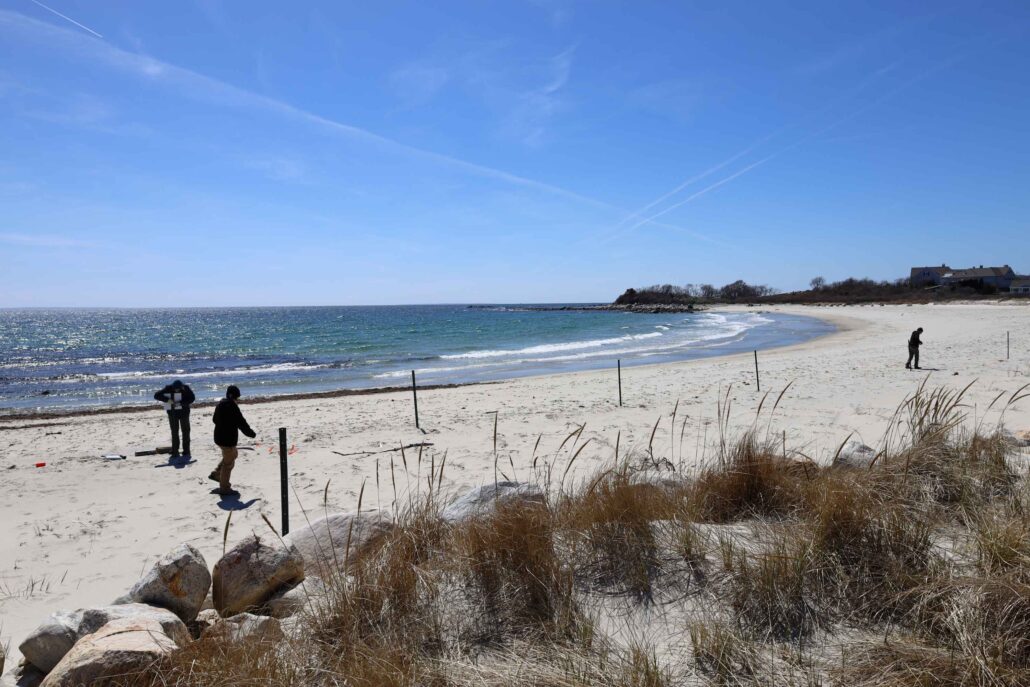
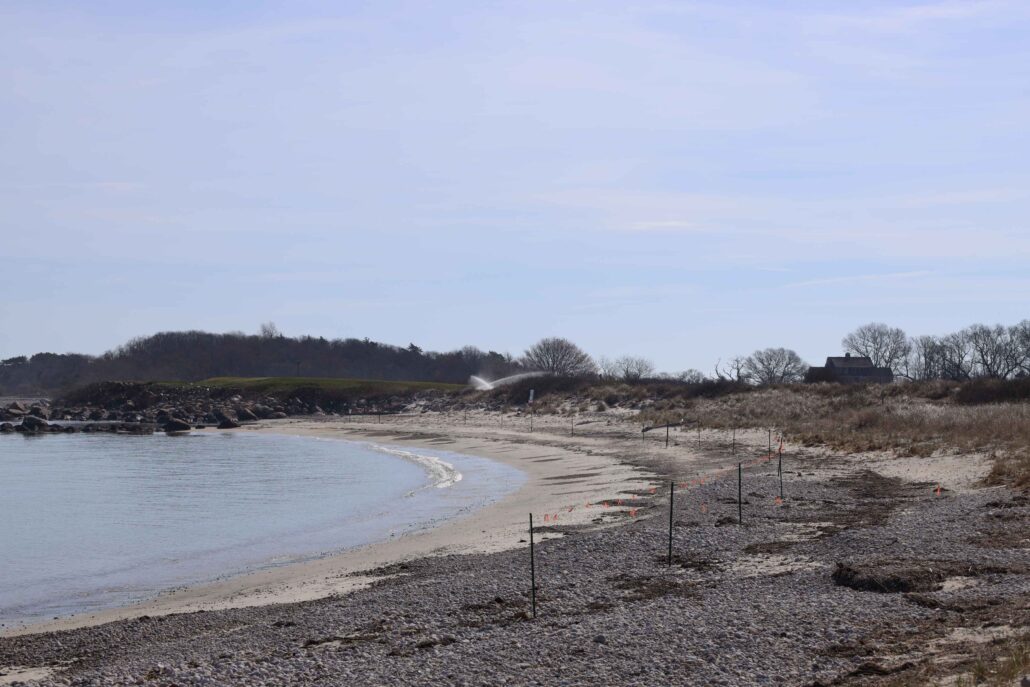
On April 9th, we were joined by New York State DEC team members Lauren Smith and Matthew Bauer, who came out to help us install symbolic fencing at a few key beach sites. With their help, fencing is now up and will stay in place through the nesting season!

This year, fencing has been installed at:

  • Big Club Beach
  • South Beach (near the Sanctuary of Sand / airfield area)
  • Eighth Hole

These are some of the most active nesting areas on the island, and protecting them gives birds a much better chance at successfully raising their chicks.

Installing fencing at the end of Big Club Beach with NYSDEC

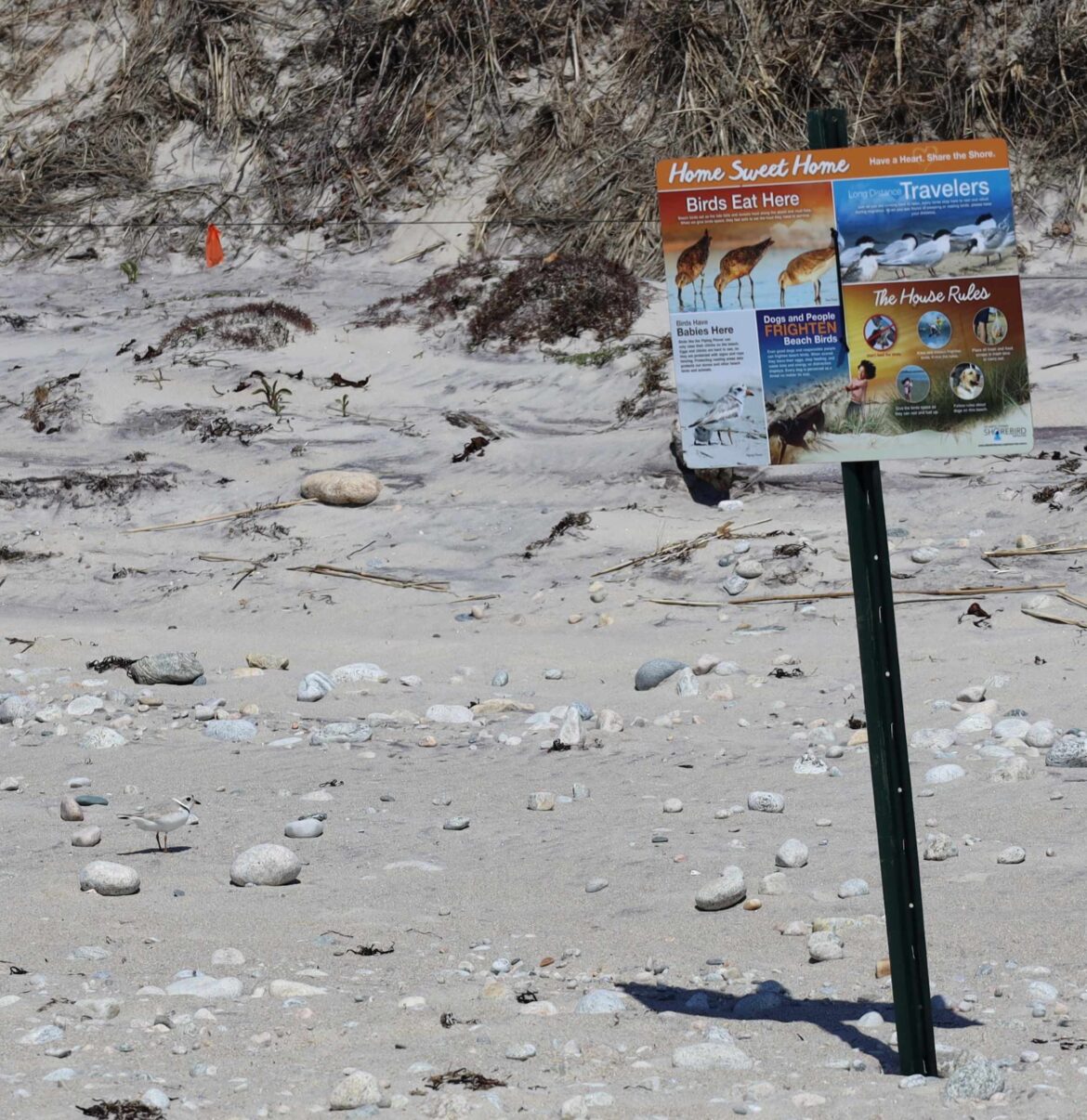
If you’ve seen the rope lines with posts, flags, and signs, that’s what we call symbolic fencing. This is there to mark areas where birds are nesting or likely to nest, and to gently remind us to give them space. These birds nest directly on the sand, often in spots that are almost impossible to see. Even walking through the area once can accidentally disturb a nest or separate chicks from their parents.

Right now is the most important time of year for these birds.

Piping plovers and least terns are trying to nest, hatch, and raise their chicks over the next few months. If things go smoothly, most chicks will be up and flying by July. If nests fail, they may try again, which can stretch the season a bit longer.

Giving them space during this window makes a huge difference!

How you can help!

It’s simple, and it really does matter:

  • Stay outside of fenced areas
  • Keep dogs leashed near nesting sites
  • Give birds space if you see them on the beach

You might notice some new signs this year along with the fencing. These are there to help explain what’s going on and why these areas are protected.

We know these beaches are meant to be enjoyed, and the goal is always to balance that with giving wildlife the space they need during a really important time.

It’s pretty special that these birds choose to nest here. With just a little awareness, we can make sure they keep coming back!

Symbolic fencing at Eighth Hole beach

If you ever have questions, feel free to reach out to Anna White at annarwfic@gmail.com 

To learn more about what Fishers Island Conservancy is doing click here 

Thanks for being part of it!

April 23, 2026 267 views
Newer Posts
Older Posts

Upcoming Events

Notice
There are no upcoming events.

Keep in touch

Facebook Instagram Youtube

Recent Posts

  • Fall Migratory Bird Count 2026 – Date Change Notice!

  • An Invasive Spotted Lanternfly Was Found on Island – Time to Take Action!

  • June 2026 Breeding Bird Count

  • What to Do if You Find a Stranded Animal

  • Update on Phragmites Work and New Wetlands Regulations

  • SPOTTED in New London!

  • 2025 Fall Migratory Bird Count Results

  • Fall 2025 Migratory Bird Count

  • FIRST Summer Highlights 2025

  • Buzz Be Gone- Final Spray of the Season

Explore

    • Home
    • Who We Are
    • What We Do
    • How To Help
    • News
    • Events

Connect

    • Join Us
    • Donate
    • Contact Us
Facebook Instagram Youtube
© 2026 All Right Reserved. Fishers Island Conservancy
<div class="ctct-inline-form" data-form-id="061f85ae-f375-4bdb-8f08-07d67d260f3b"></div>
Fishers Island Conservancy
  • Home
  • Who We Are
    • Our Mission
    • Our History
    • Our People
    • Contact Us
  • What We Do
    • Shorebird Monitoring
    • Annual Bird Counts
    • Marine Debris Clean Up
    • Island Sentinels
    • Research and Survey Team
    • Grassland Restoration
    • Mosquito Control
    • Invasive Plant Management
  • How To Help
    • Donate
    • Join Us
  • From the Field
  • News
  • Events
    • Calendar