
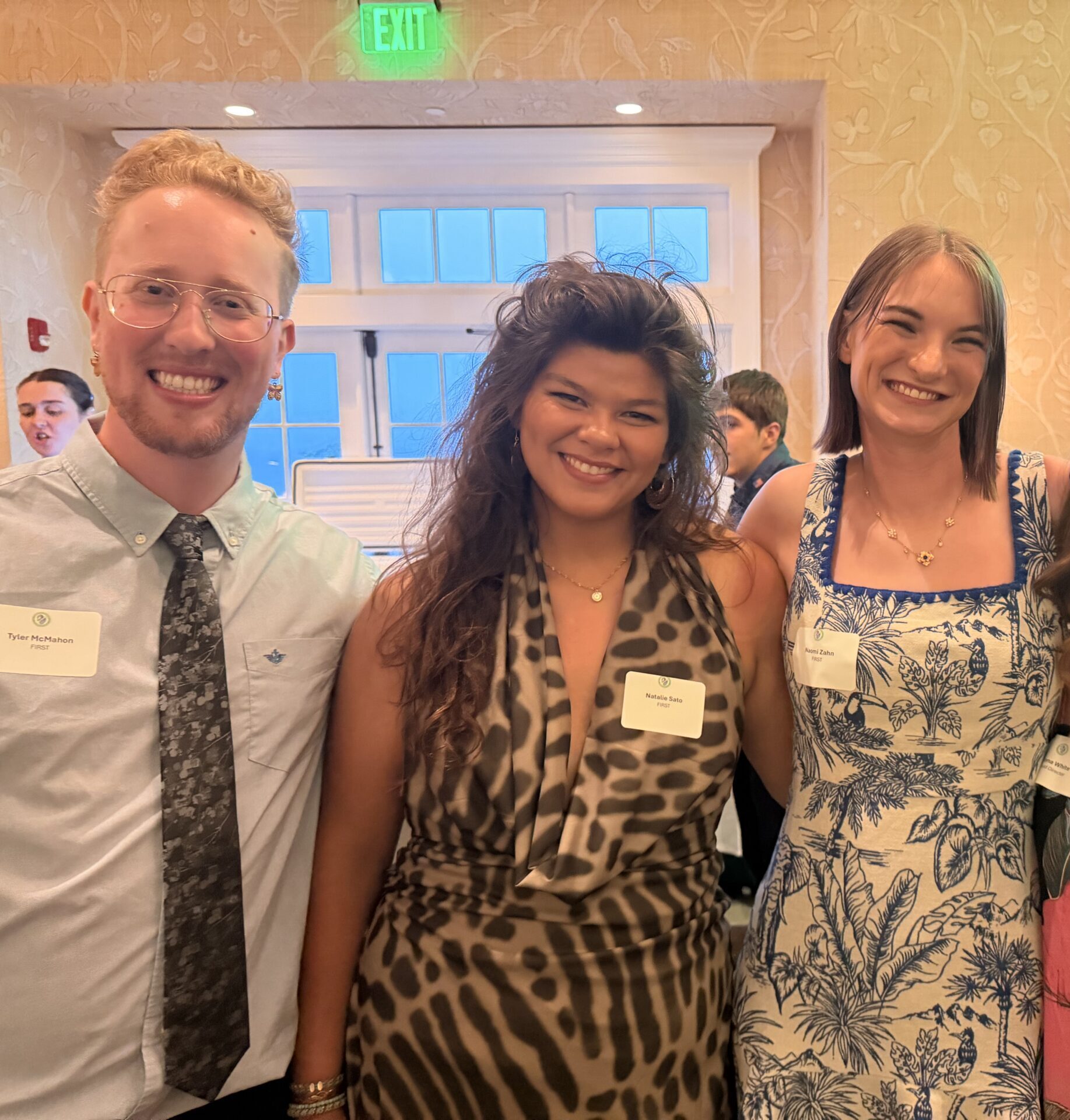
the 2026 FIRST Team
We’re excited to welcome the Fishers Island Research and Survey Team (FIRST) back for another summer on the island. The 2026 field season kicks off June 1st, and we’re looking forward to having a great group of students back out in the field!
Starting in 2024, the Conservancy piloted the FIRST program in collaboration with Tarleton State University and Dr. Adam Mitchell, bringing students from Texas to Fishers Island to take part in hands-on conservation work and ecological research.
FIRST itself grew out of the Conservancy’s earlier Weed Team program, which focused on hands-on invasive species removal across some of the island’s most sensitive habitats. That work laid the groundwork for what FIRST is today.
Over the course of the summer, FIRST students help with everything from monitoring wildlife and tracking biodiversity to managing invasive species and supporting habitat restoration efforts across the island.
Meet the 2026 FIRST Team
This year’s team includes a mix of returning students and new faces, and we’re excited to introduce them!
Tyler McMahon returns as the FIRST team lead and is currently a PhD student in Wildlife and Natural Resources working in partnership with the Fishers Island Conservancy.
His research focuses on long-term grassland biodiversity and how management decisions shape insect communities over time. Before coming to Fishers Island, Tyler studied the effects of bison reintroduction in Illinois tallgrass prairies, looking at how large grazers influenced moth diversity.
On Fishers Island, Tyler leads field surveys, supports invasive species management, and continues expanding the program’s insect monitoring efforts, including nocturnal sampling. His work builds on earlier datasets while helping to track how vegetation change and restoration efforts are influencing biodiversity across the island.
In addition to his research, Tyler works closely with the undergraduate team, guiding student projects and helping connect their work to the broader goals of the program. His background in insect ecology, especially his interest in moths and butterflies, continues to shape and strengthen the Conservancy’s growing monitoring efforts.

Naomi Zahn is returning to Fishers Island for her third field season with FIRST. She is a Senior at Tarleton State University studying Wildlife Sustainability and Ecosystem Science, with a minor in Entomology.Passionate about insect–plant interactions, Naomi has focused her research on how invasive species management practices affect arthropod communities. Her work on Fishers Island has contributed to a growing understanding of how restoration efforts influence insect diversity over time.Before transferring to Tarleton in 2024, Naomi attended the University of Texas at San Antonio and spent two years working as a dolphin trainer at SeaWorld San Antonio. She has a strong interest in invertebrate ecology and plans to continue building on her research experience this summer. Naomi hopes to pursue a career as a wildlife biologist, with a focus on entomological interactions in natural systems.
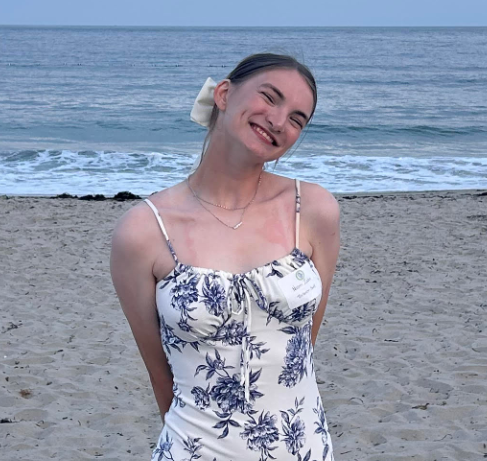
Natalie Sato is a Junior at Grinnell College, where she is pursuing a double major in Biology and Studio Art. She brings a strong interest in restoration ecology, plant communities, and the role of invasive species in shaping ecosystems.
Natalie has experience working in prairie systems, including identifying and removing invasive plant species and studying biodiversity across restored landscapes. She has also worked as a research assistant studying soil ecology and carbon cycling, giving her a broader understanding of how plant and soil systems interact.
Her academic and field experience reflect a focus on sustainability and environmental change, particularly how ecosystems respond to management and disturbance. During her time on Fishers Island, she is excited to continue developing her skills in plant identification and contribute to ongoing restoration work.
Outside of her academic work, Natalie enjoys backpacking and playing both the saxophone and violin.
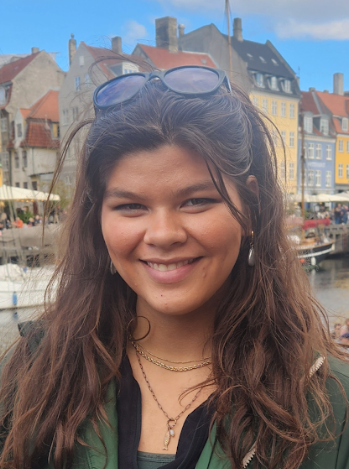
The 2026 FIRST Team: Season Findings
The 2026 field season marked the third year of the FIRST program on Fishers Island, and in many ways it was the most significant yet. From birds and bats to insects, plants, and soils, the team spent the summer collecting data that will help us better understand how the island’s ecosystems are changing and how conservation efforts can support them into the future.
Here is a look at what the team worked on and what they found this season.
Tyler McMahon
Three-Year Plant-Insect Study: A Major Milestone
This season marked the completion of FIRST’s three-year plant-insect study, one of the program’s most ambitious long-term efforts. Over the summer, Tyler and the team completed 15 vegetation transects, 150 pitfall traps, 75 vacuum samples, and 75 vegetation plots, adding a full third year of data to what is now a comprehensive ecological dataset.
With all three years now in hand, Tyler will begin the full analysis this fall. The results will eventually be paired with similar research conducted on Fishers Island about ten years ago, giving us a rare opportunity to compare how the island’s plant and insect communities have changed over the past decade and how restoration and management work may be shaping those changes. Results will be shared with the community as they become available.
The team also continued the annual breeding bird surveys throughout June and July, adding another season to a dataset that now spans 14 years. Formal analysis of that long-term bird data will also begin this year, looking at population trends and how different species are faring across the island’s habitats over time.
Bat monitors were deployed again this summer across the island. Tyler is working with a collaborator to confirm species identifications from the recorded calls, and results will be shared once finalized.
Naomi Zahn
What Happens to the Bugs When the Knotweed is Mowed?
Now in her third and final season with FIRST, Naomi continued her investigation into how Japanese knotweed management affects arthropod communities in the Parade Grounds. While most invasive species management focuses on the plants themselves, Naomi’s work asks what happens to the insects, spiders, beetles, and other ground-dwelling creatures when knotweed is disturbed or removed.
This season, Naomi established ten sampling sites within areas of 100% knotweed cover, collecting arthropods from the foliage using vacuum sampling and deploying pitfall traps at each site. After completing her pre-mow sampling, the team coordinated with Race Rock Garden Company to get the Parade Grounds mowed, then waited a full month before returning for her second round of sampling to allow arthropod communities time to respond.
Her results showed that while mowing did not significantly change the overall diversity of arthropods present, it did shift which types were most common. Mowed areas showed more plant-eaters and predators, a shift that can ripple outward and affect things like pollination and nutrient cycling across the broader ecosystem.
This was Naomi’s third and final season with FIRST. She graduated from Tarleton State University this summer and we could not be more proud of everything she has contributed to this program. We cannot wait to see where her career in wildlife biology takes her next.
Natalie Sato
What Invasive Plants Leave Behind
Natalie joined FIRST for the first time this season, coming to Fishers Island from Grinnell College in Iowa, and she brought a research project that asked a question we have not explored before: does knotweed keep affecting the soil even after it is gone?
Her work focuses on allelopathy, a process by which invasive plants release chemical compounds into the soil that can suppress the growth of native plants long after the invader has been removed or managed. Natalie collected soil from four different site types around the Parade Grounds, areas actively dominated by knotweed, sites that have been mowed, sites that have been chemically treated, and native reference grasslands, and is growing two native plant species, black-eyed Susan and Virginia wild rye, in each soil type to measure how well they germinate and grow.
Half of each soil sample was also treated with activated carbon, which absorbs harmful chemical compounds, helping confirm whether lingering knotweed chemistry is actually causing any differences in plant growth. Her results could have real implications for how restoration efforts approach reseeding and soil management after invasive removal on the island.
Natalie also got a new project underway investigating the island’s seed bank, the dormant seeds sitting in soil that could play a role in native plant recovery after restoration work. Around 250 topsoil samples were collected on island, with an additional 150 samples brought back to Grinnell for further analysis.
What the Team Built Together
Beyond their independent research, the team started a Plants of Fishers Island pressed-plant collection this season, preserving examples of plants found across the island as a lasting educational and identification resource for the community. They also pitched in on piping plover and least tern monitoring in collaboration with the New York State DEC and the Long Island Colonial Waterbird and Piping Plover Survey, and volunteered across three major community events including Pollinator Pathways, Ferry Park, and FI Seagrass, contributing more than 36 hours of community volunteer time.
The team wrapped up the season and departed the island on August 2nd. Some of this year’s projects are just getting started, while others are bringing several years of fieldwork into analysis. Together they are building a long-term scientific picture of Fishers Island’s plants, insects, birds, bats, soils, and habitats, one that will help guide conservation decisions for years to come.
Thank you to Tyler, Naomi, and Natalie for another outstanding season, and to the Fishers Island community for continuing to support this work.