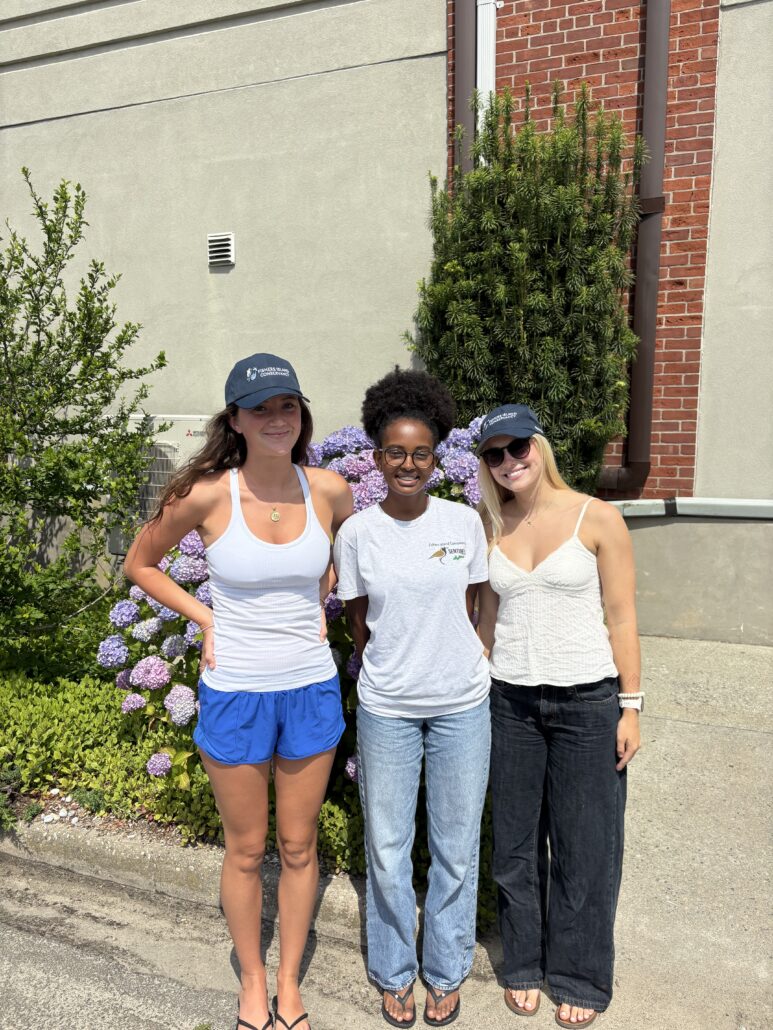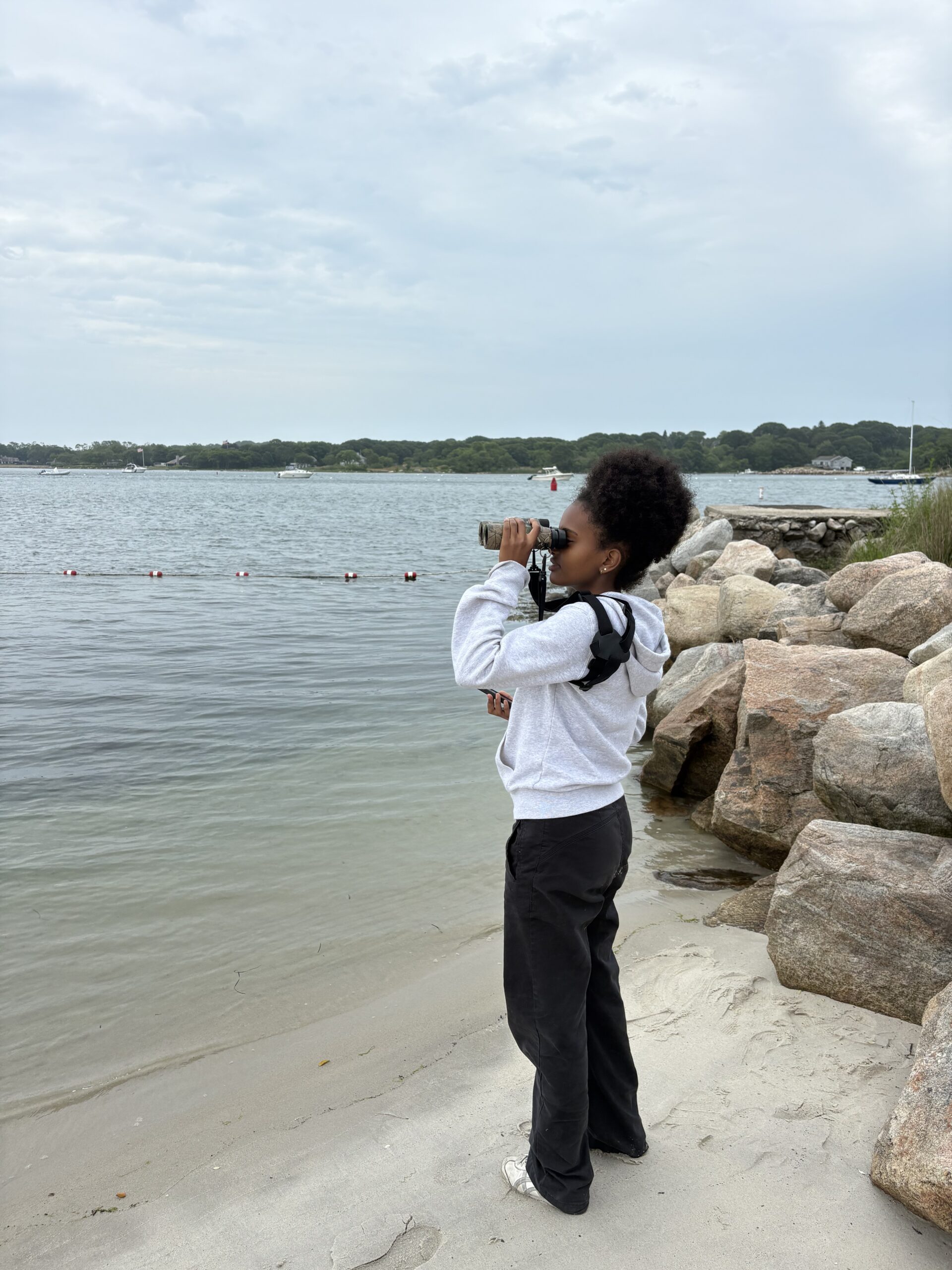
This summer marked a meaningful shift for the Island Sentinel Program. After a thorough review of the historical dataset going all the way back to 2018, one thing stood out clearly: over 70% of everything ever recorded by Sentinels was bird related. So for 2026 we leaned into that. Sentinels were assigned specific sites, given standardized routes, and asked to focus primarily on bird and wildlife observations. The goal was cleaner, more consistent data that could actually be compared over time.
Here is what the season produced.
The Numbers
- 89 field visits logged across all 10 monitoring sites
- 38 unique species recorded
- An estimated 1,263 individual birds observed between June and mid August
Where Sentinels Spent Their Time
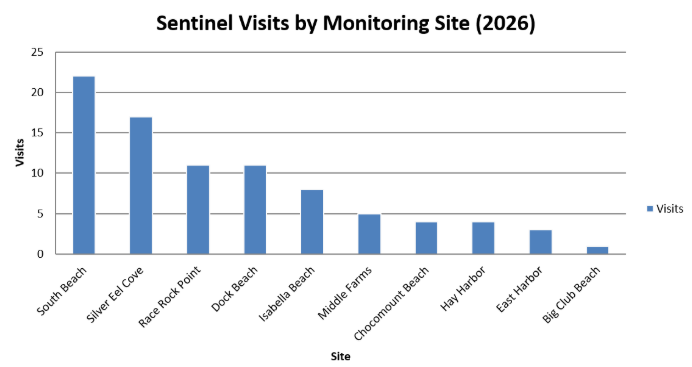
South Beach and Silver Eel Cove saw the most consistent coverage this season, together accounting for nearly half of all visits. Race Rock Point and Dock Beach were also well covered. A few sites like Big Club Beach and East Harbor received lighter coverage this season, which is useful information in itself as we think about how to structure site assignments going forward.
What Was Seen
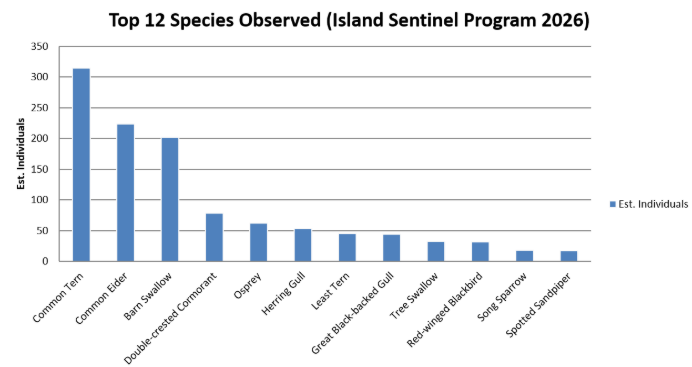
Common Tern, Common Eider, and Barn Swallow made up the largest share of individual birds recorded this season, which makes a lot of ecological sense. All three are highly social species that gather in large groups, so a single visit can turn up dozens or even over a hundred individuals at once. On more than one occasion Sentinels recorded over 100 Common Terns feeding together in a single fish boil.
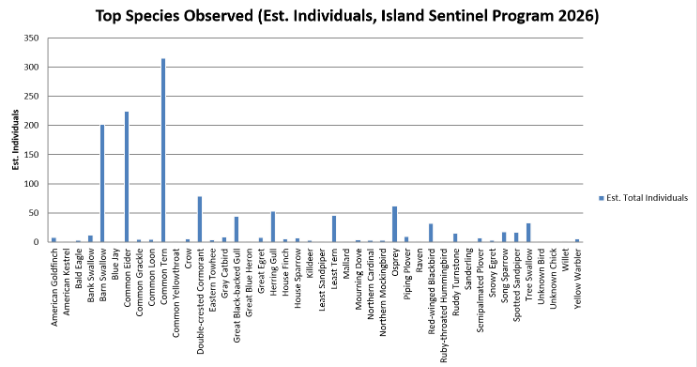
Beyond those top three, the species list tells a story about the range of habitats the program covers. Osprey, Double-crested Cormorant, Herring Gull, Least Tern, Great Black-backed Gull, Tree Swallow, Red-winged Blackbird, Song Sparrow, and Spotted Sandpiper all showed up consistently across sites, reflecting the mix of open water, shoreline, marsh, and upland environments the 10 monitoring sites collectively cover.
A handful of species were recorded outside the standard dropdown in the field form, including Bald Eagle, Ruddy Turnstone, Sanderling, and American Kestrel, all logged in the notes field by Sentinels who knew what they were looking at. Those will be added to the species list for next season.
What Comes Next
Next season we will build directly on this foundation, refining site assignments, expanding the species list, and continuing to grow what is becoming a real long term record of bird life across Fishers Island.