Fishers Island Conservancy
  • Home
  • Who We Are
    • Our Mission
    • Our History
    • Our People
    • Contact Us
  • What We Do
    • Shorebird Monitoring
    • Annual Bird Counts
    • Marine Debris Clean Up
    • Island Sentinels
    • Research and Survey Team
    • Grassland Restoration
    • Mosquito Control
    • Invasive Plant Management
  • How To Help
    • Donate
    • Join Us
  • News
  • Events
    • Calendar
Monday, August 10, 2026
Fishers Island Conservancy
  • Home
  • Who We Are
    • Our Mission
    • Our History
    • Our People
    • Contact Us
  • What We Do
    • Shorebird Monitoring
    • Annual Bird Counts
    • Marine Debris Clean Up
    • Island Sentinels
    • Research and Survey Team
    • Grassland Restoration
    • Mosquito Control
    • Invasive Plant Management
  • How To Help
    • Donate
    • Join Us
  • News
  • Events
    • Calendar
Fishers Island Conservancy
  • Home
  • Who We Are
    • Our Mission
    • Our History
    • Our People
    • Contact Us
  • What We Do
    • Shorebird Monitoring
    • Annual Bird Counts
    • Marine Debris Clean Up
    • Island Sentinels
    • Research and Survey Team
    • Grassland Restoration
    • Mosquito Control
    • Invasive Plant Management
  • How To Help
    • Donate
    • Join Us
  • News
  • Events
    • Calendar
Copyright 2026 - All Right Reserved
News

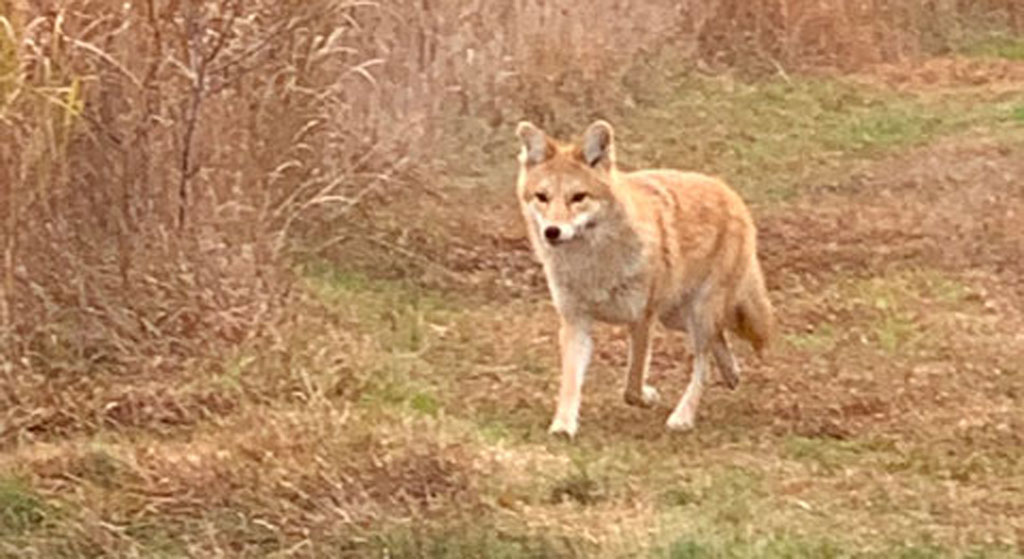
Coyotes Have Made a Home on Fishers Island

by Betty Ann Rubinow December 5, 2020

Coyote at night, Fishers Island. Dave Denison Photo

Story originally published Oct. 20, 2020, Southampton Press, 27east.com

By Mike Bottini

Last week, I had the pleasure of spending two days on Fishers Island, the easternmost of an archipelago of islands including Plum, Great Gull and Little Gull, located two miles south of the coast of Connecticut and 10 miles from the closest points to Long Island (Montauk and Orient). Despite its proximity to Connecticut, and sole ferry link to New London, it falls under the jurisdiction of Southold Town, Suffolk County, New York State.

A relatively small piece of glacial moraine, Fishers is a long, narrow piece of land measuring six miles in length and between 1.5 and 0.5 miles in width, with a total land mass of four square miles. For East Enders, by comparison, Shelter Island has 10 square miles of terra firma.

I had last visited the island in 2013, when I surveyed its fresh and tidal waterways for sign of the North American river otter. This time, my quarry was the Eastern coyote.

With the help of Ferguson Museum’s director, Pierce Rafferty, and island resident Terry McNamara, I had mapped several areas that they suggested I focus my survey efforts. Naturalist Tracy Brock, Dartmouth undergrad McKenna Gray, and James Hilton, an undergrad from Columbia University who is interning with the Long Island Coyote Study Group this fall, joined me in the field for day one.

Our goal was to determine suitable sites to collect coyote scats for a year-long study of Fishers’ coyote population. The scats were destined for a laboratory at the American Museum of Natural History, where staff mammologists and geneticists would analyze the material to determine the island coyotes’ diet, which shifts over the year, and the number of coyotes residing on the island.

DNA “fingerprinting” of these coyotes would also enable us to determine the source of the eastern Long Island coyotes: Did they trek east from Queens, bypassing lots of suitable, unoccupied habitat, or did they manage to swim the archipelago from Fishers to Orient?

Our first stop was the large grassland area on the western end of the island, called the “Parade Grounds,” adjacent to the small airport. We managed to collect four scats. All were composed of fruit and berry material, in stark contrast to all the scats collected from Long Island sites this summer and fall, which were entirely fur and bones.

Tracy Brock confirmed the Fishers coyotes’ appetite for fruit: Every single pear disappeared the night before she planned to harvest the fruits on her two quite small pear trees. There wasn’t a single pear left behind — and they had the nerve to leave pear-loaded scats along the adjacent driveway!

We also learned some interesting anecdotal information about the island’s fauna. On Fishers, deer hunters actually outnumber deer this year, and as deer hunting season approaches, the days are numbered for the one deer that resides on the island.

American mink, another Mustelid related to the otter, have found their way onto the island, and in recent years they have obviously bred successfully and are quite commonly seen.

Eastern cottontails, on the other hand, once the most commonly seen four-legged, wild mammal on the island, is no longer as plentiful. Most residents seem to suspect the coyote for that, but the mink is quite capable of making a dent in a relatively small island’s rabbit population.

What most surprised me was the notion that another Mustelid, the fisher (Pekania pennanti), has been sighted on the island. Also known as the fisher cat, despite its common name it does not fish for food and it does not share its otter and mink relatives’ penchant for swimming.

My sense is that, with only a slight difference in body length, the dark brown mink has been occasionally identified as the similarly shaped and colored, but larger, fisher.

We did not have as much luck searching the edges of the golf course property on the east end of the island, until we ran into a woman at one of the island’s trailheads. She directed us to a wooden bridge on the golf course, where we scraped a scat with fur, bones, claws and teeth into our collection bag. A nickel-sized ball of fur wedged firmly between two planks was a challenge to retrieve but was worth the effort: Inside was a small rodent skull.

Lunch break was well-timed, as a soaking torrent of rain passed over the island. Next stops were focused on wooded and grassland areas located in the middle of the island, appropriately named the “Middle Farms.” This area included several otter scent stations, which we checked, finding fresh scats composed of bones and scales, the latter measuring 1/16th of an inch in diameter, and most likely representing the remains of the ubiquitous mummichogs and striped killies that otters found in the adjacent tidal pond.

The earlier downpour seemed to prompt spring peepers out of their daytime resting spots, as a surprising number were noted moving atop the wet leaves of the forest floor. I’m not sure when this hardy, cold-tolerant, 1-inch-long tree frog commences its winter dormancy beneath an insulating layer of leaves, but the cold front may have prompted many to start searching for appropriate winter quarters.

Day two’s goal was to train interested island residents in the relatively simple process of collecting scat. Most important were measures to ensure that the genetic material in the scat did not get contaminated, and noting several key pieces of information on each collection bag.

Before setting out, we ran into Pierce Rafferty and a group of birders, all excited that the previous night’s cold front would prompt many birds to pass over the island en route to their southern wintering grounds. We later confirmed that they had a spectacular “hawk watch,” with kestrels, our smallest falcon, topping the list at 40 sightings for the day.

Two Fishers Island teachers were among the trainees, and they planned to get their students involved in the project. By day’s end, we had collected a total of 12 coyote scats and left the school with a remote camera for the students to experiment with. Perhaps they will prove me wrong and capture an image of a fisher.

In any event, the Fishers Island component of the coyote study is off to a great start.

December 5, 2020 140 views
News

New Fluorometer Meter Boosts Oceanography Studies at Fishers Island School

by Betty Ann Rubinow October 6, 2020

Fishers Island School Oceanography students use fluorometer donated by FIConservancy. Carol Giles Photo

FIConservancy has provided a grant to Fishers Island School to purchase a fluorometer, already in use by Oceanography students.

The meter will enable these students to measure phytoplankton population density. Quantifying seasonal changes in density will spark student discussion of how environmental factors such as temperature, fertilizer runoff and light intensity affect growth. This, in turn, will engage student learning and awaken their concern for the environment, said science teacher Carol Giles in a letter to FIConservancy.

“FIConservancy has supported the Fishers Island science program for many years,” Mrs. Giles said in her letter. “Your past purchase of binoculars has allowed our Oceanography class to enumerate the FI seal population and graph its variance throughout the year. The carbon dioxide and oxygen probes are again being utilized to further explore fauna carbon sequestering.”

The fluorometer grant comes from FIConservancy’s 25th Anniversary Grant Fund founded in celebration of 25 years of preserving and protecting our Island’s environment.

October 6, 2020 158 views
EventsNews

Join Us for the Fall 2020 Migratory Bird Count

by Betty Ann Rubinow September 14, 2020

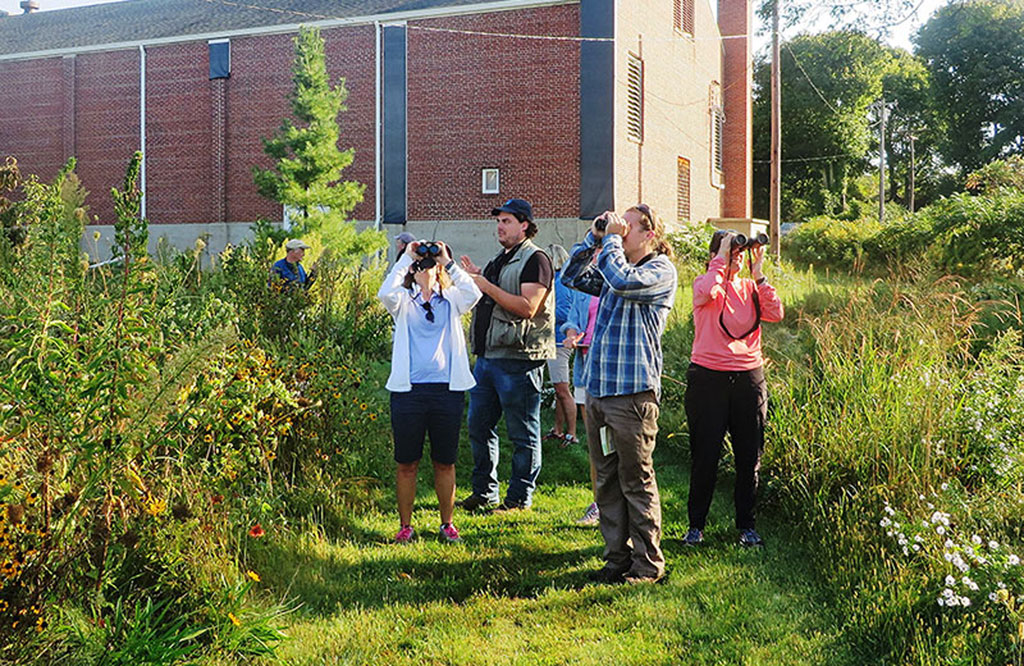
John Thatcher Native Garden (formerly Demonstration Garden) is a busy third stop during the Fall Migratory Bird Count.

Mark your calendars for the 2020 Fall Migratory Bird Count Saturday Sept. 19, 8 a.m.-10:30 a.m. Meet at the Island Community Center. Bring binoculars. Masks required.

Following Audubon bird count rules, birders will make 15 five-minute stops from West End to East End. At each timed stop, birders count birds and call out what they see.

The fall 2019 bird count began under overcast skies, with thick clouds and fog, but the weather this Saturday is predicted to be sunny, in the 60s!


September 14, 2020 113 views
Island SentinelsNewsSentinel Archives

2020 Island Sentinels

by Betty Ann Rubinow August 14, 2020

2020 Island Sentinels (l-r): Caroline Toldo, Nicolas Hall, Izzie Reid, Wilson Thors, Gardner Thors, Betsy Conger and Alexa Rosenberg. (Marc Rosenberg missing from picture.) Stephanie Hall Photo

FIConservancy’s Island Sentinels program, established in 2014, provides environmentally passionate students from both Fishers Island School and the seasonal community the opportunity to observe and monitor flora, fauna, insects, marine life and birds across the Island. This experience, combined with discussion and guidance, is creating future stewards of our environment.

Betsy Conger, 18, lives in Stonington, Conn. She will be a freshman at Sewanee: The University of the South this fall and plans to major in Biology. She is an alumna of Fishers Island School, where she attended 6th-12th grade, commuting daily via ferry.

Betsy’s interest in environmental studies started in science classes, where teachers utilized the Island as a living laboratory. She was intrigued by the Island’s ecology and became an Island Sentinel to learn more about the environmental work taking place here. Betsy volunteered as a Sentinel in 2016 and 2017, before officially working as a Sentinel in 2018, helping to monitor ecological sites across the Island.

In the summer of 2018 and 2019, Betsy participated in the Sewanee Environmental Institute (SEI), where she learned about ecosystems, plant and animal species, archeological techniques, GPS and GIS technology and conservation strategies that she shared when she returned to the Island. She also learned the importance of caring for the environment, not just on Fishers Island, but globally, because all ecosystems are interconnected.

Betsy’s environmental stewardship extends beyond FIConservancy. As chair of the environmental committee for the East Lyme Leo Club chapter, an internationally recognized youth volunteer organization, she designed and organized the distribution of reusable grocery totes. Over 400 bags were distributed to shoreline residents. 

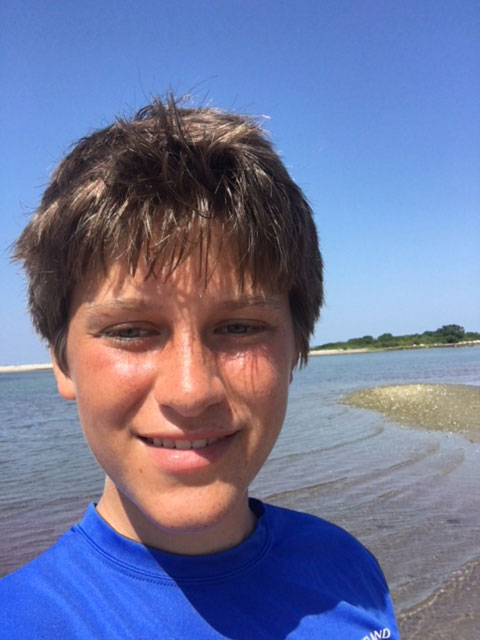
Nicolas Hall, 18, has lived on Fishers Island his whole life and is a sophomore at Dalhousie University in Halifax, Nova Scotia, where he is majoring in Oceanography. This is his third year as an Island Sentinel, including one winter of volunteering. Nick has a passion for the ocean whether sailing, fishing, spearfishing or simply going to the beach. He loves to monitor sites and immerse himself in Fishers flora and fauna. In addition to monitoring, Nick volunteers for the Fishers Island Seagrass Management Coalition helping them protect Fishers Island’s beautiful eelgrass meadows. Nick looks forward to furthering his knowledge and understanding of wildlife on and around the Island.


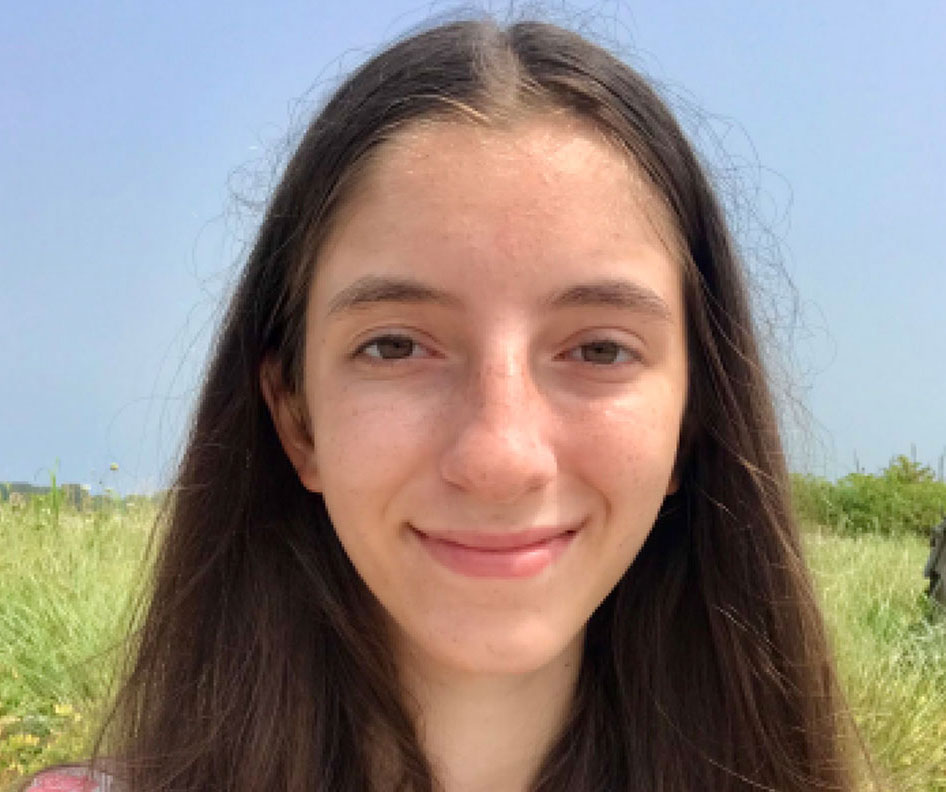
Isabelle “Izzie” Reid is a rising junior at Elon University majoring in Strategic Communications with a minor in Human Services. She is new to the Island Sentinels team this summer, but Fishers has been a part of her life for over 20 years. Isabelle went to Tabor Academy, where she studied Environmental Science, Oceanography, Fish & Fisheries. Her years by the sea instilled an appreciation for marine wildlife. Over the past couple months, Isabelle has enjoyed discovering more of our Island wildlife through the Island Sentinels and Seagrass Management Coalition programs and looks forward to exploring more of the Island!

Alexa Rosenberg, 15, is a sophomore at Hunter College High School in New York City. She started as an Island Sentinel in the summer of 2019 and is very grateful for all the wonderful experiences she has had with the team. She has been coming to Fishers Island for as long as she can remember and has enjoyed learning about the fascinating Island wildlife. Alexa appreciates that the program has helped her to take a more active role in the protection and preservation of the Island.

sentinel

Marc Rosenberg, 16, lives in New York City and is a junior at Bronx High School of Science. 2018 was his “volunteer” year and first summer as an Island Sentinel. He joined the Sentinel program because he was interested in sea life and wildlife on Fishers Island.

Marc’s interest in sea life was sparked when he vacationed in Greece and observed a multitude of fish through his goggles. After that experience, Marc became increasingly curious about wildlife on and around Fishers Island. His trip to Costa Rica helped him experience more underwater life and renewed his passion for marine biology. This summer, Marc hopes to continue monitoring as well as working on monitoring water quality for the Fishers Island Seagrass Coalition.

Marc enjoys spending time under water and made a video of seagrass off the coast of Fishers Island. See Marc’s video.

Gardner Thors, 18, lives in New York City and is a freshman at Colgate University in Hamilton, New York. This is his seventh summer as an Island Sentinel, after volunteering for one summer. Throughout his childhood, growing up in the urban environment of Manhattan, Fishers Island has been his natural sanctuary. Gardner has been summering here for as long as he can remember, and Fishers holds a special place in his heart. That is why he chose to play a part in the preservation of this environment. With eight years of environmental preservation experience on the Island and schooling in ecology, conservation biology and other areas of environmental studies, Gardner looks forward to sharing his experiences and what he has learned with the Island community, as well as to continue to gather crucial data about the ever-changing ecology of Fishers Island. His brother, Wilson, is also a passionate Sentinel.

Wilson Thors lives in New York City and is a rising Junior at Groton School in Massachusetts. 2017 was his first summer as a Sentinel, although he volunteered to monitor for FIConservancy the year before. Initially, he joined the Island Sentinel program because he was curious about his brother’s experiences as a Sentinel and wanted to take an active role in supporting the environmental community of Fishers Island.

Through his two years as a Sentinel, Wilson has not only learned more about the ecological trajectory of Fishers Island, especially concerning the eelgrass meadows, but also how to direct it forward. Wilson has always appreciated the natural beauty of Fishers Island, but now he has a deeper love of the Island since learning more about the wildlife and learning that we share such a great Island with it.

Caroline Toldo is a third-year student at Loyola University Chicago, double majoring in Environmental Studies and Environmental Policy with a minor in Environmental Activism and Leadership. She lived on Fishers Island from the age of 12 and graduated from Fishers Island School in 2018. Caroline is looking to further educate herself on the humanitarian side of the ecological crisis, aiming to learn how to spread awareness. She is interested in furthering her education by getting a masters degree in Oceanographic Studies.


August 14, 2020 173 views
News

Pest and Pest Control Wrapped in One Package

by Betty Ann Rubinow August 7, 2020

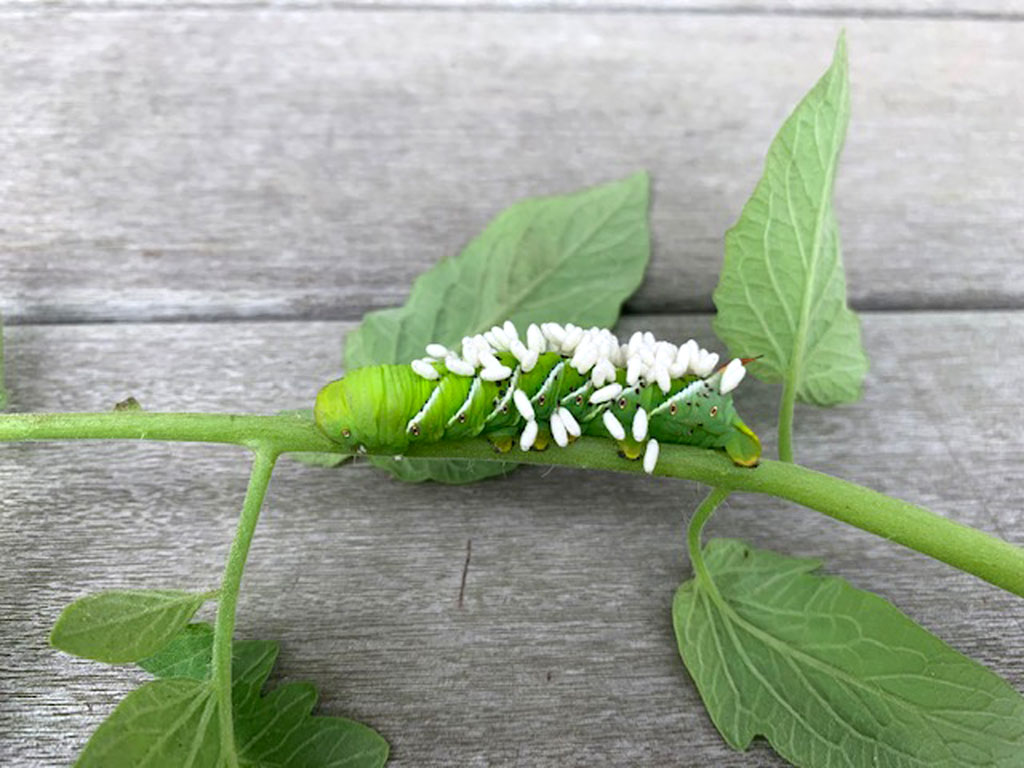
Tobacco hornworm caterpillar coated with parasitic wasp cocoons. Jane Crary Photo

Masters of camouflage, the tobacco hornworm caterpillar is a garden pest that can overnight devour entire leaves of their favored plants, including tomatoes, eggplant, peppers and tobacco.

The clusters of white silky pods covering the caterpillar are cocoons of tiny parasitic wasps. (Not the kind that bite.) The female wasp lays her eggs under the skin of the tobacco hornworm. As the eggs hatch, the larvae feed on the hornworm’s insides, eating their way out and spinning the cocoons.

When adult wasps emerge from the cocoons, the caterpillar dies. The above caterpillar will likely die in a week, according to entomologist Adam Mitchell, Ph.D.

“The parasitic moth is fairly common with these caterpillars, which used to feed exclusively on nightshade or tobacco, and the toxins in those plants helped the caterpillars reduce the likelihood of parasitism,” Dr. Mitchell said. “However, we’ve done a good job at removing plant defenses in tomatoes so we can improve fruit yield, and this has led to the caterpillars having no real defense against the wasps when they lay their eggs.”

Entomologists recommend leaving the cocooned caterpillar alone, because parasitic wasps control other garden pests including beetles, aphids, squash bugs, stink bugs and tent caterpillars.

The tobacco hornworm is also a “model organism” commonly used in neurobiology in a variety of biomedical and biological experiments, due to its easily accessible nervous system and short life cycle.

August 7, 2020 134 views
News

Four New Options Presented to Recoup Lost Revenue from “Sunset” Cancellation

by Betty Ann Rubinow July 30, 2020

In lieu of our popular event, “Sunset on the Beach”, FIConservancy is asking the Island community to consider supporting the four initiatives listed below. Canceling “Sunset” has caused a shortfall in revenue raised for these projects.

Your generosity in supporting any one of them
is greatly appreciated.
CLICK THE BUTTONS BELOW TO MAKE A DONATION
NEW LAND RESTORATION: There are land parcels on both the west end and east end of the Island that have been earmarked for restoration. In order to promote native plant growth, the parcels require clearing and removal of invasive plants.
NATIVE TREE INSTALLATION: Native trees attract native insects that are a critical food source for birds. Planting trees in west end locations will help increase and strengthen the native bird population on Fishers Island.
ISLAND SENTINELS PROGRAM: This program provides environmentally passionate students from both FI School and the seasonal community the opportunity to observe and monitor flora, fauna, insects, marine life and birds across the Island. This experience, combined with discussion and guidance, is creating future stewards of our environment.
TRACTOR: A new or used midsize 20hp-30hp tractor, ideally with a front end loader, a mower deck and a brush hog, will greatly enhance our ability to clear land restoration areas.

THANK YOU!

Sent as eBlast July 30, 2020
July 30, 2020 109 views
News

Fishers Island Osprey Nests Not Immune from Plastic Pollution Spanning the Globe

by Betty Ann Rubinow July 28, 2020

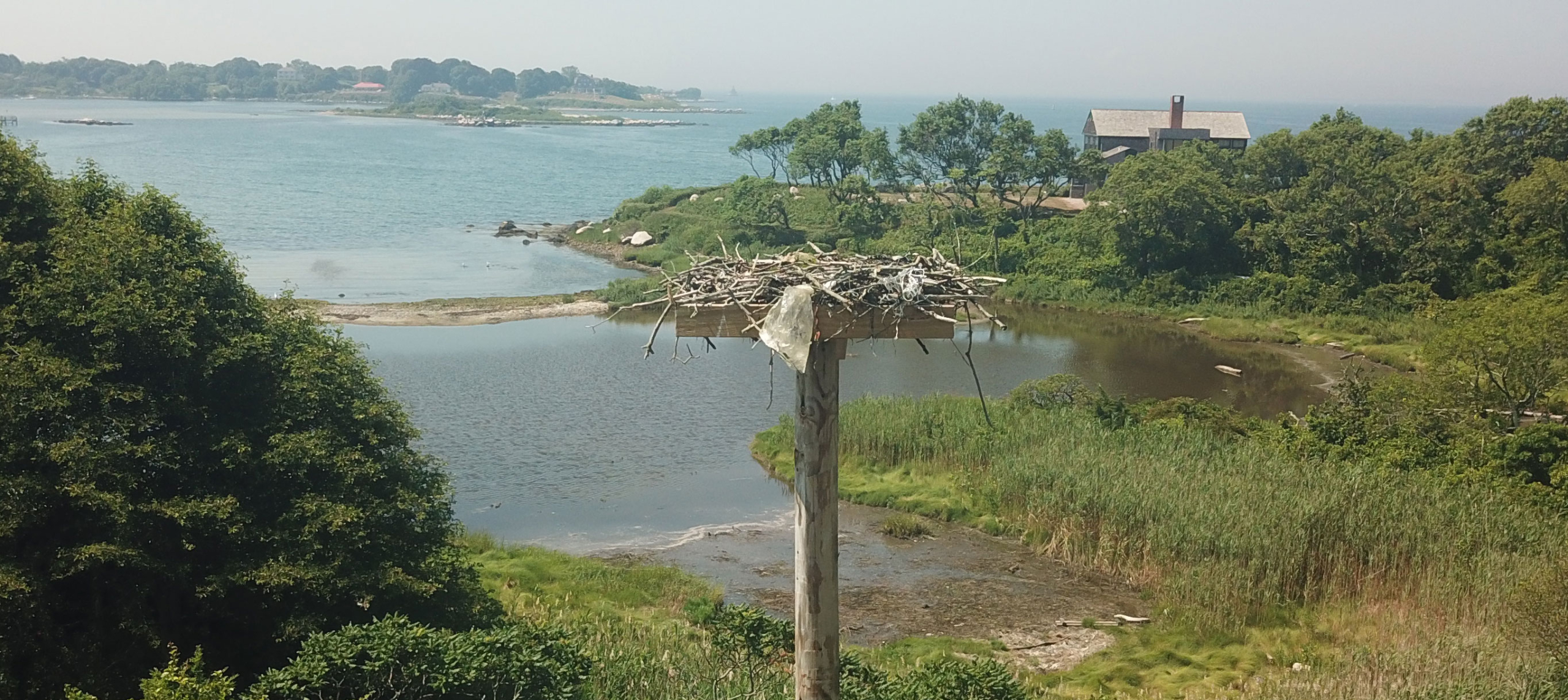
Plastic bag hangs off Osprey nest on North Hill Road. Jim Reid Photo

This osprey nest on North Hill Road is emblematic of the threat posed by the ubiquitous use of plastic. FIConservancy Board Member Marina Caillaud noticed the plastic bag plus “quite a bit of plastic” in the nest and balloon strings hanging from the nest.

Ben Wurst, of the Conserve Wildlife Foundation of New Jersey, noticed plastic in nests when he began working with ospreys in 2004. After years of work clearing plastic from osprey nests, he is seeing more plastic in nests than ever.

A recent Audubon web article reported that about 8.3 billion metric tons of virgin plastic has been produced since the 1950s, mostly to manufacture consumer products. Of that, 6.3 billion metric tons went unrecycled, with most of it ending up in landfills and the environment.

July 28, 2020 111 views
Beach CleanupNews

Filmmaker Creates Video Highlighting Marine Debris Cleanup Along Fishers Island Shores

by Betty Ann Rubinow July 28, 2020

Michele Klimczak is a lone figure as she traverses the shores of Fishers Island clearing marine debris for FIConservancy. This video is a gift from filmmaker Marisela La Grave to Michele and FIConservancy.

Marisela La Grave is a New York-based multimedia artist, producer, filmmaker and environmentalist, currently living on Fishers Island year-round. She created an eight-minute video, Oceanica 2020, as a personal present to the Fishers Island Conservancy.

“This video is a thank you note to FIConservancy for the joy its conservation efforts bring to Islanders throughout the year,” Marisela said.

“It started last summer when I met Michele Klimczak, who is employed by FIConservancy for marine debris cleanup. I was so impressed by her environmental passion, and that of her collaborators, that I wanted to create this video as a way of honoring and acknowledging them.”

The video follows Michele as she works to clear marine debris and explains what it takes to do her job.

“As a year-round resident, I’d very much like to inspire collaborations with like-minded people and organizations in the region, such as FIConservancy, and continue to produce videos and create online campaigns that may help educate and inspire all generations.”

“It would be great to see Fishers Island turn into a model of environmental and oceanic conservation,” Marisela said.

July 28, 2020 123 views
News

Thank you!

by Betty Ann Rubinow July 28, 2020
FIConservancy Board and Committee members gather in John Thatcher Native Garden July 21 for a collective thank you. Mere Doyen Photo
TO ALL OF OUR SUPPORTERS AND SPONSORS OF SUNSET ON THE BEACH
WE MISSED THANKING YOU IN PERSON DUE TO OUR CANCELED ANNUAL EVENT
BUT WE APPRECIATE YOUR GENEROSITY AND HOPE
YOU WILL CONTINUE TO SUPPORT OUR IMPORTANT INITIATIVES!
YOU’LL HEAR ABOUT THEM IN OUR NEXT POST!!
Sent as eBlast July 27, 2020
July 28, 2020 121 views
News

New Picnic Tables At Parade Grounds

by Betty Ann Rubinow July 23, 2020

New Picnic Tables At Parade Grounds

Picnic tables sit on concrete pads built for Ft. Wright. FIConservancy photos

Come to the Parade Grounds! The stage is set for fun family picnics amidst ocean breezes and serene meadows. FIConservancy has installed four picnic tables in the Parade Grounds to enhance the enjoyment of 175 acres of Fishers Island’s restored grasslands.

Three tables, one set for a picnic, sit at west end of Parade Grounds. The fourth picnic table is near final stop of Par Course, also at the west end.

VERY IMPORTANT: Please bring post-picnic trash bags to leave the sites as pristine as you found them.

How to Get There

(l) Access three picnic tables from concrete road. (r) Access fourth picnic table from par course.

Drive past Transfer Station. Park just past concrete road. Three picnic tables are 300 feet up the paved road on the left. To reach fourth picnic table, enter path to Par Course. Follow course to final stop. South Beach is just a short walk from parking area.

(Sent as eBlast July 22, 2020)

July 23, 2020 102 views
Newer Posts
Older Posts

Upcoming Events

Notice
There are no upcoming events.

Keep in touch

Facebook Instagram Youtube

Recent Posts

  • June 2026 Breeding Bird Count

  • What to Do if You Find a Stranded Animal

  • Update on Phragmites Work and New Wetlands Regulations

  • SPOTTED in New London!

  • 2025 Fall Migratory Bird Count Results

  • Fall 2025 Migratory Bird Count

  • FIRST Summer Highlights 2025

  • Shorebirds Take Flight- The 2025 Season Wrap-Up

  • Buzz Be Gone- Final Spray of the Season

  • Silver Eel–Race Point Coastal Trail Opens with Dedication to Janet Harvey

Explore

    • Home
    • Who We Are
    • What We Do
    • How To Help
    • News
    • Events

Connect

    • Join Us
    • Donate
    • Contact Us
Facebook Instagram Youtube
© 2026 All Right Reserved. Fishers Island Conservancy
Fishers Island Conservancy
  • Home
  • Who We Are
    • Our Mission
    • Our History
    • Our People
    • Contact Us
  • What We Do
    • Shorebird Monitoring
    • Annual Bird Counts
    • Marine Debris Clean Up
    • Island Sentinels
    • Research and Survey Team
    • Grassland Restoration
    • Mosquito Control
    • Invasive Plant Management
  • How To Help
    • Donate
    • Join Us
  • News
  • Events
    • Calendar