Fishers Island Conservancy
  • Home
  • Who We Are
    • Our Mission
    • Our History
    • Our People
    • Contact Us
  • What We Do
    • Shorebird Monitoring
    • Annual Bird Counts
    • Marine Debris Clean Up
    • Island Sentinels
    • Research and Survey Team
    • Grassland Restoration
    • Mosquito Control
    • Invasive Plant Management
  • How To Help
    • Donate
    • Join Us
  • News
  • Events
    • Calendar
Monday, August 10, 2026
Fishers Island Conservancy
  • Home
  • Who We Are
    • Our Mission
    • Our History
    • Our People
    • Contact Us
  • What We Do
    • Shorebird Monitoring
    • Annual Bird Counts
    • Marine Debris Clean Up
    • Island Sentinels
    • Research and Survey Team
    • Grassland Restoration
    • Mosquito Control
    • Invasive Plant Management
  • How To Help
    • Donate
    • Join Us
  • News
  • Events
    • Calendar
Fishers Island Conservancy
  • Home
  • Who We Are
    • Our Mission
    • Our History
    • Our People
    • Contact Us
  • What We Do
    • Shorebird Monitoring
    • Annual Bird Counts
    • Marine Debris Clean Up
    • Island Sentinels
    • Research and Survey Team
    • Grassland Restoration
    • Mosquito Control
    • Invasive Plant Management
  • How To Help
    • Donate
    • Join Us
  • News
  • Events
    • Calendar
Copyright 2026 - All Right Reserved
News

Successful 2019 Controlled Burn

by Betty Ann Rubinow May 2, 2019

The Fishers Island Fire Department (FIFD) conducted a successful controlled burn on selected sections of the Parade Grounds and Elizabeth Airport March 26. FIConservancy relies on FIFD volunteers to coordinate their ongoing training with annual prescribed burns necessary to maintain a healthy natural habitat.

The drill began on a clear evening with moderate wind speed…

Jane T. Ahrens reporting and photo.

May 2, 2019 102 views
EducationNews

FIConservancy Awards Grant to FI School Student and Island Resident Nicolas Hall

by Betty Ann Rubinow May 1, 2019


The Fishers Island Conservancy in February awarded Fishers Island School senior Nicolas Hall, The Edwin Horning Research Grant for Environmental Conservation to study the effect of acidifying sea water on the soft shells of oysters.

The grant enabled Nicolas to purchase equipment to acidify seawater and subject developing oysters to the acidic solution. His goal is to determine the potential future of shelled organisms living in acidifying sea water.

Nicolas is fortunate to live on Fishers Island where he sought the counsel of Steve Malinowski, owner of the nationally-recognized Fishers Island Oyster Farm. “Steve is supplying my oysters,” Nicolas said. “He walked me through feeding and caring for oysters, as well as how I can quantify my results.”

Nicolas, 17, the son of Stephanie and James Hall, grew up on Fishers Island attending Fishers Island School. His love of the ocean developed through the years, but it was a 10th grade oceanography class with science teacher Carol Giles that sparked his intense interest.

“I had a lot of fun in that class. Being around water all my life, it was natural that I would go into a field based on it,” Nicolas said. He will attend Dalhousie University in Halifax, Nova Scotia this fall, where he will study oceanography.

May 1, 2019 99 views
News

Tent Caterpillars

by Betty Ann Rubinow May 1, 2019

Tent Caterpillars!

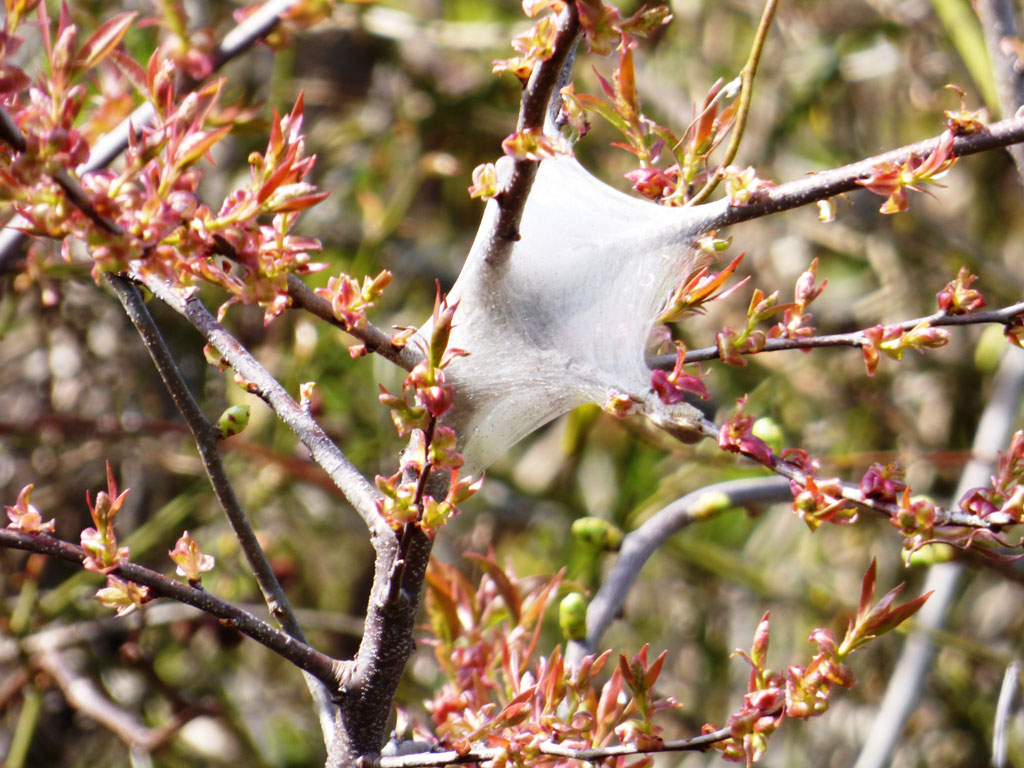
(left) Eastern tent caterpillar moth nest. Justine Kibbe Photo. (right) Eastern tent caterpillar moth. (Doug Tallamy Photo)

Silk nests of the eastern tent caterpillar (Malacosoma americana) began showing up on South Beach Road in late April. Not to worry! Contrary to popular belief, these nests will not kill trees, plus they provide food for bluejays, orioles, chickadees and nuthatches.

“I wouldn’t be concerned about the eastern tent caterpillar,” said entomologist Adam B. Mitchell, Ph.D. “These are native species feeding on native plants (mostly cherry trees). The caterpillars, in turn, provide food for breeding birds.

“Tent caterpillars can defoliate young trees, especially ornamentals, but native trees will recover within a month—just  part of the natural process!”

Eastern tent caterpillars form a silken nest (or tent) in the crotch of tree branches, where they rest and molt. They leave the nest during each bout of feeding to “scout” for leaves to feed on, dragging a trail of silk behind them that other caterpillars will follow. They move to new feeding sites en masse, feed, and then return immediately to the tent, where they rest until the next feeding.

Approximately six weeks after hatching, the larva become fully grown, up to two inches long. They leave the nest to pupate in silken cocoons that are found on tree trunks, fences or leaf litter. About two weeks later adult moths emerge and soon deposit the overwintering eggs on trees.

The eastern tent caterpillar moth overwinters as an egg, usually in a spongy mass of 150-400 eggs. These egg masses are covered with a shiny black material that helps protect the eggs during the winter months. Once spring arrives, the larvae hatch about the same time cherry tree buds open, and the trees begin to produce young leaves, required for larval development. Also, the position of the tent is critical because these caterpillars must bask in the sun to elevate their temperatures to aid digestion.

May 1, 2019 135 views
News

Island Beauty by Justine Kibbe

by Betty Ann Rubinow May 1, 2019

Island Beauty by Justine Kibbe

FIConservancy Naturalist Justine Kibbe walks and bikes Fishers Island from end to end. Her pictures, captured with patience and thoughtful attention, reveal the beauty of this Island.

Read about the above images in Justine’s nature portfolio: From the Field

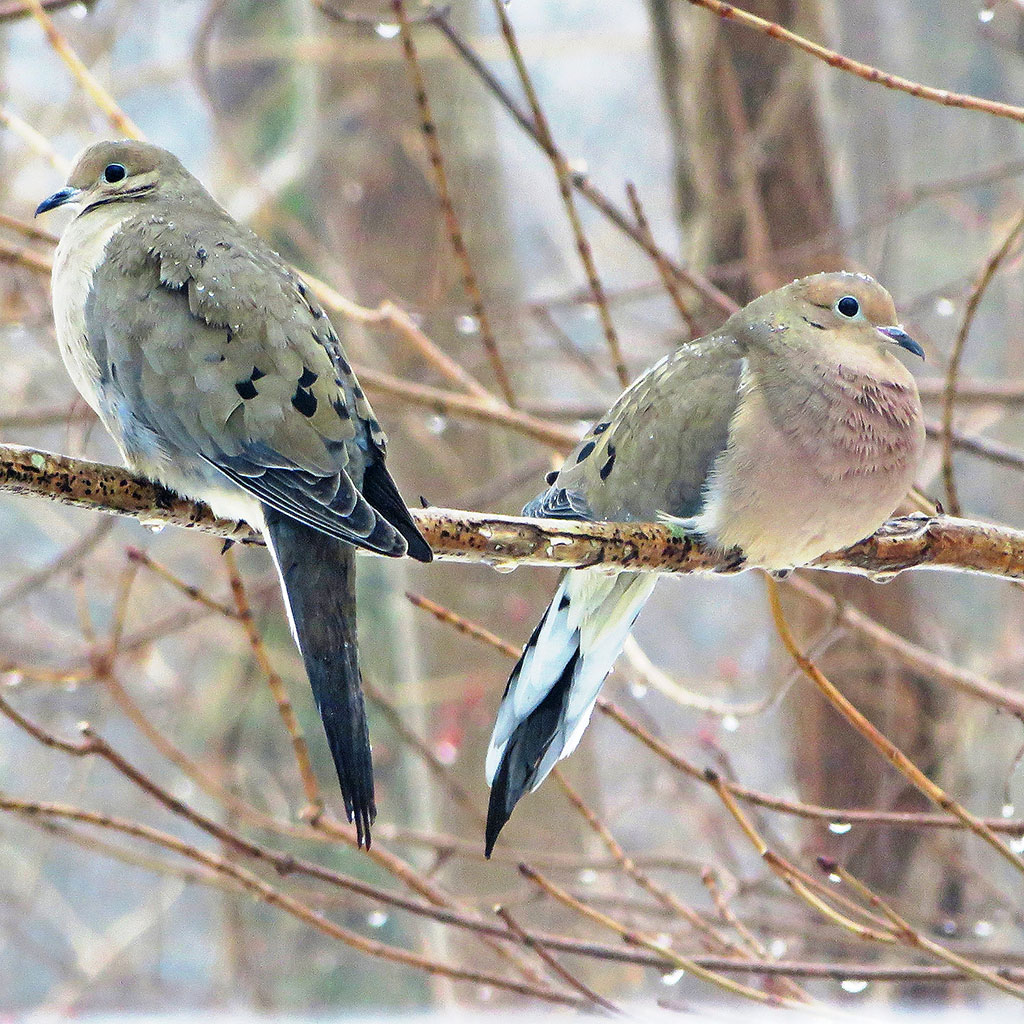
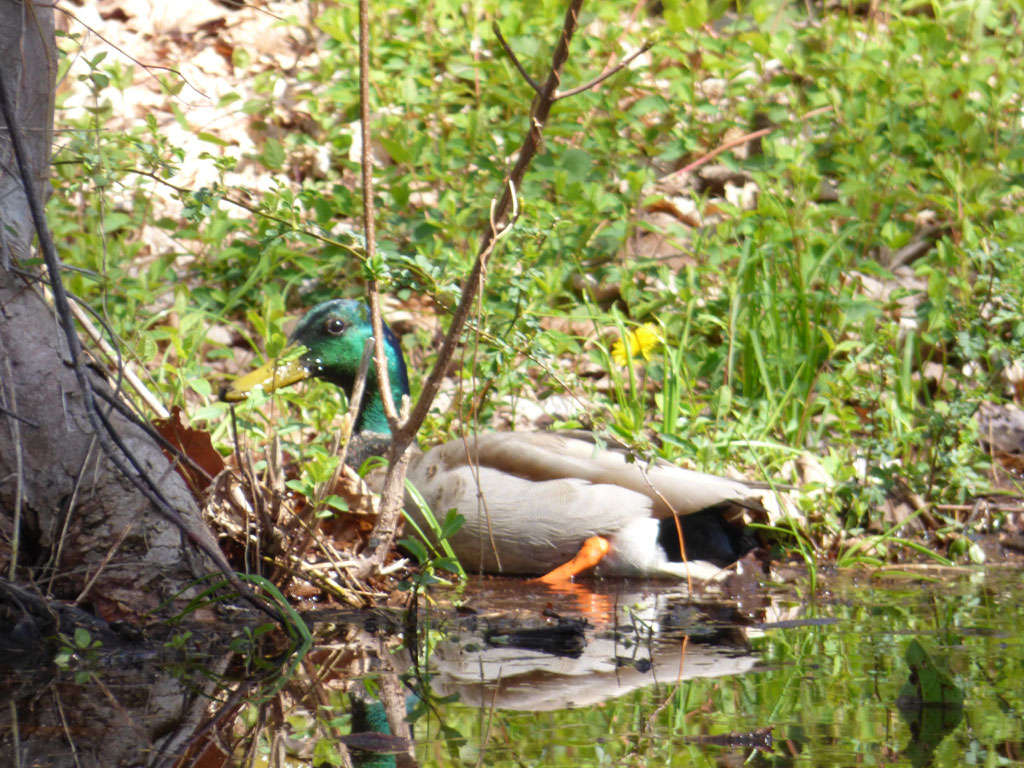
Clockwise from top left: Osprey, mallards, seaweed, red-tailed hawk, American bullfrog

May 1, 2019 110 views
FIFerry District 2016 Burn Plan
grasslands restoration

Burn Plan Archive

by Betty Ann Rubinow May 1, 2019

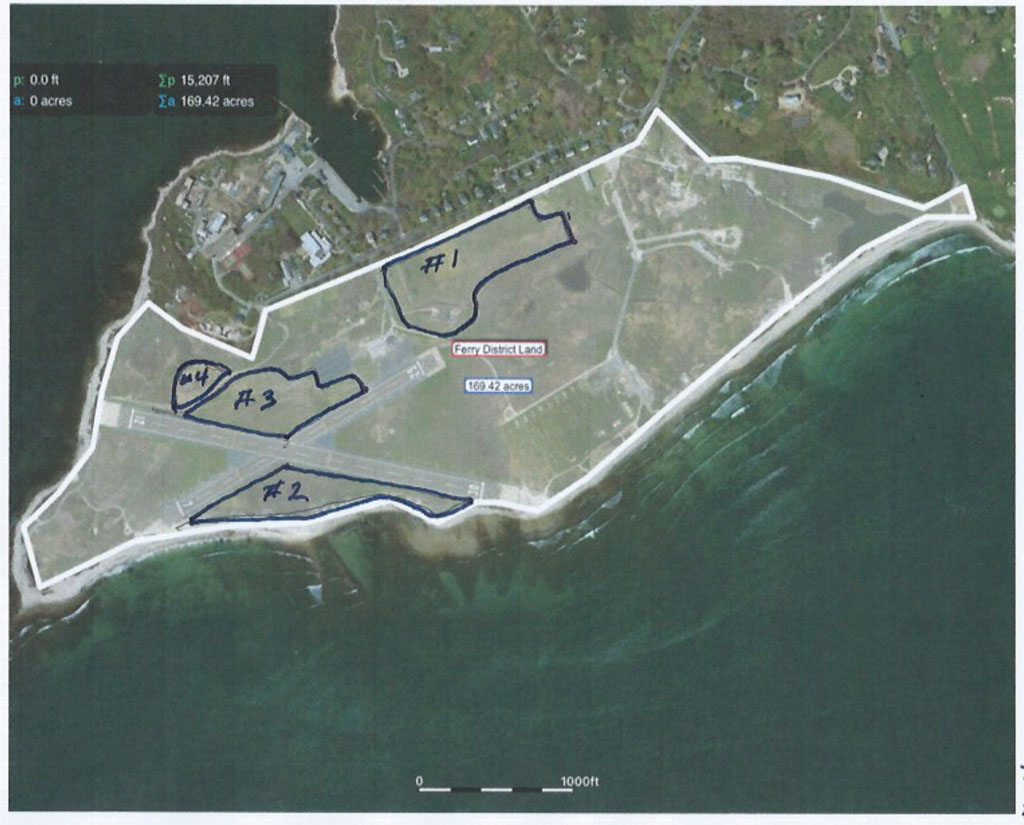
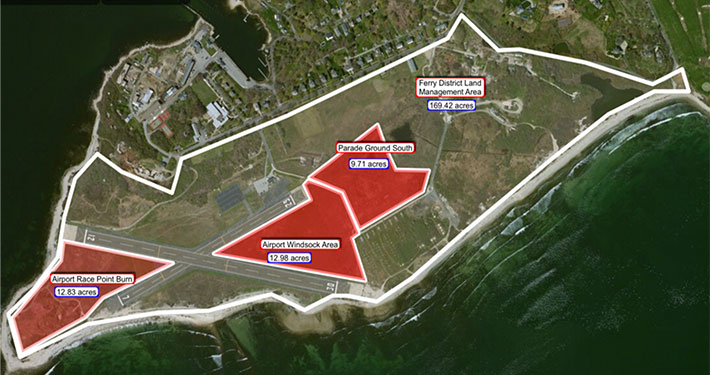
2019 Fishers Island Ferry District Burn Map

FIFerry District 2016 Burn Plan

2018 Fishers Island Ferry District Burn Map


2017 Fishers Island Ferry District Burn Map

Sectioned Burn

2016 Fishers Island Ferry District Burn Map

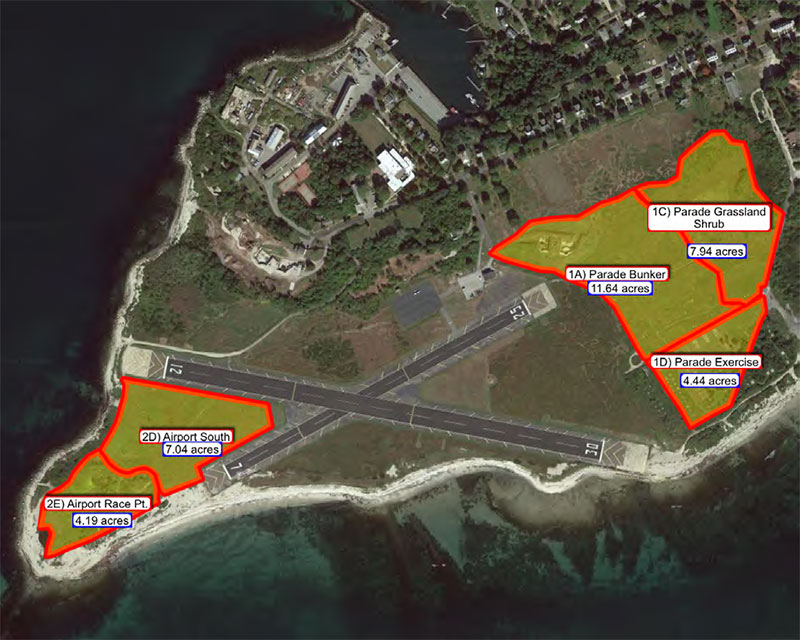
Early FI Ferry District plan for controlled burning in 175 acres of grassland restoration.

May 1, 2019 109 views
News

Beaver Believers

by Betty Ann Rubinow April 21, 2019

Beaver Believers

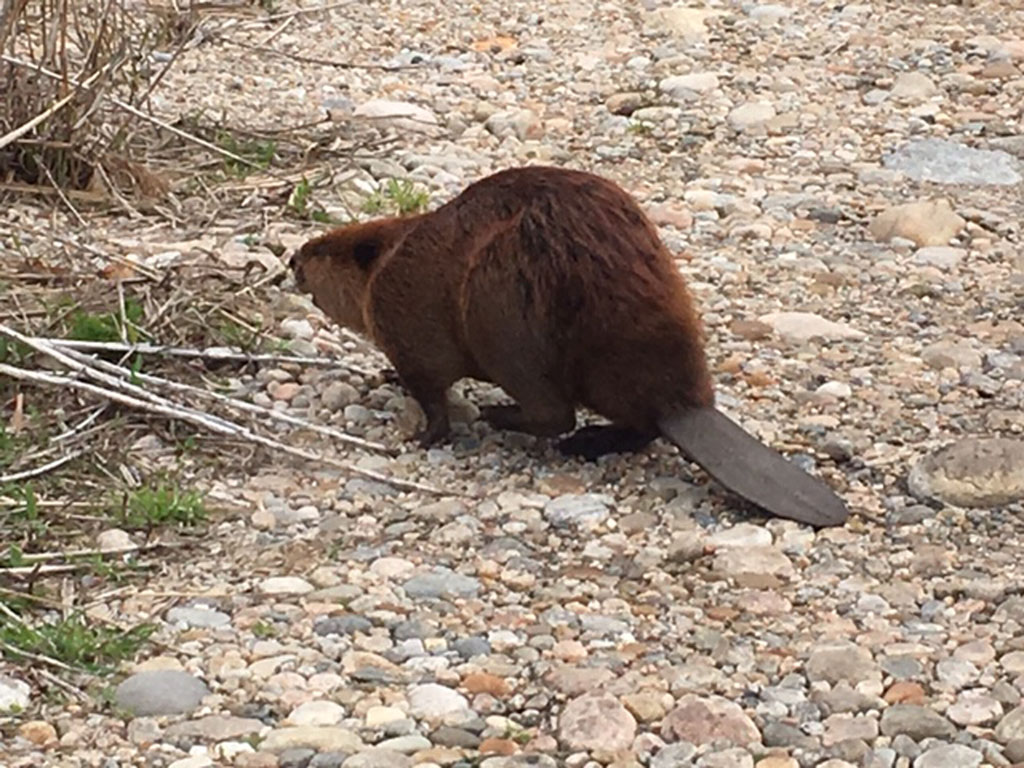
Beaver spotted near airport April 18. Stephanie Hall Photos

Multiple people reported late afternoon beaver sightings on the West End in April. The first was April 18 near the airport, and the second was April 19 at the Gatehouse. This is a good thing! Beavers are critical to the healthy ecology of streams and wetlands.

The American beaver is the largest rodent in the United States and is sometimes thought of as a nuisance in populated areas, because it fells trees (for food) and floods areas with dams (as protection from predators).

But beavers provide multiple ecological benefits: They create a diversity of wetland habitats and replace forested areas with grassy “beaver meadows” and aquatic vegetation. Beavers are also a “keystone” species, which means that they have a disproportionate positive impact on an ecosystem when compared to their numbers.

A growing coalition of “Beaver Believers”, including scientists and ranchers, are trying to restore beavers to diverse areas, from the Nevada deserts to the Scottish Highlands.

A 2018 book, Eager: The Surprising Secret Life of Beavers and Why They Matter, by Ben Goldfarb, shows how our landscapes have changed over the centuries, and how beavers can help fight drought, flooding, wildfire, extinction, and the ravages of climate change. The book is the winner of the 2019 PEN/E.O. Wilson Literary Science Writing Award.

For further information, read Beavers in Connecticut: Their Natural History and Management.

Beaver heads across road to Gatehouse April 19 and eventually down Recreational Path. (Still photo from Jim Reid video)

April 21, 2019 187 views
News

The Burn: How It’s Done

by Betty Ann Rubinow April 15, 2019

The Burn: How It’s Done

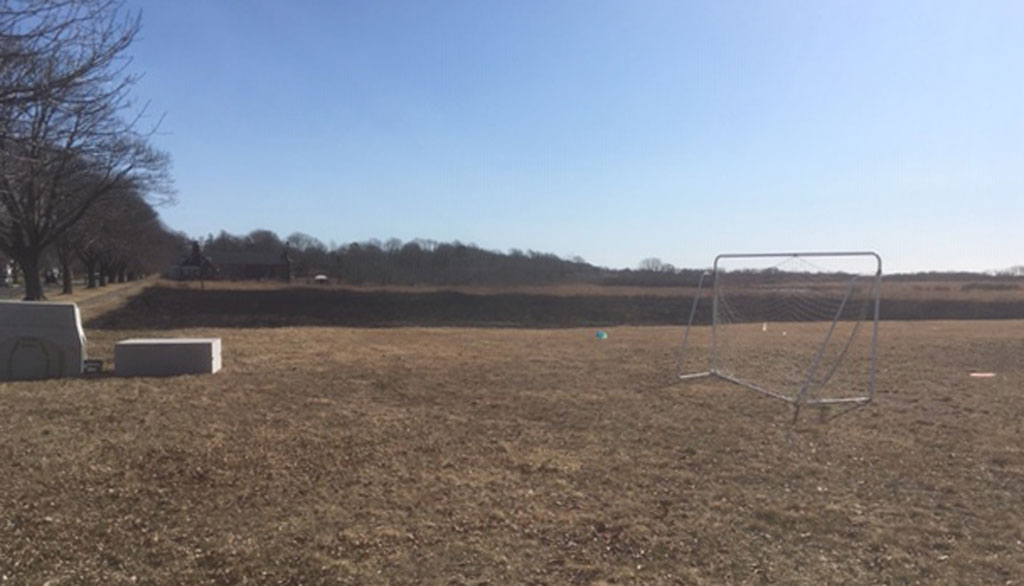
Part of 2019 planned burn Mar. 27 on Parade Grounds.

The Fishers Island Fire Department (FIFD) reported a successful planned burn Mar. 27 of 36.04 acres of restored grasslands along the airport runway and on the Parade Grounds. But what do our volunteers actually do to conduct a safe burn in specifically prescribed areas?

Don Beck, FIConservancy Board Member and Fishers Island Club golf course superintendent explains:

The fire department combines its annual training exercises with burns necessary to maintain FIConservancy’s restored grasslands. This year, it took about 20 volunteers and three fire trucks two-and-a-half hours to complete the burn. We always have an ambulance on site during the  burns.

Before the burn, we had a meeting at the fire department with Chief Bruce Hubert and Assistant Chief Jeff Edwards, who split up FIFD members into three teams, with one truck for each team.

We discussed the logistics of the burn and what everyone’s role would be. The 36.04 acres were broken down into four plots or burn units. The wind was blowing from the north, away from houses and traffic along the road, over open water, so Team 1 started the burn on the southern most plot, which abutted a sandy beach.

While the southern-most plot was burning, Team 2 used one of the fire trucks to water down lights and electrical components along the runways. Once the southern-most burn was completed, the two other teams started to back burn the two plots along both sides of the long runway. (Back burning is a method of controlling the fire, so it doesn’t spread to adjacent fields. The back burn is lit against the wind, so it burns very slowly.)

Once the back burn had created a sufficient buffer between plots, both fields were lit from the northern side, allowing both plots to burn very quickly. Once those two plots were completed, we moved everyone to the final Parade Grounds plot. The Parade Grounds was back burned, then lit from the northern side the same as the earlier plots. We finished as the sun was setting. We then re-filled the trucks at the hydrants near the post office, and everyone came back to the fire department for a warm meal cooked by John Bergquist and Aaron Lusker.

Fire is essential for the habitat of the fields. The fire burns all the duff of previous seasons’ growth and more importantly kills a lot of the invasive weed seeds. The heat from the fire warms the top inch or so of the soil making the weed seeds unviable but not harming the desired warm season grasses which root very deeply in the soil.

See 2019 prescribed burn pictures below. Tom Sargent Photos.

April 15, 2019 123 views
News

Piping Plovers Return to Fishers Island

by Betty Ann Rubinow April 7, 2019

Piping Plover pair returns to Fishers Island. House hunting on Sanctuary of Sands, South Beach.

FIConservancy Naturalist Justine Kibbe has been monitoring Piping Plovers in the South Beach area of Fishers Island for several years. Officially designated a “threatened” species, Piping Plovers are named for their melodic mating call.

Piping plovers eat freshwater and marine invertebrates that wash up on shore. They require a specific habitat to survive and are therefore an indicator of the “health” of a marine area. Their speckled eggs blend seamlessly into the coastal environment. Please tread lightly.

April 7, 2019 109 views
Field NotesFrom the Field

Let’s Welcome the Least Terns

by Betty Ann Rubinow April 5, 2019

Let’s Welcome the Least Terns

Last year’s couple (in archived photos) return within “homestead” scrape*, eastern tip of Elizabeth Field Airport runway.

As sunnier and warmer months unfold; PLEASE tread lightly!

*Least Terns nest in a simple “scrape” in sand, shell, or other fragmentary, sometimes lined with pebbles, grass, debris.

From the Field, Field Note, Justine Kibbe, April 5, 2019

April 5, 2019 117 views
News

Capsized Vessel Finally Removed from Mouth of Hay Harbor

by Betty Ann Rubinow April 1, 2019

Fishing vessel “All for Joy”, with yellow spill boom in place, is secured to a barge at Mohawk Northeast, Inc., Thames River, New London/Groton CT. Joe & Tracy Brock Photo

It took 20 days, but the capsized fishing vessel “All for Joy” was finally removed from the mouth of Hay Harbor at 6:05 p.m. Mar. 30.

The commercial fishing vessel capsized south of the Race March 10 and eventually came to rest at the mouth of Hay Harbor, leaking fuel that reached to the shore of Fishers Island. Two fishermen were rescued unharmed.

By 6:30 a.m. March 12, the smell of diesel fuel was “overpowering” on the north side of the Island, particularly at North Hill west past Hay Harbor. Heavy winds and seas prevented divers from safely capping the leaking fuel at that time, because there were too many hazardous pieces hanging and floating around the capsized vessel.

According to the US Coast Guard, all of the tanks on the vessel had been capped by Mar. 13. The current, tide and winds took the fuel into Hay Harbor and along Stony Beach. A crew from Clean Harbors walked the shoreline Mar. 14 to mop up any remaining oil with absorbent pads. They also deployed absorbent booms in those areas where oil was most prevalent. (Reporting by Jane T. Ahrens.)

See fishersisland.net for full story
Share this entry

LATEST VIDEO SNIPPETS

  • Oystercatcher Welcome CommitteeMarch 30, 2019 – 1:17 pm
  • Today’s Lone PeepMarch 28, 2019 – 3:35 pm
  • Conservancy’s Healthy HabitatMarch 28, 2019 – 3:33 pm
  • Diving DucksMarch 26, 2019 – 3:20 pm


April 1, 2019 108 views
Newer Posts
Older Posts

Upcoming Events

Notice
There are no upcoming events.

Keep in touch

Facebook Instagram Youtube

Recent Posts

  • June 2026 Breeding Bird Count

  • What to Do if You Find a Stranded Animal

  • Update on Phragmites Work and New Wetlands Regulations

  • SPOTTED in New London!

  • 2025 Fall Migratory Bird Count Results

  • Fall 2025 Migratory Bird Count

  • FIRST Summer Highlights 2025

  • Shorebirds Take Flight- The 2025 Season Wrap-Up

  • Buzz Be Gone- Final Spray of the Season

  • Silver Eel–Race Point Coastal Trail Opens with Dedication to Janet Harvey

Explore

    • Home
    • Who We Are
    • What We Do
    • How To Help
    • News
    • Events

Connect

    • Join Us
    • Donate
    • Contact Us
Facebook Instagram Youtube
© 2026 All Right Reserved. Fishers Island Conservancy
Fishers Island Conservancy
  • Home
  • Who We Are
    • Our Mission
    • Our History
    • Our People
    • Contact Us
  • What We Do
    • Shorebird Monitoring
    • Annual Bird Counts
    • Marine Debris Clean Up
    • Island Sentinels
    • Research and Survey Team
    • Grassland Restoration
    • Mosquito Control
    • Invasive Plant Management
  • How To Help
    • Donate
    • Join Us
  • News
  • Events
    • Calendar