Fishers Island Conservancy
  • Home
  • Who We Are
    • Our Mission
    • Our History
    • Our People
    • Contact Us
  • What We Do
    • Shorebird Monitoring
    • Annual Bird Counts
    • Marine Debris Clean Up
    • Island Sentinels
    • Research and Survey Team
    • Grassland Restoration
    • Mosquito Control
    • Invasive Plant Management
  • How To Help
    • Donate
    • Join Us
  • News
  • Events
    • Calendar
Monday, August 10, 2026
Fishers Island Conservancy
  • Home
  • Who We Are
    • Our Mission
    • Our History
    • Our People
    • Contact Us
  • What We Do
    • Shorebird Monitoring
    • Annual Bird Counts
    • Marine Debris Clean Up
    • Island Sentinels
    • Research and Survey Team
    • Grassland Restoration
    • Mosquito Control
    • Invasive Plant Management
  • How To Help
    • Donate
    • Join Us
  • News
  • Events
    • Calendar
Fishers Island Conservancy
  • Home
  • Who We Are
    • Our Mission
    • Our History
    • Our People
    • Contact Us
  • What We Do
    • Shorebird Monitoring
    • Annual Bird Counts
    • Marine Debris Clean Up
    • Island Sentinels
    • Research and Survey Team
    • Grassland Restoration
    • Mosquito Control
    • Invasive Plant Management
  • How To Help
    • Donate
    • Join Us
  • News
  • Events
    • Calendar
Copyright 2026 - All Right Reserved
News

2019 Fall Migratory Bird Count

by Betty Ann Rubinow September 23, 2019

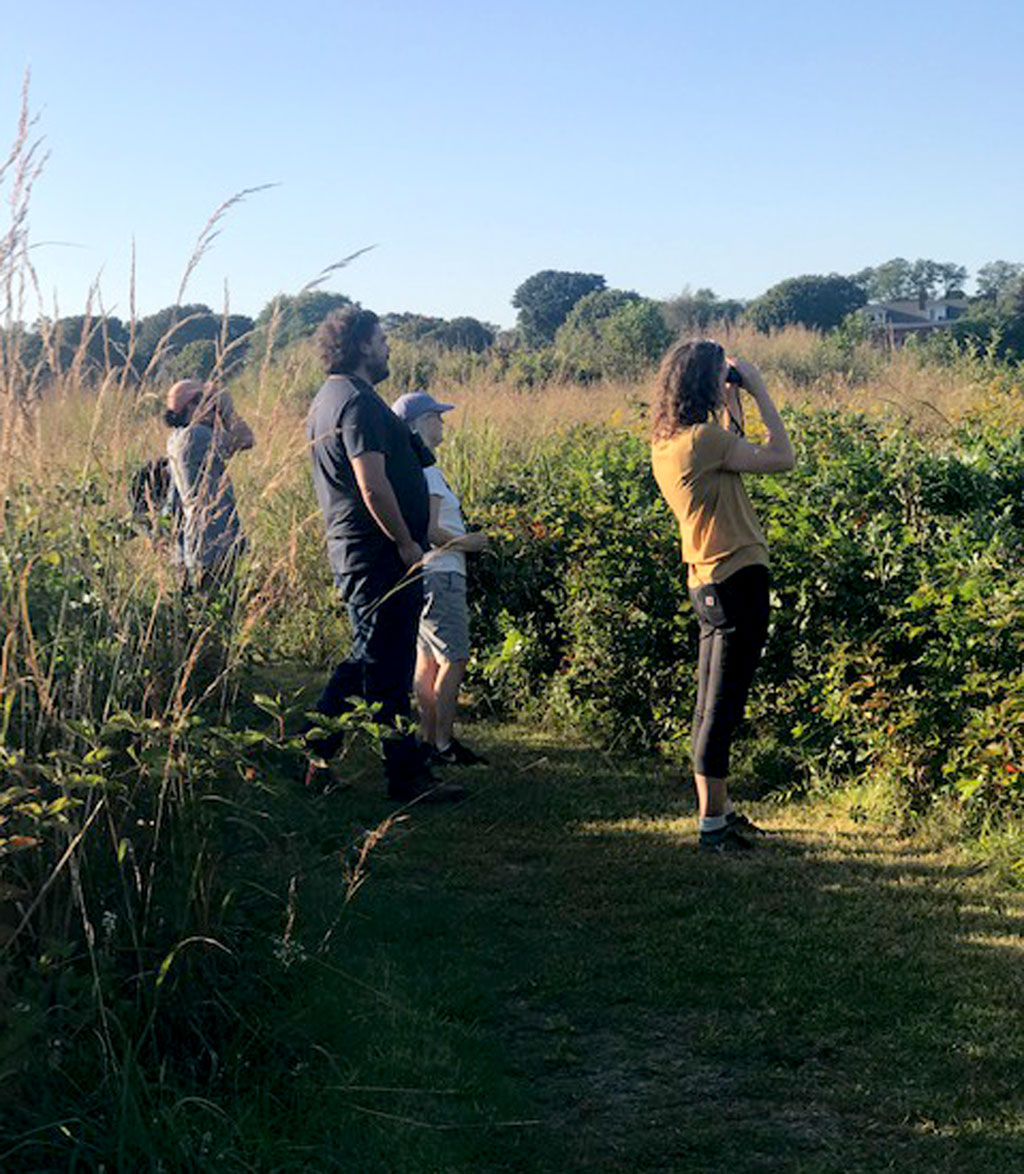
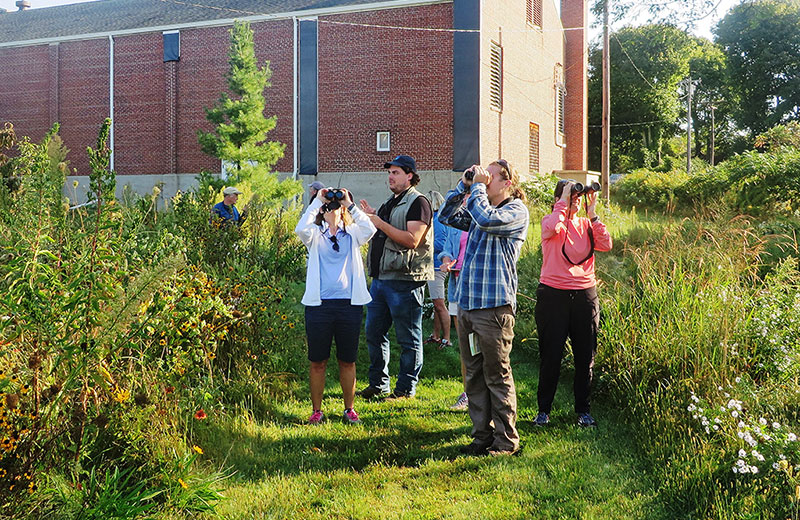
Adam Mitchell, Ph.D. (in black shirt) helps birders in the Parade Grounds hone bird counting skills the evening before the Sept. 23, 2019 Fall Migratory Bird Count. Tom Sargent Photo

Dr. Mitchell, who led the bird count, submitted the following summary of the three-hour event:

Although this year’s count began under an overcast sky, thick with clouds and fog, we observed a total of 45 species for this year’s survey, which falls within the range of average for past counts in the fall.

We noticed, however, that the number of individuals we observed was far below average: Most species (39 of 45) encountered were represented by only one or two birds. This has been a difficult year for many birds—an incredibly wet and cold spring, followed by an extremely humid and hot summer.

The late start to the growing season may account for so few birds migrating through, as warmer parts north of us may still have plenty of insects to keep populations going. Alternatively, the many tropical storms brewing along the Atlantic could be pushing winds northward, making the southward migration more difficult for many of our distant flyers.

The good news is that Fishers Island has been invaded (in a good way!) with droves of monarch butterflies. Residents have remarked that the Island has not seen monarchs in these numbers for decades. In the first 15 minutes of our bird survey, we observed around 240 monarchs, which exceeds the dozens we have encountered in past years.

Nearly all of the monarchs we encountered were in the westernmost part of the Island: Race Point, Parade Grounds and the Demonstration Garden. This is due, in part, to the ample supply of native, fall-flowering plants found at these stops, which provide a nutritional source of nectar for the butterflies to refuel on their journey south.

Other species of note include a Nelson’s sharp-tail sparrow, a wetland specialist bird, found in the Parade Grounds, as well as Eastern bluebird near the driving range farther up-Island. A pair of merlins were observed near Chocomount, one of which was feeding on-the-go as it circled the group. Barred owls were heard calling outside Barley Cove, and a red-tailed hawk literally ate crow on the Hay Harbor green. The afternoon prior to the official count, we also observed our resident Northern Harrier hawk gliding over the Parade Grounds fields in search of prey, as well as a flock of at least two dozen common nighthawks flying overhead.

With recent news articles highlighting the drastic, long-term decline of birds in North America, it is critical that we continue to monitor our migrant and resident populations as they make landfall on Fishers Island. It is also important to acknowledge the strides that the Fishers Island Conservancy has made towards reducing that decline on the Island, with the grassland restoration project providing habitat to numerous species of wildlife, including those considered threatened or endangered.

When you have members of the community remarking on how they haven’t seen so many monarchs in years, or how beautiful the birds are in your grassland, you know you’re doing something right.


BIRD LIST

American crow

American goldfinch

American kestrel

American robin

Barred owl

Black-bellied plover

Black-capped chickadee

Blue jay

Brown thrasher

Canada Goose

Carolina Wren

Common eider

Common grackle

Common yellowthroat

Double-crested cormorant

Eastern bluebird

Easter Phoebe

Eastern Towhee

European starling

Greater black-backed gull

Gray catbird

Great egret

Herring gull

House finch

House sparrow

Laughing gull

Mallard

Marsh wren

Merlin

Mourning dove

Mute swan

Nelson’s sharp-tailed sparrow

Northern cardinal

Northern flicker

Osprey

Pileated woodpecker

Ring-necked pheasant

Ruby-throated hummingbird

Red-tailed hawk

Red-winged blackbird

Song sparrow

Tree swallow

Tufted titmouse

White-breasted nuthatch

Yellow warbler


———————————————————————————–

Adam B Mitchell, Ph.D.

Assistant Professor of Entomology

Department of Wildlife, Sustainability, and Ecosystem Sciences

Tarleton State University

September 23, 2019 159 views
Field NotesFrom the FieldNews

Orange Sulphur Butterflies

by Betty Ann Rubinow September 11, 2019

Orange Sulphur Butterflies

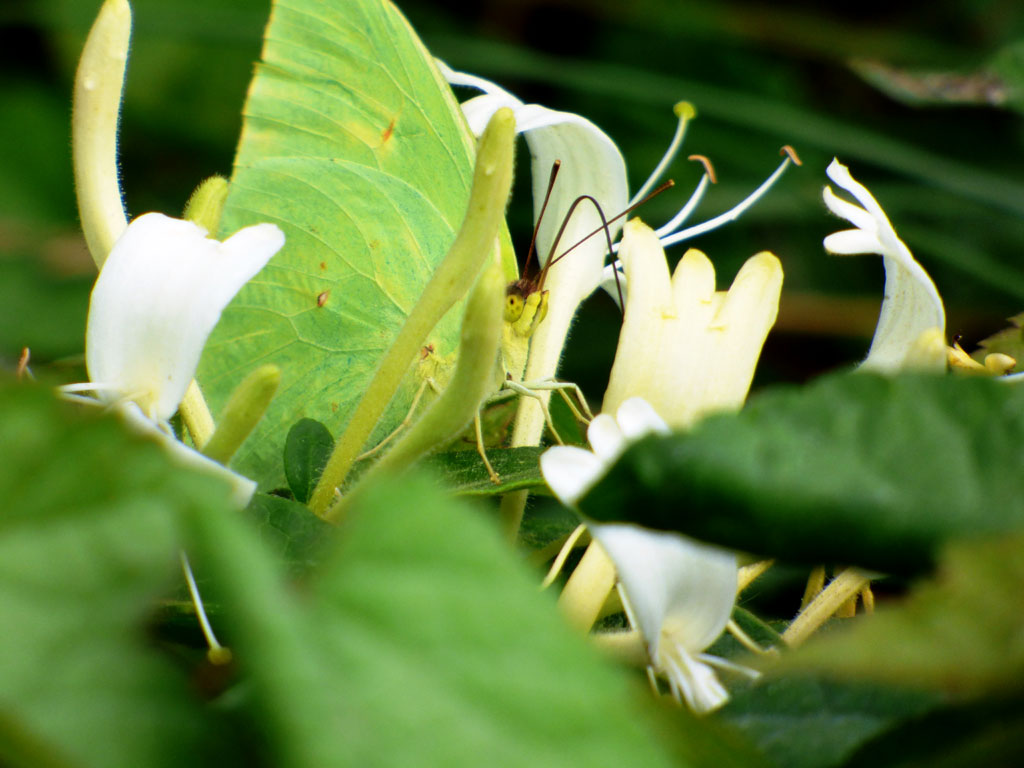
Butterfly wings in left photo are so green, they look like a leaf. In right photo, they are pale enough to look like a flower.

Crickets here are still high-pitched and butterflies are still high flying.

Swirling within clusters of busy dragonflies, and darting past reigning Monarchs, is the Orange Sulphur. While this insect varies in color, it appears nearly neon against tawny grasses or nearly invisible within honeysuckle and clover.

Grab a pair of binoculars and enjoy the views this September while walking the lovely paths within Parade Grounds, Fishers Island.

From the Field, Field Note by Justine Kibbe, Sept. 11, 2019

September 11, 2019 121 views
Field NotesFrom the FieldNews

Painted Lady Butterfly Observed

by Betty Ann Rubinow September 9, 2019

These quiet days of September are perfect for learning more about butterflies.*

Find a bench warmed by the sun within native meadows across from Silver Eel Cove, and you’re bound to see just how “social” these brilliantly colored insects are, flitting from one flower to the next.

Some populations gather enough nutritious energy feeding on plants (aster family) within Parade Grounds to migrate south. Others stay behind and overwinter here on Fishers Island.

*The painted lady butterfly is one of the most ubiquitous butterflies in the world and is identified by the shape of its wings and its eyespots, particularly evident on the underside of its hind wings. The butterflies flare with orange when flying and are sometimes mistaken for monarch butterflies.

*According to the National Geographic Society, the two-inch painted lady butterfly can migrate nearly 2,500 miles, starting from Europe, traversing obstacles such as the Mediterranean Sea, North Africa’s mountains and the Sahara Desert. Unlike monarch butterflies, chemical signatures in the painted lady wings reveal that they can make the trip in a single generation.

From the Field, Field Note by Justine Kibbe, Sept. 9, 2019

September 9, 2019 133 views
Sentinel Archives

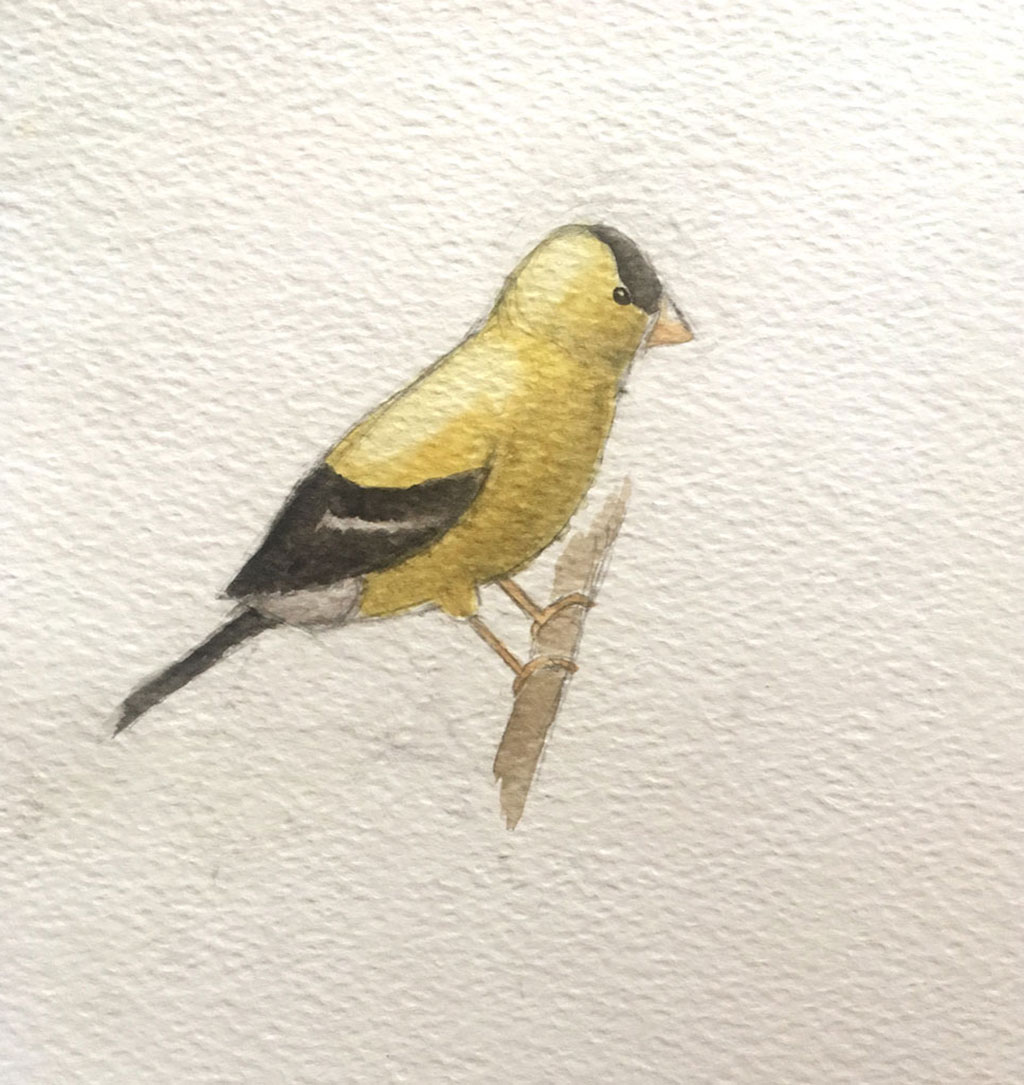
Alexa Rosenberg Goldfinches on FI

by Betty Ann Rubinow September 7, 2019

The goldfinch can be identified by its vibrant yellow plumage accented by bold black streaks. These birds are common and can be seen in a variety of places on Fishers Island.

Locations of sightings include, but are not limited to, the Parade Grounds, South Beach, Dock Beach and the Ferry Dock. Their diet consists mainly of seeds and insects. The goldfinch has an irregular migration, remaining North lingering for the food supply. Keep watching for these brightly colored birds. 

Alexa Rosenberg watercolor

September 7, 2019 133 views
Field NotesFrom the FieldNews

Sanctuary of Sands Migration Station

by Betty Ann Rubinow September 4, 2019

Sanctuary of Sands Migration Station

For many diverse species of shorebirds, Fishers Island has become the best “next stop” for fall migration.

With tepid tidal pools, thick salted wrack lines and sand dunes buffered with tall beach grass, birds returning to this ideal habitat feed, rest and recover morning, noon and night.

Usually an arctic resident, the Black-bellied Plover has been observed foraging here into December after breeding season up north.

This week, both a male (right) with declining black plumage and a female (left), pictured with a Killdeer, will hopefully pair up for their future southerly journey.

From the Field, Field Note by Justine Kibbe, Sept. 4, 2019

September 4, 2019 141 views
Autumn Bird Survey 2017
EventsNews

Calling All Birders to Fall Migration Bird Count!

by Betty Ann Rubinow September 4, 2019

Autumn Bird Survey 2017

Demonstration Garden is a busy third stop on Fall Migration Bird Count.

Mark your calendars for the 2019 Fall Migration Bird Count Sept. 22, 8 a.m.-11 a.m. Meet at the Island Community Center. Bring binoculars.

Following Audubon bird count rules, Dr. Adam Mitchell and two additional experts will lead birders, making 15 five-minute stops from West End to East End. At each timed stop, the birders will count birds and call out what they see.

Not sure how to count birds? Come for a tutorial and quick tour of the Parade grounds Sept. 21 at 5 p.m. Meet at the Parade Grounds.

September 4, 2019 112 views
Field NotesFrom the FieldNews

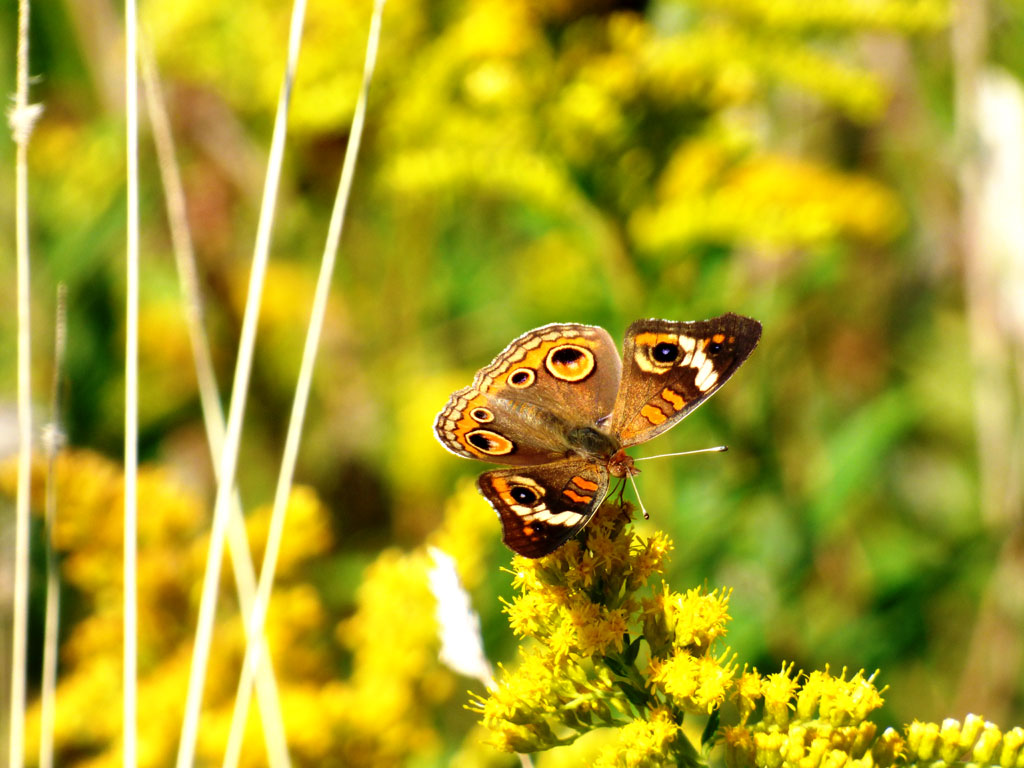
Common Buckeye Butterfly

by Betty Ann Rubinow September 4, 2019

Common Buckeye Butterfly

The Common Buckeye Butterfly is another beautiful pollinator, in addition to the Monarch Butterfly, drawn to goldenrod in late summer. Dr. Adam Mitchell* had this to say about the butterfly:

“Very nice shot! That’s a common buckeye butterfly. Their caterpillars feed on geraniums, toadflax, plantains and wild petunias. But as you can see, the adults love a good nectar source!

What’s interesting about this species is that they are are residents of the southern U.S. and migrate north to New England to breed. The population will migrate south in the fall, where they overwinter. (They remain active year-round south of the Carolinas).

*Adam B. Mitchell, Ph.D. is Asst. Professor of Entomology, Dept. of Wildlife, Sustainability, and Ecosystem Sciences, Tarleton State University,
a member of the Texas A&M University System

Justine Kibbe Photo

September 4, 2019 123 views
Field NotesFrom the Field

Monarch on Thorny Thistle

by Betty Ann Rubinow September 4, 2019

As evening light overshadows and cricket’s echo dims–

See beams of setting sunshine pass though butterfly wings.

And feel breeze–fly above and beyond wispy meadow grasses.

*Parade Grounds, Fishers Island

From the Field, Field Note by Justine Kibbe, Sept. 4, 2019

September 4, 2019 108 views
News

As Requested: Fishers Island Seed Mix

by Betty Ann Rubinow September 4, 2019

Fishers Island’s native grass meadows, grown from “Fishers Island Seed Mix”, were on full display for “Conservation on Parade” Aug. 3 in the Parade Grounds. FIConservancy Photo

There have been numerous requests for “Fishers Island Seed Mix” used in FIConservancy’s grassland restoration project on the Parade Grounds and adjacent to South Beach and Elizabeth Airport.

Ernst Conservation Seeds, the largest native seed producer and supplier in the eastern United States, created a custom blend for Fishers Island. The seeds are listed below. Butterfly milkweed, however, is out of stock but will be available in the spring.

Seeds can be planted from mid-to-late October or in the spring. Call 800-873-3321 for further information. Learn more about planting meadows at the Ernst website: www.ernstseed.com>Planting Guides>Uplands, Meadows & Pollinator Planting Guide and www.ernstseed.com>Life Cycle of a Meadow.


September 4, 2019 124 views
Sentinel Archives

Betsy Conger: 2019 Conservation on Parade

by Betty Ann Rubinow September 1, 2019

Betsy Conger: 2019 Conservation on Parade

Betsy Conger writes:

One of my favorite days last August was when the Island Sentinels had the opportunity to participate in FIConservancy’s “Conservation on Parade”.

The event ran from 3-6 p.m. at the Parade Grounds and was attended by a large number of Island residents of all ages. The day began with answering questions from our Fishers Island Community about being a Sentinel.

Many hands-on educational nature stations were set up for all to visit. My favorite was the close-up meeting with a real owl, sponsored by the Denison Pequotsepos Nature Center. 

A great time was had by all… 


September 1, 2019 137 views
Newer Posts
Older Posts

Upcoming Events

Notice
There are no upcoming events.

Keep in touch

Facebook Instagram Youtube

Recent Posts

  • June 2026 Breeding Bird Count

  • What to Do if You Find a Stranded Animal

  • Update on Phragmites Work and New Wetlands Regulations

  • SPOTTED in New London!

  • 2025 Fall Migratory Bird Count Results

  • Fall 2025 Migratory Bird Count

  • FIRST Summer Highlights 2025

  • Shorebirds Take Flight- The 2025 Season Wrap-Up

  • Buzz Be Gone- Final Spray of the Season

  • Silver Eel–Race Point Coastal Trail Opens with Dedication to Janet Harvey

Explore

    • Home
    • Who We Are
    • What We Do
    • How To Help
    • News
    • Events

Connect

    • Join Us
    • Donate
    • Contact Us
Facebook Instagram Youtube
© 2026 All Right Reserved. Fishers Island Conservancy
Fishers Island Conservancy
  • Home
  • Who We Are
    • Our Mission
    • Our History
    • Our People
    • Contact Us
  • What We Do
    • Shorebird Monitoring
    • Annual Bird Counts
    • Marine Debris Clean Up
    • Island Sentinels
    • Research and Survey Team
    • Grassland Restoration
    • Mosquito Control
    • Invasive Plant Management
  • How To Help
    • Donate
    • Join Us
  • News
  • Events
    • Calendar