Fishers Island Conservancy
  • Home
  • Who We Are
    • Our Mission
    • Our History
    • Our People
    • Contact Us
  • What We Do
    • Shorebird Monitoring
    • Annual Bird Counts
    • Marine Debris Clean Up
    • Island Sentinels
    • Research and Survey Team
    • Grassland Restoration
    • Mosquito Control
    • Invasive Plant Management
  • How To Help
    • Donate
    • Join Us
  • News
  • Events
    • Calendar
Sunday, August 9, 2026
Fishers Island Conservancy
  • Home
  • Who We Are
    • Our Mission
    • Our History
    • Our People
    • Contact Us
  • What We Do
    • Shorebird Monitoring
    • Annual Bird Counts
    • Marine Debris Clean Up
    • Island Sentinels
    • Research and Survey Team
    • Grassland Restoration
    • Mosquito Control
    • Invasive Plant Management
  • How To Help
    • Donate
    • Join Us
  • News
  • Events
    • Calendar
Fishers Island Conservancy
  • Home
  • Who We Are
    • Our Mission
    • Our History
    • Our People
    • Contact Us
  • What We Do
    • Shorebird Monitoring
    • Annual Bird Counts
    • Marine Debris Clean Up
    • Island Sentinels
    • Research and Survey Team
    • Grassland Restoration
    • Mosquito Control
    • Invasive Plant Management
  • How To Help
    • Donate
    • Join Us
  • News
  • Events
    • Calendar
Copyright 2026 - All Right Reserved
News

FIConservancy Helps FIFerry District With Native Grasses on New Berm

by Betty Ann Rubinow May 28, 2022

FIConservancy Helps FIFerry District With Native Grasses on New Berm

Two views of new 1200-ft. FIFerry District berm, (l) heading west away from ferry entrance and (r) heading east toward Silver Eel Cove.

The Fishers Island Conservancy is pleased to have been a part of the Fishers Island Ferry District’s new berm project at Silver Eel Cove. The following letter of thanks and appreciation from the Ferry District was published in the June 2022 Fog Horn:

To the Fishers Island Community,

This past winter, the Fishers Island Ferry District (FIFD) dredged the entrance channel to Silver Eel Cove yielding over 2500 cubic yards of clean sand. FIFD used the majority of that sand to create a covered and graded berm between the high tide line and the rear parking area.

Ideas about how best to plant the berm in order to stabilize and beautify it were tossed about. FIFD Management sought the advice of FIConservancy. The Conservancy Board was excited about the opportunity and offered to recommend, source and sponsor the planting of native grasses.

We can all see the results taking hold today over the entire 1200-ft. berm, as it winds west from behind the Coast Guard Station to the Ordnance Building. The berm remains off limits to foot traffic, while our plantings take hold.

Thank you Fishers Island Conservancy.

From,

Fishers Island Ferry District

May 28, 2022 161 views
News

Maddie Hatfield Shines at Science Competition with Local Sponge Species

by Betty Ann Rubinow May 20, 2022

Maddie Hatfield, a Fishers Island School junior and honors Regents chemistry student, with the graphic explanation of her award-winning science project. Maddie’s research was made possible with a grant from FIConservancy.

Maddie Hatfield, an honors Regents chemistry student at Fishers Island School, took one of the top prizes at an April 8 Long Island high schools science competition and did it with an unplanned harvest of marine sponges from docks at Pirate’s Cove Marina.

When Maddie discovered that a Maine vendor did not have the specific marine sponge she needed for her research, Carol Giles, Maddie’s science teacher, came up with a potential solution.

“I had noticed sponges growing on the docks at Pirate’s Cove,” Mrs. Giles said. “But sponges are difficult to identify because of only slight differences in external features. Maddie obtained a sample of a sponge different from her initial intention, but one she thought might work for her research.

“She extracted and measured microscopic particles and identified the species as Halichondria bowerbanki, exactly what she wanted. I reached out to Connor Jones, former FI Seagrass Management Coordinator, who posted pictures on several marine sponge listservs.

“Over a dozen scientists responded with varying species identification, but two offered to confirm its identity. Dr. Robert Thacker of Stony Brook University verified Maddie’s identification, as did Dr. Sergio Vargas of LMU München, the most prestigious university in Germany, who DNA-barcoded the sponge.

“Maddie’s four-month science project studying ocean acidification on a specific marine sponge species would not have been possible without Fishers Island Conservancy’s grant to purchase two tank coolers and two filtration systems,” Mrs. Giles said.

FIConservancy continues to support Fishers Island School through a series of grants, including a 2020 purchase of a fluorometer, which measures phytoplankton density.

Maddie was one of five top students out of 300 finalists at the Long Island Youth Summit, a partnership between Northwell Health, St. Joseph’s College, Vision Long Island and other public and private organizations. 

The purpose of the Summit is to engage talented high school students of diverse backgrounds, encouraging them to think about solutions for local and regional problems related to social, economic and environmental issues. The Summit aims to develop the students’ research, creative and social skills by allowing them to work together with leaders in business, government and non-profit sectors.

May 20, 2022 116 views
News

2022 Spring Migratory Bird Count Surpasses Average Count For Fishers Island

by Betty Ann Rubinow May 14, 2022

Birders gather May 8 in the John Thatcher Native Garden next to Movie Theater. Tom Sargent Photo

Sunday, May 8 was a great day for birding! Dr. Adam Mitchell of Tarleton State University led a group of enthusiastic volunteers who counted birds from the West End to the East End of Fishers Island, following Audubon Bird Count rules.

“We observed a total of 52 species during the migration count, and 58 species overall for the weekend.” Dr. Mitchell said. “To put that in perspective, the average migration count over the past eight years is 47 in the spring and 39 in the fall.

“According to birdcast.info (a great migration tool!), however, the predicted overall migration rate for birds this spring was low. The late spring, compounded by cold and windy weather, kept many of our overwintering and migrant birds on the Island.

“More recent migrants, like warblers, vireos and other passerines (perching birds), were  forced to wait out our recent storm front by hiding in the dense undergrowth, rather than gleaning from the exposed tree branches, so our detection on these birds was likely to be fairly low.

“Of note was the unusual amount of brown-headed cowbirds in the mix,” Dr. Mitchell said. “It’s possible that these migrants were blown in from the storm. The bird count list is below:

American black duck

American crow

American goldfinch

American robin

Baltimore oriole

Barn swallow

Black-and-white warbler

Black-capped chickadee

Blackburnian warbler

Blue-winged warbler

Brown-headed cowbird

Blue-gray gnatcatcher

Blue jay

Canada goose

Carolina wren

Chimney swift

Chipping sparrow

Common eider

Common grackle

Common loon

Common raven

Common tern

Dark-eyed junco

Double-crested cormorant

Downey woodpecker

Eastern towhee

European starling

Fish crow

Gray catbird

Great black-backed gull

Great egret

Herring gull

House finch

House sparrow

House wren

Killdeer

Mallard

Mourning dove

Mute swan

Northern cardinal

Northern flicker

Northern harrier

Northern parula

Osprey

Red-bellied woodpecker

Red-tailed hawk

Red-winged blackbird

Ring-necked pheasant

Ruby-crowned kinglet

Ruby-throated hummingbird

Song sparrow

Tufted titmouse

Tree swallow

Turkey vulture

White-breasted nuthatch

White-throated sparrow

Yellow-rumped warbler

Yellow warbler

May 14, 2022 89 views
News

2022 Spring Bird Count

by Betty Ann Rubinow April 29, 2022

2022 Spring Bird Count

(l-r) Osprey (Bill Colman Photo) and mourning doves (Justine Kibbe Photo) have been sighted in previous Spring Migratory Bird Counts.

After wintering in warmer climates, migratory birds are returning their northern breeding grounds via the Atlantic Flyway and we need your help charting these bird populations and getting a sense of which species are prevalent in our area.

Mark your calendars for the 2022 Spring Migratory Bird Count Sunday, May 8, 8 a.m.-10:30 a.m. Meet at the Island Community Center. Bring binoculars. Dr. Adam Mitchell from Tarleton State University, and the University of Delaware team of Emily Baisden and Will Almeida will again lead the bird count and answer questions about migratory birds.

Click here to RSVP for the Bird Count

Following Audubon bird count rules, birders will make 15 five-minute stops from West End to East End. At each timed stop, birders count birds and call out what they see.

We’re fortunate that Fishers Island is on the Atlantic Flyway, a major north-south flyway for migratory birds in North America. Migrating songbirds descend on woods and thickets, along ponds and next to streams, to feed on the insects that fuel their migrations.

May is the peak month for songbird migration, when birds travel (usually at night) from their wintering grounds in South and Central America to breeding grounds in the northern United States and Canada.

Ornithologists estimate that each spring, 2.5 billion to 3.5 billion songbirds are on the move across the United States. Between 90 and 100 species of songbirds pass through the state of New York in May, according to Andrew Farnsworth, a senior research associate at the Cornell Lab of Ornithology in Ithaca, N.Y.

We hope to see you at this fun, informative outdoor event, celebrating the spring season at Fishers Island. Don’t forget to RSVP here!

April 29, 2022 108 views
Marine Debris Annual Report

2022 Marine Debris Report

by Beth Jepsen January 1, 2022

2022 Marine Debris – Monthly Summary Report

ZONEWEIGHT (LBS)TIME (HOURS)
JANUARY69793
FEBRUARY57272
MARCH898107.5
APRIL826103.5
MAY58584.5
JUNE625103.5
JULY461121
AUGUST672151.5
SEPTEMBER634119.5
OCTOBER65995
NOVEMBER464100
DECEMBER775108
TOTAL7,8681,287

January 1, 2022 141 views
Marine Debris Annual Report

2021 Marine Debris Annual Report

by Anna White December 31, 2021

2021 Marine Debris – Monthly Summary Report

ZONE WEIGHT (LBS) TIME (HOURS)
JANUARY 771 75
FEBRUARY 805 68.5
MARCH 1073 101.5
APRIL 868 100
MAY 512 100
JUNE 806 102
JULY 749 104
AUGUST 351 50
SEPTEMBER 765 87.5
OCTOBER 0 0
NOVEMBER 0 0
DECEMBER 951 114
TOTAL 7,651 892.5

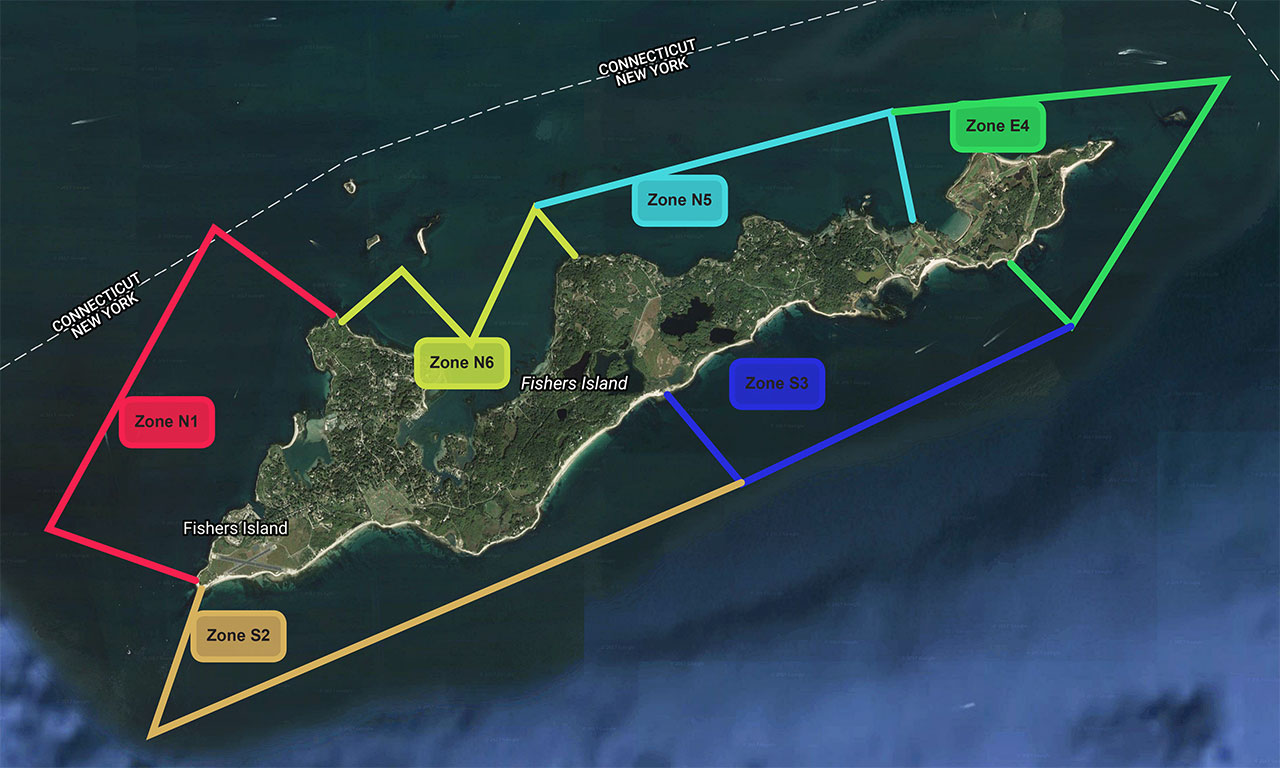
2021 Marine Debris – Zone Summary Report

ZONE WEIGHT (LBS) TIME (HOURS)
No Zone 34 25
E4 1071 115.5
N1 1010 123.5
N5 969 77.5
N6 994 111
S2 2,258 274
S3 1,275 159
S4 14 5
TOTAL 7,651 892.5


Monthly Marine Debris Reports

  • Marine Debris Report – June 2026

    July 2, 2026
  • Marine Debris Report – May 2026

    June 4, 2026
  • Marine Debris Report – April 2026

    May 3, 2026
  • Marine Debris March 2026

    April 1, 2026
  • Marine Debris Winter Reports

    February 27, 2026
  • Marine Debris November 2025

    February 27, 2026

Annual Reports

  • 2025 Marine Debris Annual Report

    March 17, 2026
  • 2024 Marine Debris Annual Report

    December 31, 2024
  • 2023 Marine Debris Annual Report

    December 31, 2023
  • 2023 Marine Debris Report

    January 1, 2023
  • 2022 Marine Debris Annual Report

    December 31, 2022

Marine Debris Stewards

  • Constant Battle Marine Debris

    March 18, 2018
  • John Peishoff’s 889th Lobster Pot

    October 1, 2017
  • Earthday EVERYday

    April 9, 2017
December 31, 2021 106 views
NewsPresident's Message

President’s Message 2021

by Beth Jepsen December 1, 2021

Restored grassland at Parade Grounds.

While the pandemic continues to present challenges for the Conservancy, overall things have returned to a somewhat normal state. We have been able to get back to our mission of preserving and protecting the natural environment of Fishers Island. We could not be more pleased.

Tom Sargent

After our schedules had been hobbled in 2020 due to the pandemic, 2021 was much less restricted as vaccines became available early this year. As a result, were able to return to our annual burn in the Parade Grounds in March. Fishers Island Fire Department volunteers activated our prescribed burn plan, and it went off without a hitch. What a sight to see several acres crackling and hissing, flames reaching high into the sky. As fast as it started, it was over. The prescribed burn is a critical part of our Parade Grounds maintenance. It releases natural nitrogen into the soil and clears woody underbrush, leaving a healthy grassland habitat for several species of ground nesting birds. I can’t thank the entire FI Fire Department enough for their experience and guidance in this annual ritual.

Still pressed with the pandemic, we were unable to operate our “weed team” of graduate students from the University of Delaware (UD). We are in current conversations, however, with Professors Tallamy and Mitchell and expect to have a full complement in place for next season. While we missed our UD team, the slack was picked up via our Island Sentinels program run by Stephanie Hall. We had a record number of participants in our student scientist program, and they took hundreds of readings at multiple sites across the Island. We are currently collecting and collating this data, which will be available to the public as trend lines become apparent as to the health and vibrancy of the Island’s unique habitats.

The Conservancy held both Spring and Fall Migratory Bird Counts according to Audubon standards. We were able to bring back our scientist birders, Emily Baisden and Will Almeida. Both counts were well attended. On a happy note, we observed the highest number of birds at locations with the least number of invasive plant species, but now we have to quantify it with the science. Along these lines, I would like to suggest a title for a little winter reading, A World on the Wing by Scott Weidensaul. The author explores the only-recently understood odyssey of migratory birds, many of whom use this little tuft of refuge as a brief stop to rest and refuel before continuing their several-thousand-mile migratory journeys. This book illuminates the importance of native habitat—a subject not lost on our community.

Our two big summer events were back in force: Sunset on the Beach and Nature Days. We had record numbers of participants at both events. I think the pent-up demand to get out, see people and celebrate our beautiful Island was overwhelming. I want to thank our Executive Director Kristen Peterson, our Sunset Sponsors and all the volunteers for making these two events so special for the Conservancy and for the Island Community. We at the Conservancy are deeply grateful to our friends and supporters for all you do to keep this organization humming. Thank you!

As we enter the quiet time of late fall, and the last of the warblers have left for warmer climes, please remember that a gift to the Fishers Island Conservancy is a gift to Fishers Island.

Cheers, Tom

December 1, 2021 120 views
News

Shoreline Superstars Embrace Adopt-A-Beach Competition

by Betty Ann Rubinow October 2, 2021

Shoreline Superstars Embrace Adopt-A-Beach Competition

(l-r) The Kinsolving/Farrar family, the Tombari/Enright family and (not pictured) the Webel family collected the most marine debris this summer in FIConservancy’s Adopt-A-Beach competition.

FIConservancy’s first community marine debris program was a great success thanks to all who participated. We’re thrilled to announce that the Kinsolving/Farrar, Tombari/Enright and Webel families collected the most marine debris throughout the season. Please join us in celebrating these shoreline superstars!

With the help of all those who joined in, we’re off to a great start expanding our coverage and collection of marine debris, helping to protect our waters and wildlife. But this is a never-ending process.

FIConservancy has cleared and hauled away over 10 tons of marine debris in the past two years alone. We are lucky and grateful to have Michele Klimczak, FIConservancy’s Marine Debris Coordinator, clearing this pollution year-round, sorting, weighing, reusing whatever possible in creative ways and properly disposing of the rest. But Michele is just one person, and there is more shoreline to cover and more debris than she alone can collect.

We hope you’ll continue to “bring a bag” when you visit the beach anytime of year. You can reach out to Michele to coordinate pick up or label your bag (your name, date and shoreline location) and leave it in the FIConservancy truck when it’s parked by the movie theater. Michele was recently off-Island for a month and shared the following anecdote:

“While I was away, folks were texting and emailing me so I had them dump the debris into the back of the truck. When I got back, I sorted over 90 pounds of debris collected in my absence, which was the best homecoming gift!”

We’re so encouraged and heartened by this story and how the Fishers Island community comes together to make a difference. Let’s keep it up! We’re looking forward to engaging even more of our community in this effort next summer.

October 2, 2021 111 views
News

Destructive Spotted Lanternfly An Increasing Threat

by Betty Ann Rubinow September 29, 2021

The destructive spotted lanternfly: Wings open and wings closed.

Be on the lookout for the colorful but treacherous spotted lanternfly (SLF). Relatively new to the U.S., it is an invasive insect from China that is known to feed on 70 different types of plants and trees. SLF adults emerge in July and are active until the first hard frost.

This insect was first spotted in Pennsylvania in 2014, and by July 2021 had spread to about half of Pennsylvania, New Jersey, Maryland, Delaware, Virginia, eastern Ohio and Indiana.

Closer to home, the the SLF has been found in western Connecticut, parts of New York state, and on Sept. 29, Rhode Island reported a second credible sighting in West Greenwich, RI. This insect usually spreads by hopping rides on vehicles as they move from state to state.

The U.S. Dept of Agriculture has issued a thorough SLF Pest Alert pdf with information about the SLF and what you can do about it. If you see an SLF, take pictures and report it to New York State via its SLF reporting form. Scraping its grey egg masses from trees and man-made outdoor items is vital to slowing its spread. Egg masses can be double bagged and discarded, or placed in alcohol or bleach to kill them.

Indicating the significance of this dangerous pest, FIConservancy posted advance warnings about the SLF in 2018 and 2020.

Thanks for your help.

September 29, 2021 145 views
Bird CountsNews

Fall 2021 Migratory Bird Count Results

by Betty Ann Rubinow September 23, 2021

Bird watchers scan the skies looking for birds to include in the biannual migratory bird count on Fishers Island. Kristen Peterson Photo

Another glorious day on Fishers Island greeted bird watchers who participated in the Fall 2021 Migratory Bird Count, Sun. Sept. 19.

Thirty-nine species were recorded, which is slightly lower than the 45 species sighted in Fall 2019. (See list of bird species below.)

Following Audubon bird count rules, birders made 15 five-minute stops from West End to East End. At each timed stop, birders counted birds and called out what they saw.

Results from bird counts help scientists and conservation organizations chart bird populations and help us get a sense of the numbers of different bird species in our area.

We are fortunate that Fishers Island is on the Atlantic Flyway, a major north-south flyway for migratory birds in North America. Migrating songbirds descend on woods and thickets, along ponds and next to streams, to feed on the insects that fuel their migrations.

University of Delaware team of Emily Baisden and Will Aleida led the bird count and answered questions about migratory birds.

Species sighted in Fall 2021 Migratory Bird Count on Fishers Island:

American Kestrel, Black Crow, Blue Jay, Catbird, Cedar Waxwing, Chickadee, Chipping Sparrow, Cormorant, Connecticut Warbler, Downey Woodpecker, European Starling, Goldfinch, Herrier Hawk, Herring Gulls, House Wren or Marsh Wren, Marsh/Goshawk, Merlin, Mockingbird, Mourning Dove, Nighthawk, Northern Parula, Osprey, Phoebe, Raven, Red Bellied Woodpecker, Red-tailed Hawk, Ring Necked Pheasant, Robin, Ruby Throated Hummingbird, Song Sparrow, Starling, Swainson’s Warbler, Towhee, Tree Sparrow, Tree Swallow, White Breasted Nuthatch, White Egret, Yellow-rumped Warbler, Yellow Throated Chickadee.

September 23, 2021 123 views
Newer Posts
Older Posts

Upcoming Events

Notice
There are no upcoming events.

Keep in touch

Facebook Instagram Youtube

Recent Posts

  • June 2026 Breeding Bird Count

  • What to Do if You Find a Stranded Animal

  • Update on Phragmites Work and New Wetlands Regulations

  • SPOTTED in New London!

  • 2025 Fall Migratory Bird Count Results

  • Fall 2025 Migratory Bird Count

  • FIRST Summer Highlights 2025

  • Shorebirds Take Flight- The 2025 Season Wrap-Up

  • Buzz Be Gone- Final Spray of the Season

  • Silver Eel–Race Point Coastal Trail Opens with Dedication to Janet Harvey

Explore

    • Home
    • Who We Are
    • What We Do
    • How To Help
    • News
    • Events

Connect

    • Join Us
    • Donate
    • Contact Us
Facebook Instagram Youtube
© 2026 All Right Reserved. Fishers Island Conservancy
Fishers Island Conservancy
  • Home
  • Who We Are
    • Our Mission
    • Our History
    • Our People
    • Contact Us
  • What We Do
    • Shorebird Monitoring
    • Annual Bird Counts
    • Marine Debris Clean Up
    • Island Sentinels
    • Research and Survey Team
    • Grassland Restoration
    • Mosquito Control
    • Invasive Plant Management
  • How To Help
    • Donate
    • Join Us
  • News
  • Events
    • Calendar