Horseshoe crab spawning study
The NYSDEC / Cornell Cooperative Extension Horseshoe Crab Spawning Study is a collaborative conservation and research effort that began in 2004. Cornell Cooperative Extension’s Marine Program and Stony Brook University work with the New York State Department of Environmental Conservation to coordinate the project, monitoring spawning horseshoe crabs at sites across Long Island and New York’s Marine District to better understand their abundance and distribution statewide.
The goal is simple: get the community involved in annual horseshoe crab monitoring. Participants help collect the scientific data used to assess horseshoe crab populations and guide conservation decisions for the species across the region.
There are currently 28 reference beaches participating in the study, and the Fishers Island site has been monitored since 2014 by the Fishers Island School.
The Fishers Island Monitoring Site
Starting in 2024, FIC Sentinels began helping collect data for the NYSDEC Horseshoe Crab Spawning Study, working alongside the Fishers Island School. The Fishers Island monitoring site is located at Dock Beach and is officially adopted and coordinated by the school as part of the statewide study.
What Monitoring looks like
During late spring and early summer, adult horseshoe crabs come ashore at night to breed, timed around the high tides of the new and full moon. NYSDEC prepares a monitoring schedule based on local tide and moon conditions from mid-May through mid-July, and surveys typically happen at night, so participants are asked to bring a headlamp and wear water shoes.
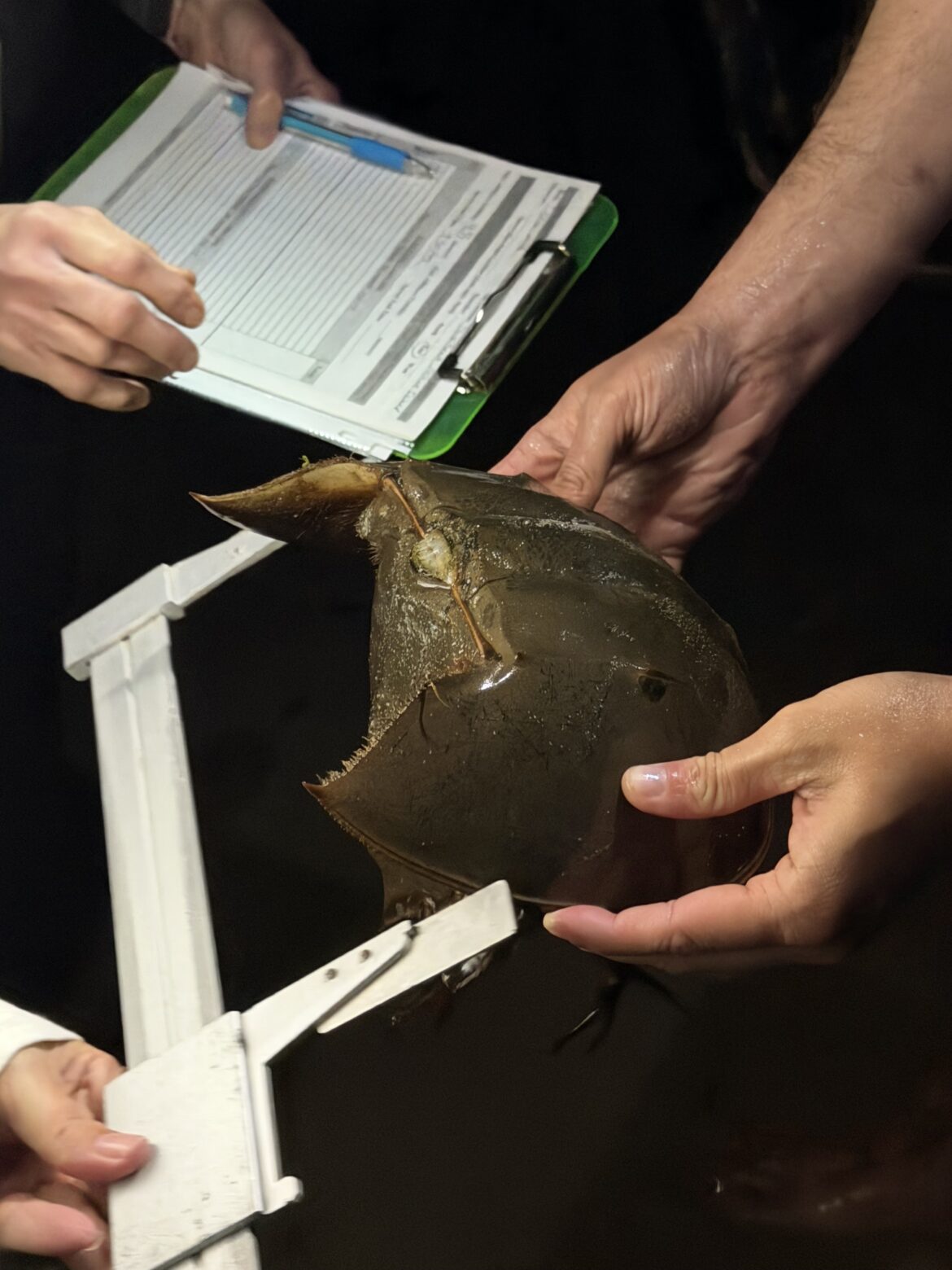
At each site, volunteers record conditions like air and water temperature, tide, water clarity, and weather, then walk the designated transect start to finish, documenting the number of horseshoe crabs and their activity. Data collected includes spawning abundance, size, sex, and tag returns.
Any untagged horseshoe crabs are tagged with a unique identifier following NYSDEC protocol, and all survey data is submitted to NYSDEC for the annual Horseshoe Crab Spawning Activity Survey.