
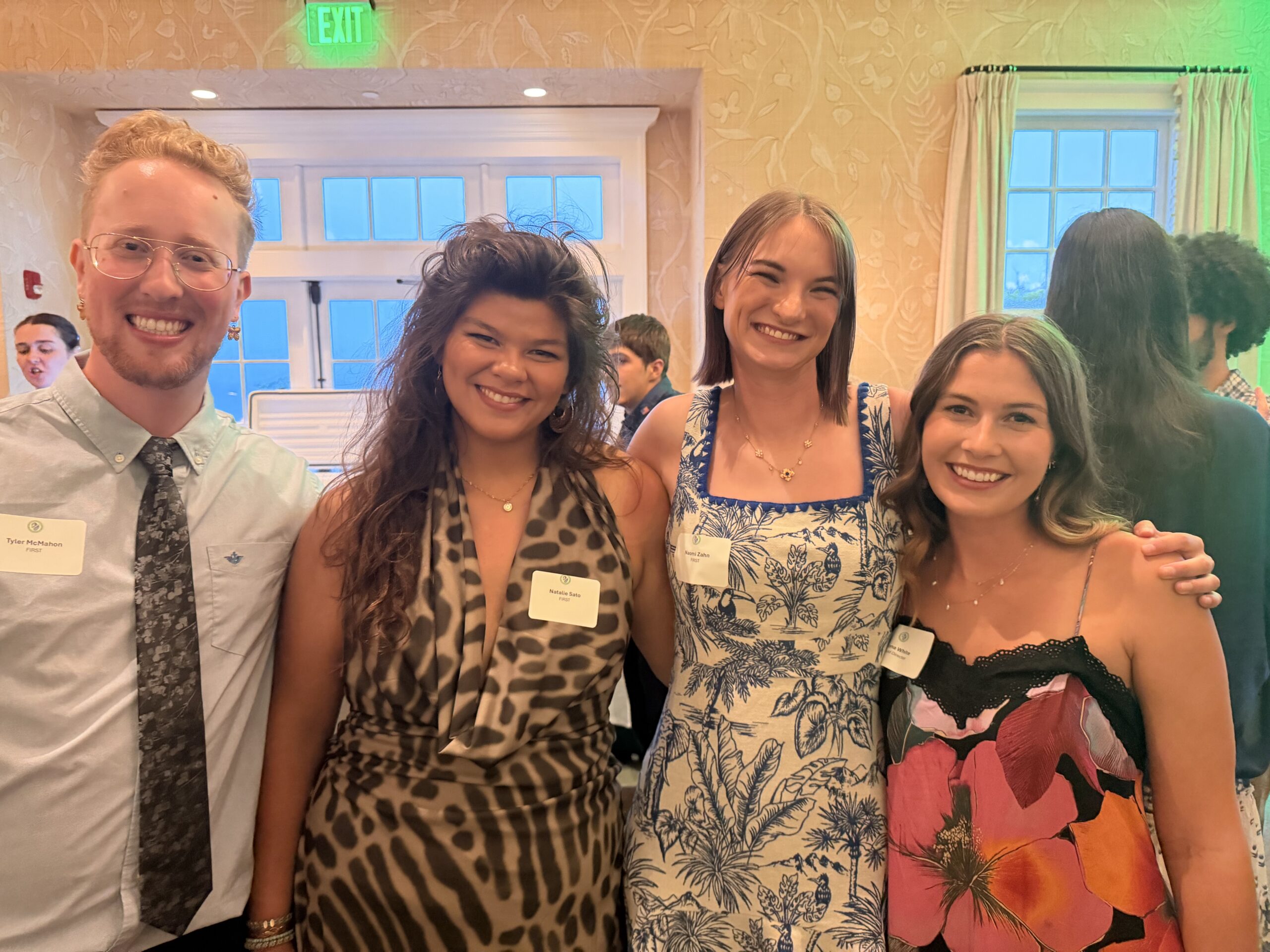
The Fishers Island Research and Survey Team (FIRST) wrapped up another season of research, monitoring, and conservation work across Fishers Island this summer. From birds and bats to insects, plants, and soils, the team spent the season out in the field collecting information that will help us better understand how the island’s ecosystems are changing and how conservation efforts can support them into the future.
Much of this summer’s data is still being processed, but a few long-term projects reached real milestones this year. Here’s a look back at what FIRST accomplished during the 2026 season.
One of the biggest was the completion of FIRST’s three-year plant-insect study, which looks at plant and insect communities across Conservancy properties. This season alone, the team completed 15 transects, 150 pitfall traps, 75 vacuum samples, and 75 1×1 meter vegetation plots. Now that all three years of data are collected, Tyler will begin analyzing the full dataset, and results are expected to be shared with the community over the coming year. This dataset will eventually be paired with similar research conducted about ten years ago, giving us a rare chance to see how Fishers Island’s habitats and biodiversity have changed over the past decade, and how ongoing restoration and management may be shaping those changes.
The team also continued our annual breeding bird surveys, conducted throughout June and July this year, documenting which species are using different habitats across the island and adding to a growing dataset that helps track the island’s breeding bird community over time. Data from these migratory bird counts will also begin formal analysis this year, looking at population trends and functional guilds over the past 14 years.
Bat monitors were deployed again this summer, but the team is holding off on reporting species identifications until they’re fully confident in the calls captured. Tyler will be visiting a collaborator in late August or early September to confirm the IDs, and we’ll share those results once they’re finalized.
Naomi Zahn’s continued research into Japanese knotweed’s effect on arthropod communities included sampling 10 1×1 meter plots, with 20 pitfall traps and 10 vacuum samples collected across those sites. This work looks beyond the invasive plant itself to examine how it affects insect communities nearby, helping us understand how invasion and management ripple outward into the broader ecosystem.
Natalie Sato’s project investigating the lingering effects of knotweed on soil chemistry involved around 250 topsoil samples collected on island, with an additional 150 soil samples she brought back to Grinnell for further analysis. A new project also got underway investigating the island’s seed bank, the dormant seeds sitting in the soil that could play a role in native plant recovery after restoration and invasive removal work.
Not everything FIRST built this summer was research data. The team also started a “Plants of Fishers Island” pressed-plant collection, preserving examples of plants found across the island as a lasting educational and identification resource for the community.
Beyond their research, FIRST students volunteered across three major community events this summer: two days at Pollinator Pathways (8 hours), four days at Ferry Park (24 hours), and one day with FI Seagrass (4 hours).
Piping Plover and Least Tern monitoring on Fishers Island is run by our Field Director, Anna White, in collaboration with the New York State DEC and the Long Island Colonial Waterbird and Piping Plover Survey . This summer, the FIRST team pitched in to help with that monitoring work, supporting the surveys as the season went on. One site is still being monitored as this season wraps up.
Sharing Their Research on Island
On July 18th, FIRST students Naomi Zahn and Natalie Sato shared their independent research projects with the community, presenting the posters they’d been building all season.
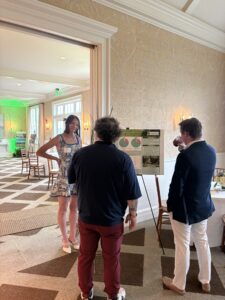
Naomi’s project looked at how mowing invasive Japanese knotweed affects the insects, spiders, and other arthropods living in it. Working across nine sites on Fishers Island, she compared arthropod communities before and after mowing using pitfall traps and vacuum sampling. Her results showed that while mowing didn’t change the overall diversity of arthropods present, it did shift which types were most common, with mowed areas showing more plant-eaters and predators, a shift that can ripple outward and affect things like pollination and nutrient cycling.
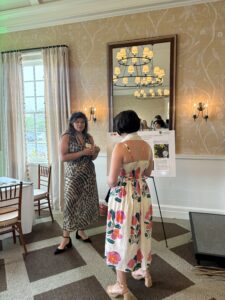
Natalie’s project asked a different question: does knotweed keep affecting the soil even after it’s gone? Her work explores allelopathy, a process where invasive plants release chemicals into the soil that can suppress native plant growth long after the invader has been removed. Natalie collected soil from four types of sites around the Parade Grounds, ranging from actively knotweed-invaded to native reference grassland, and is growing native black-eyed Susan and Virginia wild rye in each soil type to see how well they germinate and grow. Half of each soil sample was also treated with activated carbon, which absorbs these harmful chemicals, helping the team confirm whether lingering knotweed chemistry is actually the cause of any differences. Her results could help guide how restoration efforts on the island approach reseeding after invasive removal in the future.
Congratulations, Naomi!
This was Naomi’s third and final summer with FIRST, and this summer she graduated from Tarleton State University. We’re so grateful for everything she’s contributed to this program over the years, and we can’t wait to see where her career in wildlife biology takes her next!
The FIRST team wrapped up their season and departed the island on August 2nd. Some of this year’s projects are just beginning, while others are wrapping up several years of fieldwork and moving into analysis. Together, these studies are building a long-term picture of Fishers Island’s plants, insects, birds, bats, soils, and habitats, information that will help guide conservation decisions for years to come.
Thank you to our FIRST students for another season of hard work, and to the Fishers Island community for continuing to support research, education, and conservation on the island!