
The Mosquito Bucket Challenge: A Simple Thing You Can Do at Home
By Anna White
If you’ve spent a summer evening on the island, you know the feeling. You sit down outside and within five minutes you’re swatting your ankles.
Mosquitoes start showing up in late spring, but they really take off once the weather gets warm and humid. For us that’s usually July and August, and they’re worst at dawn and dusk and after a good rain. That’s the moment a lot of people reach for fogging sprays. I understand why, but fogging doesn’t just hit mosquitoes. It also kills bees, butterflies, fireflies, dragonflies and other wildlife we work hard to protect out here.
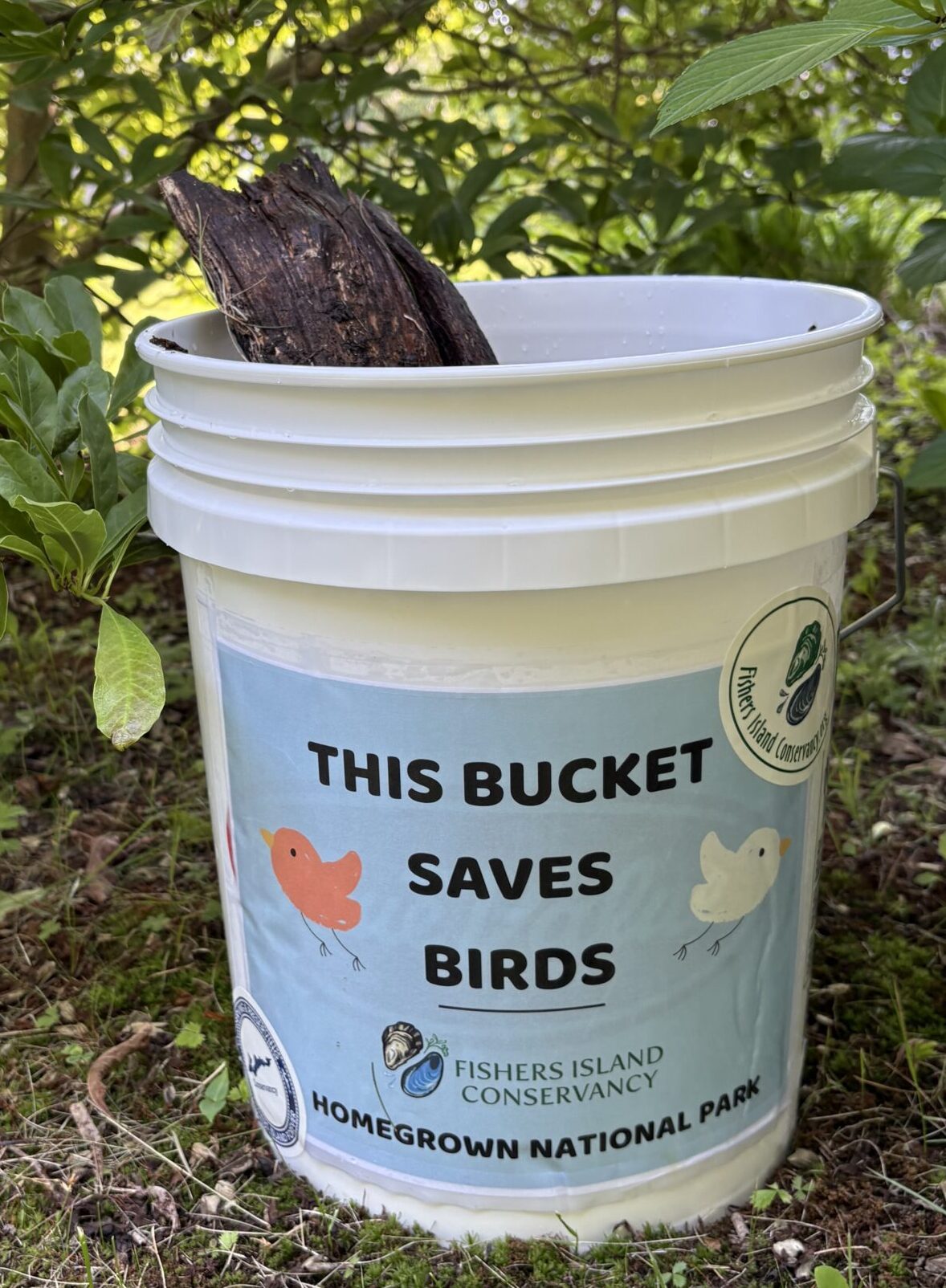
So I want to share something simpler. It’s called the Mosquito Bucket Challenge, and it comes from Homegrown National Park. The idea is to give mosquitoes a place to lay their eggs, then stop those eggs from ever growing into biting adults. The goal isn’t to get rid of every mosquito. It’s to cut down the ones bugging you in your own yard, without harming everything else.
The trick is a natural soil bacterium called Bti, which you can find in mosquito dunks at most hardware and garden stores. It only targets mosquito larvae.
What you need
- A 5-gallon bucket, or any big container that holds water
- Water
- A small handful of dead leaves or grass clippings
- A mosquito dunk with Bti
- A sturdy stick
- A marker or paint if you want to decorate
How to make one
- Decorate it if you want.
- Fill it about two thirds full with water.
- Add the leaves or grass clippings.
- Break up a dunk and drop in about a quarter of it.
- Lean a stick out over the rim. If a frog or a bee falls in, it can climb out. If you have pets or small kids, put a lid with big holes on it and keep it up high where they can’t reach.
- Find a shady, quiet spot. A corner of the yard or along a property line works well.
Timing and upkeep
Set your bucket out in late spring, before the mosquitoes build up. Once they’re out in force, you’re already behind. Check the water every so often and swap in a fresh piece of dunk about once a month. If a bucket gets neglected, it can turn into a mosquito nursery instead of a trap.
A bucket isn’t the whole answer. It works best with a few other easy habits. Dump out water that’s collecting in saucers, buckets and gutters. Put a dunk in water you can’t dump, like a birdbath or rain barrel. Use screens and repellent when you’re outside. And plant natives, because dragonflies, birds and bats will happily eat mosquitoes for you.
To be fair, the American Mosquito Control Association points out that buckets mostly help with mosquitoes that breed in containers, not the kind that breed in marshes and wetlands. So think of it as one tool, not a cure.
Show us your bucket
If you make one, send us a photo and tell us what your bucket saves. We’d love to share some on the website and in our next blast. You can also add your bucket to the Homegrown National Park Biodiversity Map so it counts alongside thousands of others.
By Anna White
Sources: Homegrown National Park, Mosquito Bucket Challenge and Build a Mosquito Bucket; American Mosquito Control Association position statement on the Mosquito Bucket Challenge.